


Key Findings
The PGa III sealant achieved complete closure of a 20-mm gastric fistula in a Bama pig model within 14 days, with repair quality exceeding that of titanium clips. In rat gastric fistula models, the PGa III group showed a postoperative mortality rate of 3.3%, significantly lower than the 6.7% for sutures and 56.7% for fibrin glue. Furthermore, the hydrogel resulted in almost no postoperative adhesion and near-complete recovery of the gastric wall structure by day 21.
Technical Details
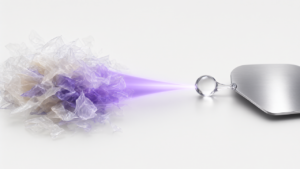
Inspired by the mucus of jungle slugs, the researchers combined linear poly(N-isopropylacrylamide) (PNIPAM) with Ga 3+. The material remains a flowing liquid at 25 °C, allowing delivery through a 27-gauge needle and standard endoscopic channels, but transforms into a gel within approximately 30 seconds upon reaching body temperature (37 °C).
- Asymmetric Adhesion: The “slug-inspired electrostatically assisted topological (SET) Janus adhesion” mechanism creates a surface that is sticky on the tissue-facing side and non-adhesive on the lumen-facing side. In vitro, the adhesive side showed a shear strength of 10.46 kPa, nearly 100 times higher than the non-adhesive side (0.11 kPa).
- Environmental Stability: Unlike commercial fibrin glue, PGa III’s adhesion strength and burst pressure increase after immersion in simulated gastric acid (pH 1.0).
- Physical Properties: The gel shrinks by approximately 51.6% at body temperature, creating a centripetal traction force that prevents the fistula from widening.
- Antimicrobial Effect: Ga 3+ provides an inhibition efficiency of about 98.6% against Staphylococcus aureus and Escherichia coli.
Background & Context
Gastrointestinal fistulas—abnormal passages between the digestive tract and other tissues—are often caused by trauma, surgery, or tumors. Current endoscopic treatments, including stents, titanium clips, and suturing, are limited by migration, recurrence, and technical complexity.
Significance & Outlook
This study, published in Nature Biomedical Engineering on October 30, provides a ready-to-use biosealant for minimally invasive surgery. Future research will focus on the metabolism and clearance of Ga³⁺ in large animals and the impact of pH fluctuations on degradation to facilitate clinical translation.
Source: https://english.cas.cn/newsroom/research-news/202611/t20261104_1213187.shtml
Get our weekly technology intelligence — free
Receive an infographic that lets you judge at a glance whether each field’s analysis report is worth reading.
Subscribe Free — Weekly Tech Intelligence
By subscribing, you’ll receive Troy-Technical’s weekly technology intelligence newsletter.
- Your email and selected fields are used only to deliver the newsletter.
- We never share your information with third parties.
- You can unsubscribe anytime via the link in each email.
See our Privacy Policy for details.
Takes about a minute · Unsubscribe anytime