


Key Findings
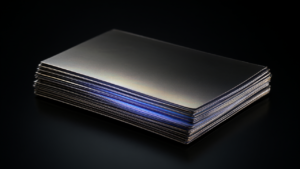
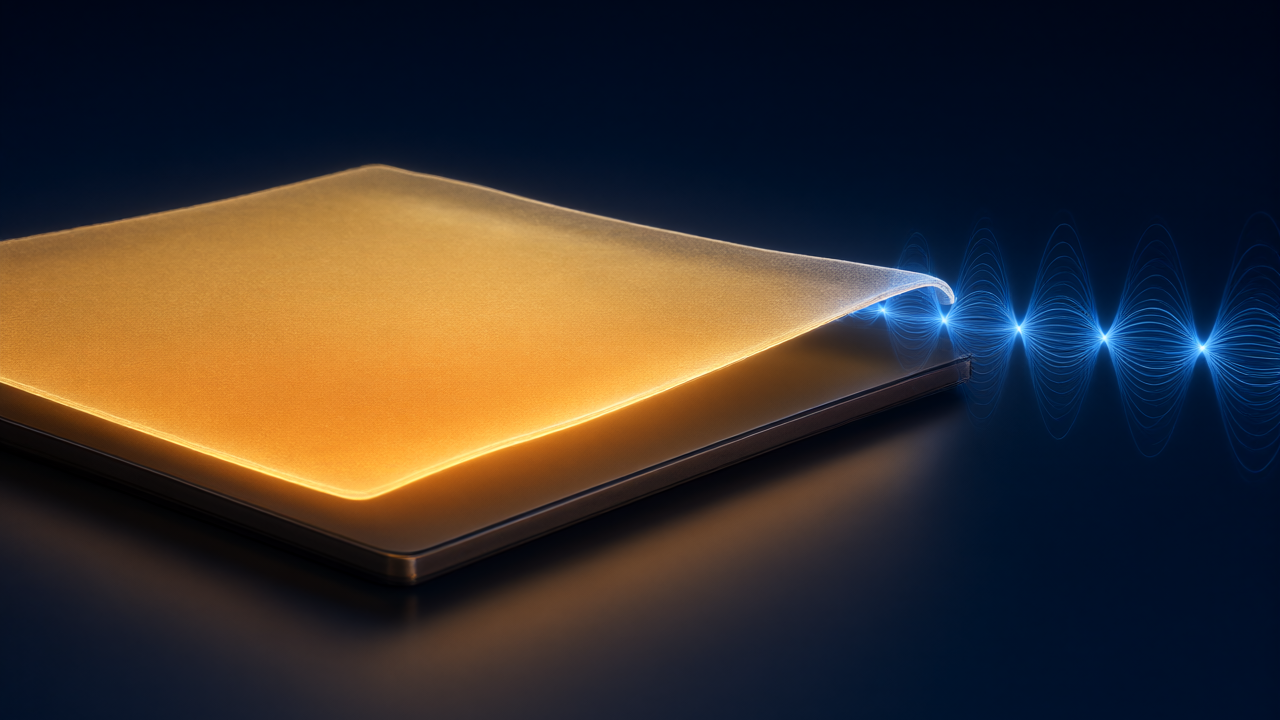
A research team led by Professor Kim Sung-ryong at Korea National University of Transportation has successfully fabricated an ultra-thin composite film that combines high thermal dissipation, electromagnetic interference (EMI) shielding, and high durability. The film blocks over 99.999% of external electromagnetic waves even at a thickness comparable to a human hair. Furthermore, the material demonstrates exceptional mechanical resilience, retaining approximately 95% of its initial performance after 10,000 repeated bending tests.
Technical Details
The team developed a method to decompose Kevlar fibers—commonly used in bulletproof vests—into nano-sized components and then re-bond them densely. To overcome the structural non-uniformity caused by rapid bonding when using water, the researchers used a mixed solution of acetic acid and alcohol to control the coagulation speed of the nanofibers. This approach allowed sufficient time for the fibers to align, resulting in a more dense and uniform internal structure.
- Thermal Performance: The new Aramid film showed more than a twofold increase in heat transfer performance compared to films produced via conventional methods, without requiring additional additives.
- Enhanced Composition: By integrating graphene nanoplatelets, the team created a multifunctional composite film with simultaneous improvements in thermal conductivity, strength, and toughness.
Background & Context
As electronic components in smartphones, wearables, autonomous vehicles, and drones become smaller and higher-performing, managing internal heat and EMI has become critical. Previous composite materials faced a trade-off: increasing functional additives like graphene to improve thermal and EMI performance typically resulted in decreased film strength and flexibility.
Significance & Outlook
This research, published in Advanced Composites and Hybrid Materials, suggests a new material design method where controlling the bonding time between fibers can simultaneously achieve thermal efficiency and structural strength. The film is expected to be applied in high-tech industries requiring lightweight, flexible materials with integrated thermal management and EMI shielding, such as autonomous vehicle electronics and wearable devices.
Source: https://www.veritas-a.com/news/articleView.html?idxno=634962
Get our weekly technology intelligence — free
Receive an infographic that lets you judge at a glance whether each field’s analysis report is worth reading.
Subscribe Free — Weekly Tech Intelligence
By subscribing, you’ll receive Troy-Technical’s weekly technology intelligence newsletter.
- Your email and selected fields are used only to deliver the newsletter.
- We never share your information with third parties.
- You can unsubscribe anytime via the link in each email.
See our Privacy Policy for details.
Takes about a minute · Unsubscribe anytime