


Key Findings
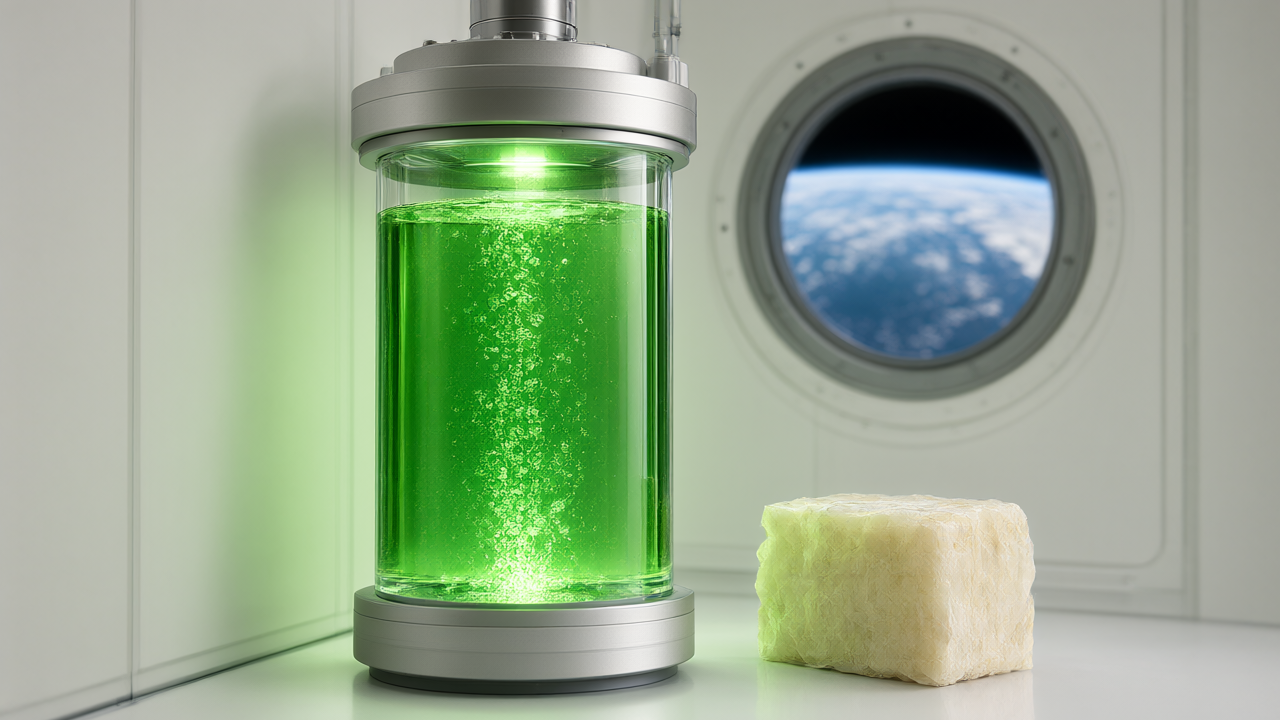
The primary constraint on microbial carbon recovery in crewed spaceflight is the composition of the waste stream, specifically packaging polymers. A Bio-Process Sizing Framework developed for this study demonstrates that these polymers set a “ceiling” on what biology can recover, regardless of the operational scenario.
Technical Details
The research utilizes an empirical carbon-accounting record spanning 25 years of stable ISS operations. During this period, logistics resupply transported approximately 87 metric tons of carbon to low Earth orbit. To evaluate recovery potential, the researchers employed a Bio-Process Sizing Framework that converts user-defined operational inputs into projected carbon-recovery capacities. This framework calculates required reactor volumes based on the physical constraints of aqueous bioprocess design, comparing the theoretical limits of physics against the capabilities of extant biology.
Background and Context
The International Space Station currently utilizes an open resource model. While the water cycle is substantially closed and the oxygen cycle is partially closed, the system for elemental carbon remains open. Carbon found in food, clothing, and packaging is typically disposed of via venting or atmospheric re-entry. This linear consumption model is considered incompatible with the requirements for planetary protection and the autonomy necessary for deep-space operations.
Significance and Outlook
Although microbial biotechnology has been proposed as a method to achieve carbon-loop closure, this study provides a quantification of the recovery capacity of resupply-derived waste for the first time. The results indicate that the physical and biological limitations of current bioprocesses, coupled with the nature of space-grade packaging materials, present a significant barrier to achieving full carbon autonomy in crewed spaceflight.
Source: https://doi.org/10.21203/rs.3.rs-11156921/v1
Get our weekly technology intelligence — free
Receive an infographic that lets you judge at a glance whether each field’s analysis report is worth reading.
Subscribe Free — Weekly Tech Intelligence
By subscribing, you’ll receive Troy-Technical’s weekly technology intelligence newsletter.
- Your email and selected fields are used only to deliver the newsletter.
- We never share your information with third parties.
- You can unsubscribe anytime via the link in each email.
See our Privacy Policy for details.
Takes about a minute · Unsubscribe anytime