

Key Findings
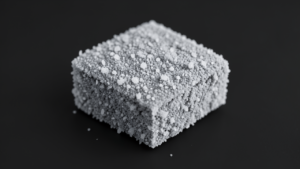
Experimental results published in the Journal of Materials Science indicate that a core-shell structured antimony and hard carbon nanocomposite significantly improves the performance of sodium-ion battery anodes. Specifically, the Sb@HC/HC composite prepared with a 6:4 mass ratio delivered a charge capacity of 482.4 mAh g−1 and an initial Coulombic efficiency of 79.7% at a current density of 100 mA g−1.
Technical Details
The researchers utilized a core-shell structural design combined with nanocomposite strategies to optimize the microstructural evolution of the anode. The performance stability of the 6:4 Sb@HC/HC composite was highlighted by its capacity retention; after 100 cycles, the anode maintained a charge capacity of 460.1 mAh g−1, representing a retention rate of 95.4%.
Background and Context
The study focused on antimony and hard carbon as they are both promising candidates for sodium-ion battery applications, though each possesses distinct limitations when used in isolation:
- Antimony: Provides high capacity but suffers from poor cycling stability.
- Hard Carbon: Offers an appropriate operating potential but delivers relatively low capacity.
To address these limitations, the researchers investigated the synergistic mechanisms that occur when these materials are integrated into a core-shell architecture.
Significance and Outlook
The study attributes the improved sodium storage performance primarily to the synergistic effects achieved through the core-shell architecture and nanocomposite strategies. The authors conclude that these findings demonstrate the feasibility of this approach and provide critical insights into the design and fabrication of Sb/HC composite materials, enhancing their potential for practical application in sodium-ion batteries.
Get our weekly technology intelligence — free
Receive an infographic that lets you judge at a glance whether each field’s analysis report is worth reading.
Subscribe Free — Weekly Tech Intelligence
By subscribing, you’ll receive Troy-Technical’s weekly technology intelligence newsletter.
- Your email and selected fields are used only to deliver the newsletter.
- We never share your information with third parties.
- You can unsubscribe anytime via the link in each email.
See our Privacy Policy for details.
Takes about a minute · Unsubscribe anytime