

Key Findings
A research team led by MicroQuanta Semiconductor has set a new world record with a certified steady-state efficiency of 23.9% for a 19.48 cm² perovskite mini-module. The result, certified by the National PV Industry Measurement and Testing Center (NPVM) of China’s Fujian Metrology Institute, also achieved a fill factor of 83.3% and a geometric fill factor of 97%.
Technical Details
Using Shapley value analysis, researchers identified the fill factor as the primary contributor to efficiency drops when scaling from small cells to modules. To mitigate this, the team implemented a specific thermal management process during fabrication:
- Perovskite precursor was spin-coated onto ITO-coated glass with two hole-transport layers (HTLs).
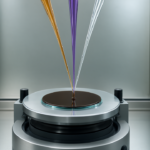
- The wet film was cooled to 0-10 °C for 15 seconds immediately after coating.
- The film was transferred to a vacuum chamber within five seconds for a two-minute vacuum-flash, followed by annealing at 110 °C for 30 minutes.
This cooling process slowed the conversion of the intermediate phase into perovskite, resulting in larger and more uniform grains. The final 19.48 cm² mini-module consists of eight subcells connected in series via laser scribing. The device architecture utilizes a FA₀.<0xE2><0x82><0x89>₅Cs₀.₀₅PbI₃ absorber, a 3PATAT-C3 self-assembled monolayer, an EDAI₂ surface passivation layer, a C₆₀ electron transport layer, a BCP buffer layer, and a silver (Ag) electrode.
Background and Context
The study, published in Nature Communications, involved collaborations between MicroQuanta Semiconductor, Zhejiang University, China Three Gorges Renewable, the Zhejiang Provincial Key Laboratory of Optoelectronic Functional Materials and Devices, and the Australian Centre for Advanced Photovoltaics.
Significance and Outlook
The cooling step not only improved initial efficiency but also enhanced stability; efficiency loss due to declining fill factor was less than one-third as large compared to control modules during aging tests. MicroQuanta is further expanding its capacity with a gigawatt-scale production line in Quzhou, targeting 2.88 m² modules with 20% efficiency and a 25-year lifespan. Additionally, the company has introduced the MQ-α² series perovskite-silicon tandem modules for BIPV, reporting 26% efficiency and power outputs between 65 W and 165 W.
Get our weekly technology intelligence — free
Receive an infographic that lets you judge at a glance whether each field’s analysis report is worth reading.
Subscribe Free — Weekly Tech Intelligence
By subscribing, you’ll receive Troy-Technical’s weekly technology intelligence newsletter.
- Your email and selected fields are used only to deliver the newsletter.
- We never share your information with third parties.
- You can unsubscribe anytime via the link in each email.
See our Privacy Policy for details.
Takes about a minute · Unsubscribe anytime