Key Findings
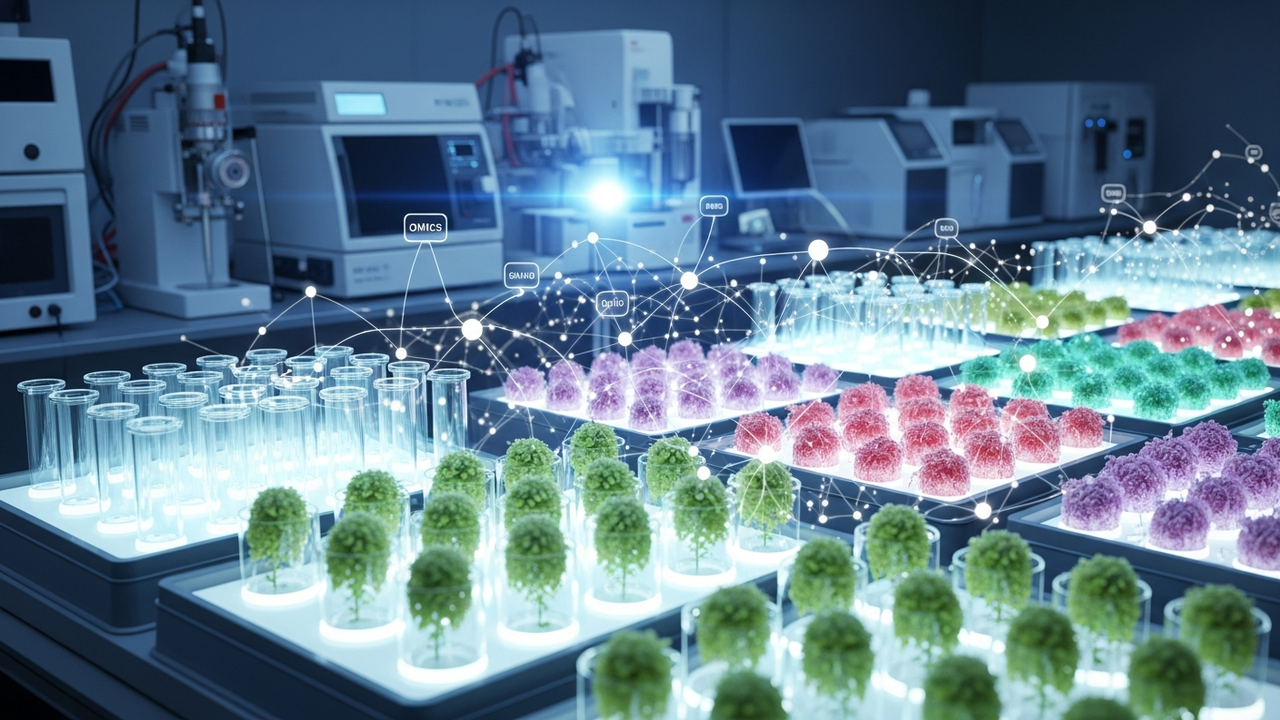
A comprehensive review published in ACS Publications focuses on optimizing metabolite production in plant tissue culture (PTC) guided by metabolomics. This review explores the potential to enhance yields of high-value compounds, such as secondary metabolites, from PTC by integrating omics technologies and synthetic biology approaches. This represents a significant advancement in improving the sustainability and efficiency of natural product production.
Technical / Clinical Details
- Leveraging Metabolomics: Metabolomics, the comprehensive analysis of all metabolites within a cell, helps identify bottlenecks and rate-limiting steps in metabolic pathways within PTC. This allows for data-driven design of strategies to maximize the production of target metabolites.
- Integration of Omics Technologies: Integrating metabolomics with other omics technologies such as genomics, transcriptomics, and proteomics provides a more comprehensive understanding of plant cellular biological systems. This multi-layered data integration improves the precision of designing genetic modifications and metabolic pathway engineering using synthetic biology methods.
- Synthetic Biology Approaches: To enhance the biosynthesis pathways of target metabolites, gene-editing technologies like CRISPR-Cas9 and heterologous gene expression systems are used to reprogram the plant cell’s metabolic network. This enables the activation of production pathways for desired compounds or the suppression of competing pathways.
- Importance of Emerging Solutions:
- Standardized Reference Cell Lines and Media Formulations: Provide a foundation for improving the reproducibility and reliability of PTC.
- Digital Twin Models: Virtually mimic physical processes and update with real-time data, enabling process simulation and optimization.
- Real-Time Biosensors: Continuously monitor culture conditions and cell states, allowing for immediate feedback control.
- Modular Enzyme Assemblies: Tools for efficiently designing and constructing biosynthetic pathways for target compounds.
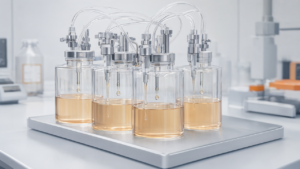
- Scaling to Continuous Bioreactor Systems: Scaling PTC to continuous bioreactor systems is key to achieving consistency and efficiency in industrial applications. Implementing control loops based on metabolomics information enables real-time process optimization and stable production.
Background & Context
Plants are crucial sources of various high-value secondary metabolites, including pharmaceuticals, flavors, pigments, and functional food ingredients. However, traditional extraction of these natural products faces challenges such as variability in yield and quality, and environmental impact. PTC offers an alternative for producing these compounds under controlled conditions, but its production efficiency has often been a bottleneck. The integration of omics and synthetic biology holds the potential to dramatically improve this production efficiency.
Strategic Significance & Outlook
Optimizing metabolite production in PTC guided by metabolomics will revolutionize the natural products industry. Establishing more efficient and sustainable production methods will create new opportunities in pharmaceutical development, cosmetics, and the food industry. The adoption of technologies like digital twins and real-time biosensors will enable precise control of PTC processes, ultimately ensuring a stable supply of high-quality plant-derived compounds, and is expected to be a crucial factor supporting the growth of these industries.
Source: https://pubs.acs.org/doi/10.1021/acssynbio.6c00352
Get our weekly technology intelligence — free
Receive an infographic that lets you judge at a glance whether each field’s analysis report is worth reading.
Subscribe Free — Weekly Tech Intelligence
By subscribing, you’ll receive Troy-Technical’s weekly technology intelligence newsletter.
- Your email and selected fields are used only to deliver the newsletter.
- We never share your information with third parties.
- You can unsubscribe anytime via the link in each email.
See our Privacy Policy for details.
Takes about a minute · Unsubscribe anytime