Key Findings
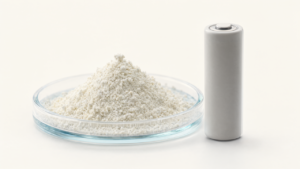
A novel design approach utilizing the metal-organic framework (MOF) ZIF-8 as an interfacial bridge has effectively resolved critical challenges in solid electrolyte development, specifically LATP (lithium aluminum titanium phosphate) aggregation and interfacial compatibility within polyethylene oxide (PEO) matrices. This innovation shows significant potential to optimize ion transport pathways in solid electrolytes, leading to substantial improvements in the performance and stability of all-solid-state batteries.
Technical/Clinical Details
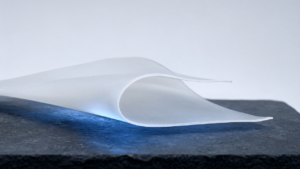
The research team successfully integrated ZIF-8 into LATP/PEO composite solid electrolytes to overcome interfacial issues. ZIF-8, with its porous structure and chemical stability, acts as an ‘interfacial bridge’ to inhibit aggregation between LATP particles and enhance adhesion with the PEO matrix. This optimized electrolyte membrane achieved an impressive lithium ion conductivity of 3.04 × 10⁻⁴ S cm⁻¹ at an operating temperature of 60°C, a marked improvement compared to conventional PEO-based electrolytes and a critical value for practical applications. Furthermore, this electrolyte demonstrates a wide electrochemical stability window up to 5.13 V, offering compatibility with high-voltage cathodes. Its enhanced mechanical properties also contribute to suppressing lithium dendrite growth, thereby increasing battery safety and long-term stability.
Background & Context
All-solid-state batteries are considered key to next-generation energy storage for electric vehicles (EVs) and other high-performance devices. However, solid electrolyte development has faced multiple hurdles, including low ionic conductivity, high interfacial resistance with electrodes, and insufficient mechanical strength. Particularly in composite electrolytes combining inorganic solid electrolytes (like LATP) and polymer solid electrolytes (like PEO), interfacial compatibility between the two materials significantly dictates performance, creating a strong demand for improvement technologies. This MOF-driven approach offers a promising solution to these long-standing interfacial problems.
Strategic Significance & Outlook
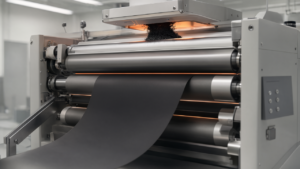
The development of MOF-modified solid electrolytes incorporating ZIF-8 represents a crucial advancement towards improving the performance and practical implementation of all-solid-state batteries. This technology holds the potential to accelerate the development of next-generation batteries that combine high energy density, high power output, long lifespan, and enhanced safety. Future research will likely focus on the scalability of the manufacturing process for this composite electrolyte, its cost efficiency, and long-term performance validation in various cell configurations. If this breakthrough leads to mass production, it could further promote EV adoption and drive innovation across a wide range of sectors, including grid-scale energy storage systems.
Source: https://pubs.acs.org/doi/10.1021/acs.jpcc.6c00524
Get our weekly technology intelligence — free
Receive an infographic that lets you judge at a glance whether each field’s analysis report is worth reading.
Subscribe Free — Weekly Tech Intelligence
By subscribing, you’ll receive Troy-Technical’s weekly technology intelligence newsletter.
- Your email and selected fields are used only to deliver the newsletter.
- We never share your information with third parties.
- You can unsubscribe anytime via the link in each email.
See our Privacy Policy for details.
Takes about a minute · Unsubscribe anytime