Key Findings
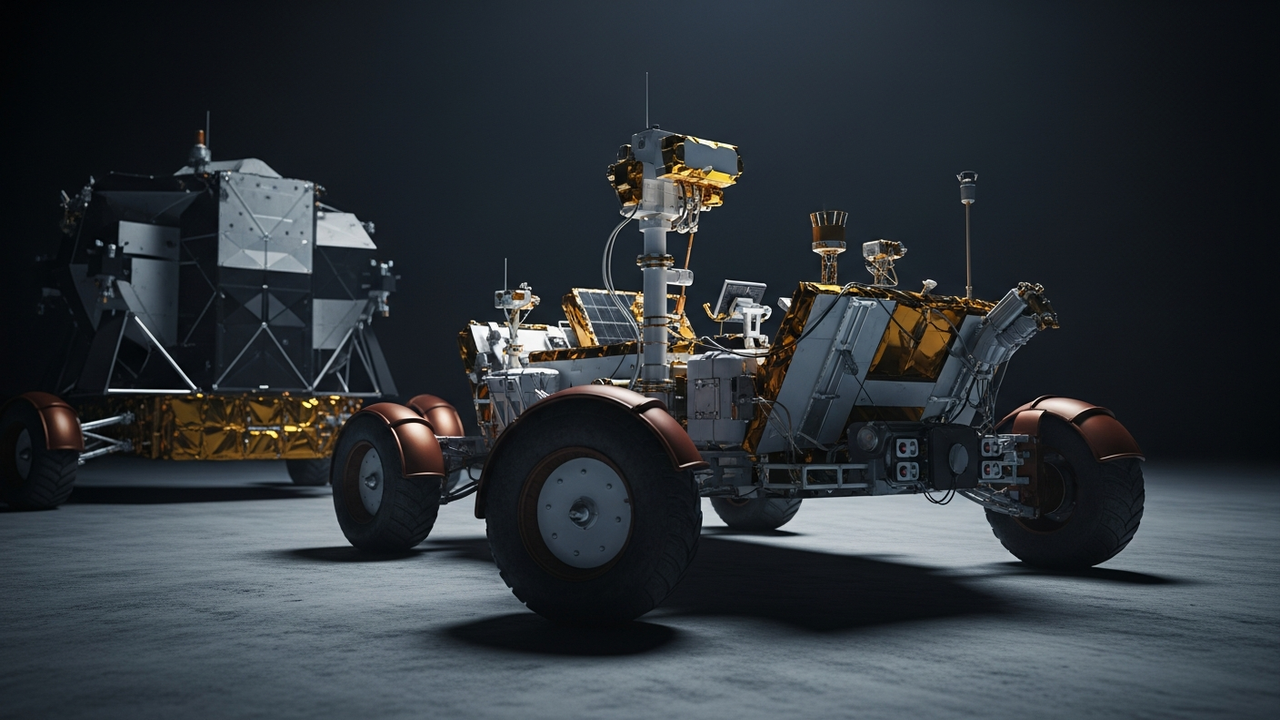
NASA has announced its intention to launch a new solicitation for lunar surface power solutions in July, simultaneously revealing its consideration of deploying the ‘PROMISE’ lunar rover, powered by a Radioisotope Thermoelectric Generator (RTG), to the Moon. PROMISE, an engineering development derivative of the highly successful Mars rovers Perseverance and Curiosity, is designed to offer extensive mission capabilities, crucially enabling it to survive the extremely harsh lunar nights, including the two-week-long periods of darkness at the Moon’s poles. This strategic focus highlights surface power as a paramount objective in Phase 1 of NASA’s lunar base plan, an indispensable element for achieving a sustained human presence on the Moon.
Technical Details
Lunar Surface Power Solicitation: NASA intends to solicit innovative technological solutions from industry for lunar power generation, storage, and distribution. In the lunar polar regions, low-angle sunlight and prolonged shadows make traditional solar power insufficient. Therefore, reliable, high-energy-density power solutions are critical for enduring the long lunar nights. Potential areas for proposals include advanced vertical solar array systems, fuel cells, small fission power systems, and high-efficiency battery technologies.
PROMISE Rover: ‘PROMISE’ is inferred to stand for ‘Planetary Rover with Multiple Instrument Scientific Explorer.’ This rover is based on NASA’s Mars-proven Perseverance and Curiosity rovers, optimizing their robust design and scientific capabilities for the lunar environment. The most critical feature of PROMISE is its power source: a Radioisotope Thermoelectric Generator (RTG). RTGs generate stable electricity from the heat produced by the natural decay of radioactive materials, enabling long-duration missions regardless of sunlight availability. This allows PROMISE to withstand extreme night temperatures (below -170°C) and keep scientific instruments operational even in limited sunlight regions like the lunar south pole. PROMISE will contribute to lunar environmental studies, exploration of lunar resources (especially water ice), and mapping terrain to identify potential base sites for future human missions.
Background & Context
NASA’s Artemis program aims to establish a sustainable human presence on the Moon, eventually paving the way for crewed missions to Mars. Stable power supply on the lunar surface is one of the most fundamental requirements for realizing this ambitious vision. The lunar environment, particularly at the poles, presents exceptionally challenging conditions for power systems, characterized by extreme temperature fluctuations and extended periods of darkness. RTG technology has proven its reliability and durability in past deep-space missions (e.g., Voyager, Cassini, Perseverance) and is expected to play an equally vital role in the Moon’s extreme environment. This focused investment in lunar surface power underscores NASA’s strategic commitment to making the Artemis program a tangible reality.
Strategic Significance & Outlook
NASA’s new solicitation for lunar surface power is expected to attract innovative solutions from industry, accelerating the development of essential power technologies for lunar bases and exploration missions. If the PROMISE rover is deployed to the Moon, it will significantly deepen scientific understanding of the lunar south pole, providing invaluable information for resource utilization and base site selection for future human missions. PROMISE’s success would demonstrate the applicability of RTG technology on the Moon, opening pathways for long-term scientific research and commercial activities in the lunar polar regions. These efforts are crucial steps in establishing the Moon as humanity’s next frontier and a stepping stone for deep-space exploration.
Get our weekly technology intelligence — free
Receive an infographic that lets you judge at a glance whether each field’s analysis report is worth reading.
Subscribe Free — Weekly Tech Intelligence
By subscribing, you’ll receive Troy-Technical’s weekly technology intelligence newsletter.
- Your email and selected fields are used only to deliver the newsletter.
- We never share your information with third parties.
- You can unsubscribe anytime via the link in each email.
See our Privacy Policy for details.
Takes about a minute · Unsubscribe anytime







Comments