Key Findings
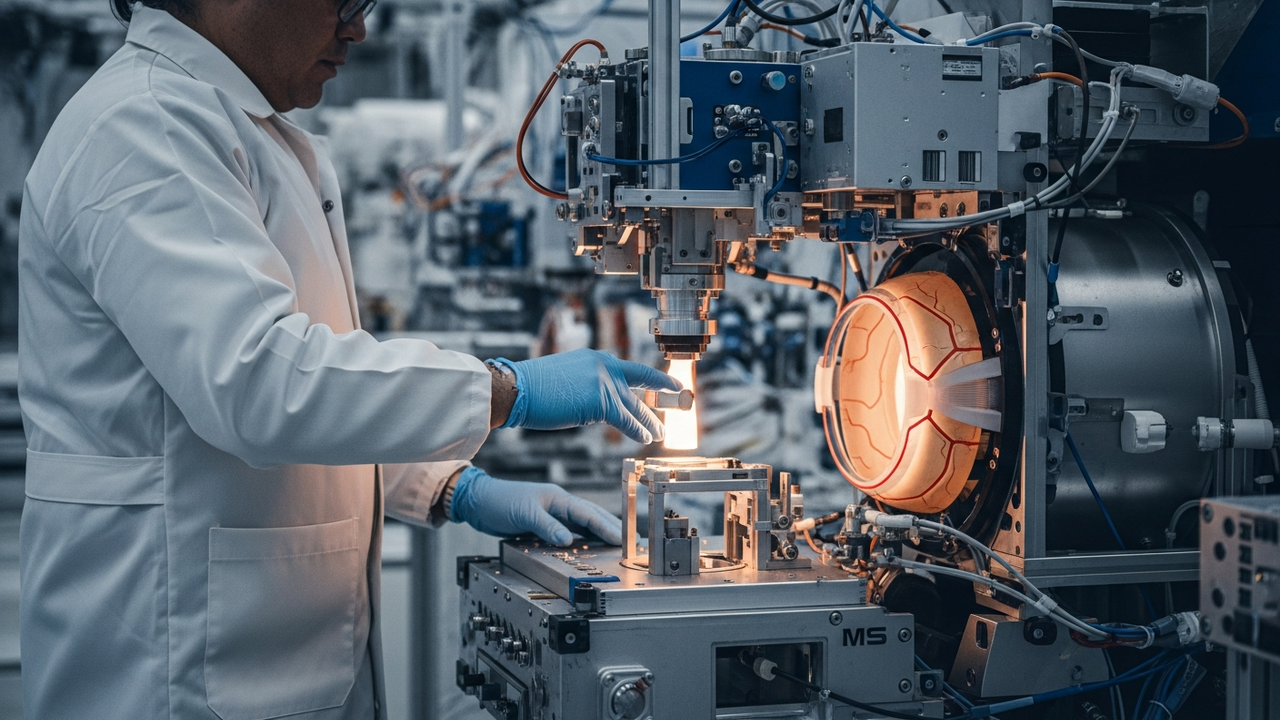
LambdaVision, a biotechnology company, has successfully demonstrated the manufacturing of artificial retinas in the microgravity environment of the International Space Station (ISS). These space-produced retinas exhibited significantly enhanced uniformity, optical performance, and reproducibility compared to those manufactured on Earth, while also requiring a reduced amount of raw materials.
Technical & Clinical Details
LambdaVision’s artificial retinas are multilayered structures that utilize a light-activated protein called bacteriorhodopsin, aiming to restore vision for patients suffering from retinal degeneration. On Earth, gravitational forces often lead to challenges in precisely layering these delicate structures, resulting in non-uniformity and sedimentation issues that compromise product quality and reproducibility. In microgravity, these gravity-induced effects are eliminated, allowing for the formation of more uniform and dense layers. The ISS manufacturing trials showed that optical performance metrics significantly surpassed those of Earth-produced retinas, indicating a higher efficiency in converting light into electrical signals. The reduced material requirement also contributes to potential cost savings and increased resource efficiency in production.
Background & Context
Retinal degenerative diseases affect millions worldwide, representing a high unmet medical need with limited effective treatments. The development of artificial retinas offers a promising avenue for restoring sight to these patients, but their precise manufacturing has posed significant technical hurdles. LambdaVision recognized the unique advantages of the space environment in overcoming these manufacturing challenges and has actively pursued research and development on the ISS. While the superiority of space-based manufacturing has been demonstrated in areas like protein crystallization, this achievement expands its potential into the realm of artificial organ and tissue production.
Strategic Significance & Outlook
LambdaVision plans to continue its research on the ISS to further optimize the artificial retina manufacturing process. The company is also exploring the utilization of future commercial space stations for full-scale commercial production of pharmaceuticals and medical devices in space. If successful, this technology could provide a new therapeutic option for retinal degenerative diseases, significantly improving patients’ quality of life. Furthermore, the establishment of advanced bio-manufacturing techniques in space could revolutionize the broader regenerative medicine field, enabling the creation of high-quality products difficult to achieve with terrestrial manufacturing methods.
Source: https://www.retinalphysician.com/news/2026/biotech-uses-space-to-manufacture-artificial-retinas/
Get our weekly technology intelligence — free
Receive an infographic that lets you judge at a glance whether each field’s analysis report is worth reading.
Subscribe Free — Weekly Tech Intelligence
By subscribing, you’ll receive Troy-Technical’s weekly technology intelligence newsletter.
- Your email and selected fields are used only to deliver the newsletter.
- We never share your information with third parties.
- You can unsubscribe anytime via the link in each email.
See our Privacy Policy for details.
Takes about a minute · Unsubscribe anytime








Comments