Key Findings
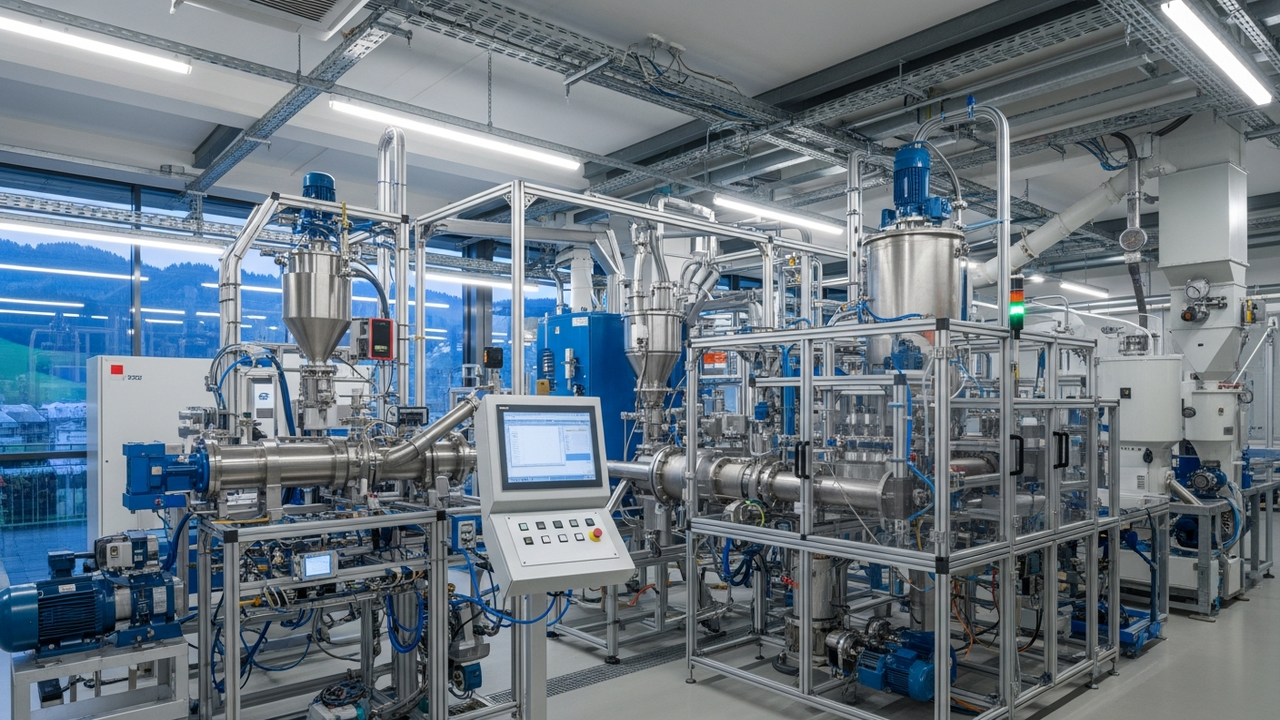
Swiss startup Depoly has successfully launched its pilot plant, demonstrating a groundbreaking chemical recycling process for post-consumer PET plastics. This facility is capable of depolymerizing various forms of PET waste, including mixed and colored plastics, into their base monomers, paving the way for high-quality recycled PET production.
Technical / Clinical Details
Depoly’s proprietary technology employs a chemical depolymerization method that breaks down PET polymers into purified terephthalic acid (PTA) and monoethylene glycol (MEG), the foundational building blocks of PET. Unlike traditional mechanical recycling, this process can handle contaminated or mixed PET waste streams, which are typically difficult to recycle into high-value products. The recovered monomers possess purity levels comparable to virgin raw materials, allowing them to be re-polymerized into new PET resin suitable for demanding applications, including food-grade packaging. The pilot plant’s operation will provide critical data on process efficiency, scalability, and economic viability, validating its potential for industrial deployment.
Background & Context
The global plastics industry faces immense pressure to reduce waste and adopt more sustainable practices. PET, widely used in bottles, packaging, and textiles, represents a significant portion of plastic waste. While mechanical recycling has its merits, it often leads to downcycling due to material degradation or contamination. Chemical recycling, as demonstrated by Depoly, offers a promising solution by enabling infinite recycling loops and producing high-quality output that can directly replace virgin materials. This advancement is crucial for brand owners and manufacturers committed to increasing their recycled content targets and achieving true circularity.
Strategic Significance & Outlook
The successful commissioning of Depoly’s pilot plant signifies a major leap forward in PET recycling technology. The ability to transform diverse PET waste into virgin-quality monomers could unlock new feedstock sources for the plastics industry and reduce reliance on fossil resources. Depoly aims to scale this technology to commercial levels, potentially through licensing agreements and strategic partnerships worldwide. This could fundamentally alter the PET value chain, fostering a more sustainable and resource-efficient future for plastics production and consumption.
Source: https://www.plasticstoday.com/materials/swiss-startup-depoly-launches-pet-depolymerization-plant
Get our weekly technology intelligence — free
Receive an infographic that lets you judge at a glance whether each field’s analysis report is worth reading.
Subscribe Free — Weekly Tech Intelligence
By subscribing, you’ll receive Troy-Technical’s weekly technology intelligence newsletter.
- Your email and selected fields are used only to deliver the newsletter.
- We never share your information with third parties.
- You can unsubscribe anytime via the link in each email.
See our Privacy Policy for details.
Takes about a minute · Unsubscribe anytime






Comments