TROY TECHNICAL · BEGINNER’S GUIDE
READ THIS FIRSTAI and machine learning — An Introduction
What does AI learn, and what does it not know? A first guide beyond the chat window.
Japanese version →Finding defects in photographs, predicting a material property and drafting text look like different activities. Machine-learning applications share a useful starting idea: examples are used to build a way of responding to inputs not yet seen. Before equations or product names, this guide connects that mechanism to the decisions a user must make.
01Learning a relationship instead of writing every rule
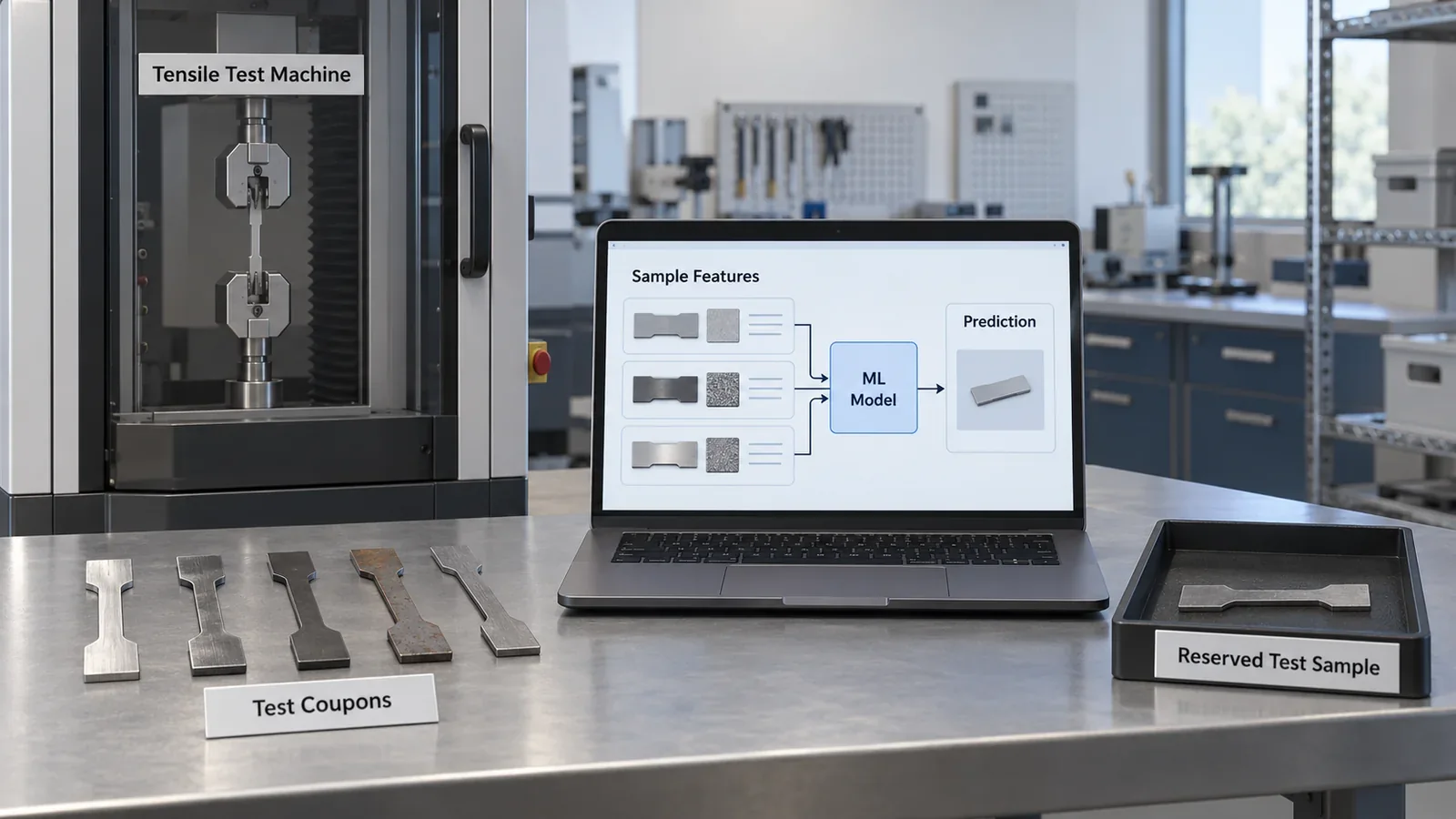
Suppose the task is to predict strength from a material formulation. A conventional program may apply an equation or explicit rules chosen by an engineer. A machine-learning system adjusts internal numerical parameters using examples that pair formulations with measured strengths. That adjustment is training. The resulting mechanism is a model; applying it to a new formulation is inference.
The model is not the experiment. A formulation outside the training range, or a different manufacturing process, may invalidate its prediction. Neural networks are one family of models, and deep learning uses networks with multiple processing layers. AI is a wider field than either deep learning or conversational software.
Background: [3]
02Predicting, generating and acting are different jobs
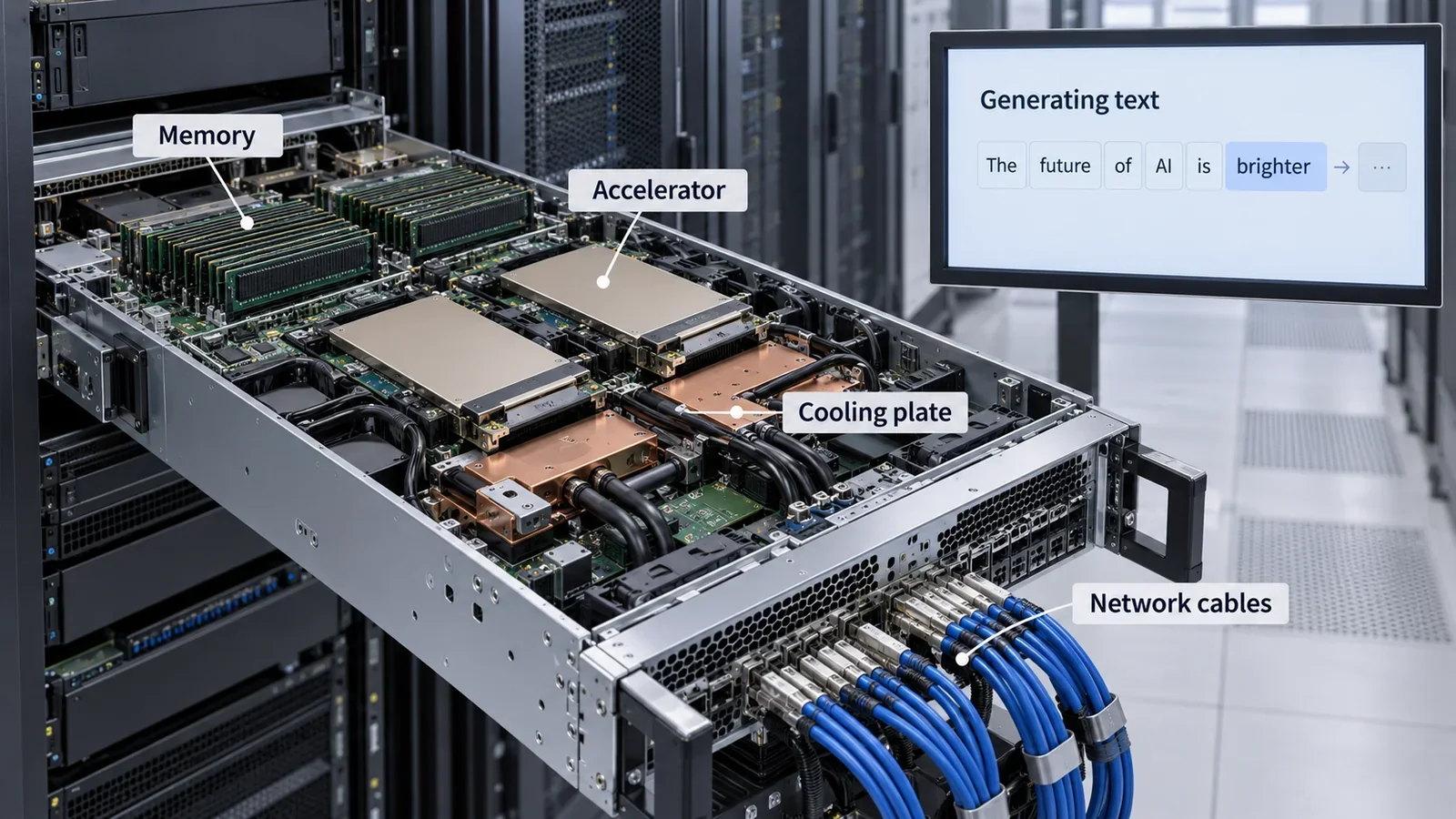
A classifier chooses a category. Generative AI produces text, images or other outputs from learned patterns and supplied input. A large language model, or LLM, builds on predicting continuations of sequences of small text units. Fluent wording does not mean that its factual claims have been verified.
Retrieval-augmented generation, or RAG, supplies retrieved material to help ground an answer. An agent combines a model with tools such as search or software controls to carry out work. Neither removes error automatically: the wrong document can be retrieved, and an action can be mistaken. Source checking and limited permissions remain important.
Background: [2]
03Ask whether it works on genuinely unseen cases
Testing on the same questions used for practice exaggerates ability. Keep evaluation examples separate from training, and prevent answer information or future information from leaking into the input. Inspect not just aggregate accuracy but also important misses, difficult conditions and the consequences of failure.
In factory inspection, missing a defect and rejecting a good part cause different losses. A new camera or different lighting can change results without any change in the model. Deployment therefore needs monitoring and a way for people to stop the system or take over a decision.
Background: [1]
04Behind the model are data and physical infrastructure
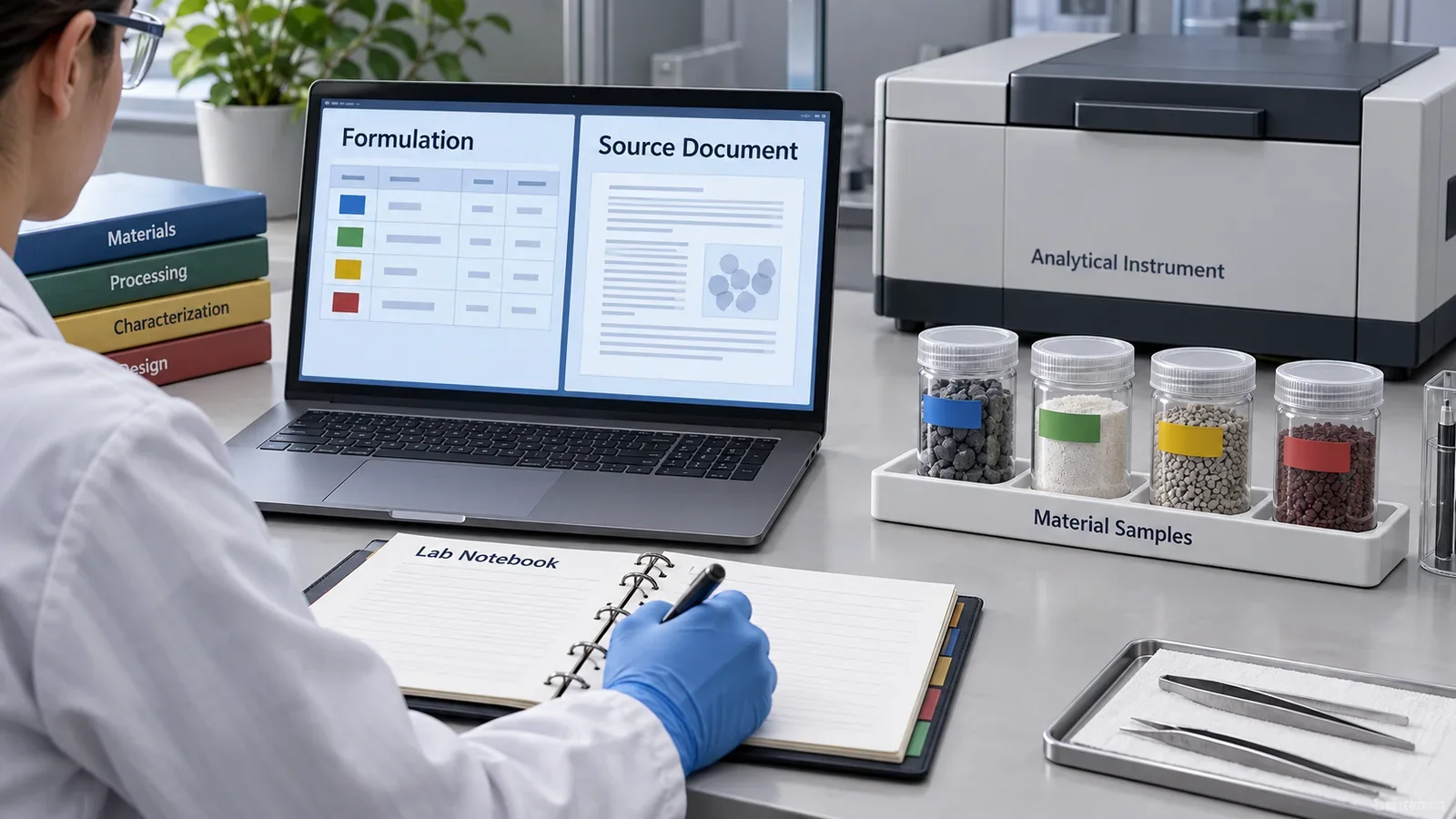
Training and inference require computation, memory, communications, electricity and cooling. Accelerators perform many operations in parallel; memory and interconnects help move the required data. More infrastructure does not automatically create more business value.
Can confidential data leave the organization? How much delay is acceptable? Who checks a failure? Those questions help determine whether to use cloud services or local hardware, and a large general model or a smaller specialized one. Start with the work or decision to improve, not with a model name.
Background: [1]
05Three questions for reading an AI claim
Ask: compared with what, tested on which data, and covering how much of the real workflow? A high benchmark score, one successful demonstration and an improvement in actual work including cost and waiting time are different kinds of evidence.
A small trial against the existing workflow under comparable conditions reveals strengths and weaknesses. Decide how correctness, safety, cost and response time matter for that task. The individual articles below can then answer a concrete question rather than simply add terminology.
Background: [1]
Connect the ideas in one situation
ILLUSTRATIVE SCENARIO — NOT A PERFORMANCE CLAIM
Suppose a factory wants to find defects
First define the defects that matter and make image capture and labelling consistent. Test on products or capture dates kept outside training, and count both misses and false alarms. If uneven lighting causes failure, improving the camera setup may help more than enlarging the model.
Send uncertain cases to people after deployment. The useful role may be narrowing what needs inspection rather than eliminating every human decision. This is a workflow example, not a promised result.
Return to the starting idea
AI is a tool to match to a task and its data. A plausible output and an output that is correct for the intended use are different things.
You do not need to memorize every technology name. Understanding the intended improvement, the mechanism being changed and the conditions needed to demonstrate it gives you a foundation for the detailed articles. Choose one route that matches your question.
Choose your next article
Read a route from top to bottom, or select just the question you need. You do not have to read everything.
Understand the mechanism
Use AI in real work
Explore hardware and power
Browse all technical articles in this field (36)
- AI in Semiconductor Design and Manufacturing
- AI Safety Evaluation and Risk Management
- AI Accelerators – How GPUs, TPUs and NPUs differ in design, and how to read “peak” versus “achieved” performance
- How AI Agents Work
- Power and Cooling for AI Data Centers
- AI in Drug Discovery and Screening
- What Co-Packaged Optics (CPO) Is
- What CoWoS Is
- The EU AI Act
- What High Bandwidth Memory Is
- Model Context Protocol and Agent Interoperability – A common socket between AI and external tools and data
- Transformers and Large Language Models
- Edge AI and On-Device AI
- Evaluating and Securing AI Agents – Reading “what can it do” and “what should it be allowed to do” through benchmarks and permission design
- Coding Agents and Computer Use
- What a Chiplet Is
- Data Centers and Energy Storage
- Benchmarks and How to Read AI Evaluations
- Multimodal AI and Generative Models
- Model Efficiency
- World Models and Embodied AI
- Post-Training and Fine-Tuning
- Deploying AI in Enterprises
- Optical Interconnects and SerDes
- Optical Transceivers (Pluggable Optical Modules)
- Training Clusters and Interconnects – Running tens of thousands of GPUs as one computer
- Training Data and Scaling Laws
- Inference Optimization and Model Serving
- Reasoning Models
- Retrieval-Augmented Generation and Context Windows
- Machine Learning and Neural Network Fundamentals
- Thermal Interface Materials (TIM)
- What Heterogeneous Integration Is
- AI Policy in the United States, China and Japan
- Autonomous Driving and AI
- Copyright, Provenance and Deepfakes
Sources and scope
This introductory synthesis connects the existing technical articles. Its grouping and design scenarios are explanatory, not standard classifications or test results. It does not catalogue current records, product availability or approvals, or forecast costs. Foundational references are below; linked articles provide more detailed technical sourcing.
- NIST. AI Risk Management Framework
- Vaswani et al.. Attention Is All You Need
- Goodfellow, Bengio & Courville. Deep Learning