Key Findings
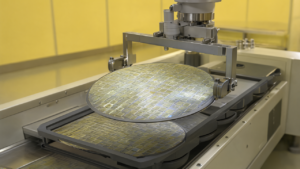
On May 21, 2026, the U.S. Department of Commerce announced a substantial financial commitment totaling $2 billion to nine quantum companies, as part of a robust effort to strengthen the nation’s quantum technology ecosystem. Of this, $1.8 billion is specifically allocated to companies building quantum foundries or forming strategic partnerships with them. This move is a strong indicator of the U.S.’s ambition to enhance its independence and establish global leadership in quantum computing and related semiconductor manufacturing. Concurrently, the artificial intelligence (AI) infrastructure layer is keenly aware of the critical importance of optical interconnects, with NVIDIA making significant investments, including a combined $4 billion into Coherent and Lumentum. Notably, GlobalFoundries is already manufacturing PsiQuantum’s Q1 silicon photonic chips in Malta, New York, and is investing an additional $375 million to expand this capability. These concerted investments suggest the potential for the U.S. to emerge as the ‘next TSMC’ in quantum and AI-related semiconductor manufacturing.
Technical / Clinical Details
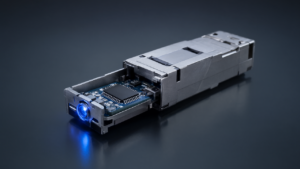
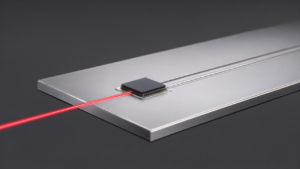
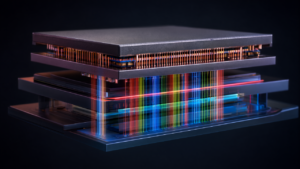
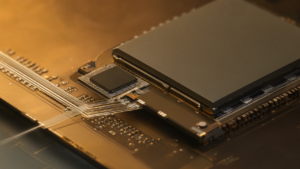
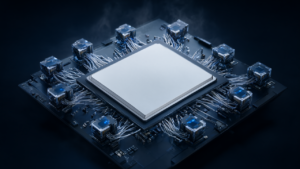
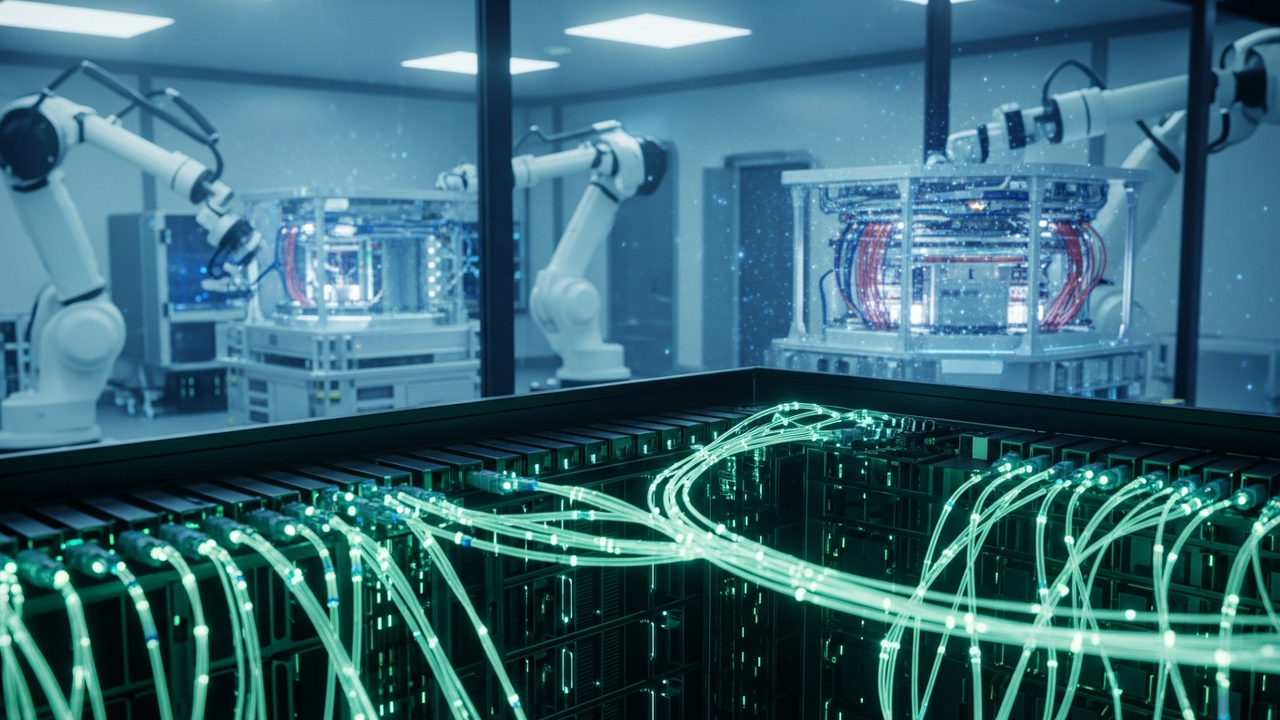
Quantum foundries are specialized semiconductor manufacturing facilities designed for producing quantum devices such as quantum computers and quantum sensors. These facilities require advanced process capabilities to accommodate diverse qubit technologies, including superconducting, ion trap, and photonics. Silicon photonics plays a central role in quantum computers that utilize photons as qubits, offering scalability due to its compatibility with existing CMOS manufacturing technology. The Q1 silicon photonic chips, manufactured by GlobalFoundries in collaboration with PsiQuantum, integrate optical waveguides, optical switches, and single-photon detectors, providing the foundation for quantum information processing. NVIDIA’s investments are accelerating technological innovation in optical component manufacturers like Coherent and Lumentum, contributing to performance improvements and mass production of optical interconnects in AI data centers. Specifically, these investments support the realization of 1.6T and 3.2T optical modules and co-packaged optics (CPO).
Background & Context
Amidst intensifying technological competition between the U.S. and China, the U.S. government is strongly committed to enhancing domestic manufacturing capabilities in semiconductors and advanced technologies. Through policies like the CHIPS Act, massive investments are being made in domestic R&D, manufacturing, and workforce development. Quantum computing and AI are recognized as two pivotal technologies that will shape the economy and national security in the 21st century, making the secure availability of manufacturing capabilities in these sectors strategically indispensable. Given that TSMC in Taiwan currently dominates a significant portion of global advanced semiconductor manufacturing, the U.S. aims to build a robust domestic foundry ecosystem to mitigate supply chain vulnerabilities. AI leaders like NVIDIA investing in optical interconnects clearly indicate that the AI infrastructure bottleneck is shifting from computational power to data movement.
Strategic Significance & Outlook
The large-scale funding for quantum companies by the U.S. Department of Commerce, coupled with strategic investments from NVIDIA and GlobalFoundries, will dramatically bolster the U.S. quantum and AI-related semiconductor manufacturing ecosystem. The expansion of GlobalFoundries’ Malta facility for PsiQuantum chip manufacturing will accelerate the practical realization of utility-scale fault-tolerant quantum computers. Simultaneously, investments in optical interconnects will drastically improve the performance and energy efficiency of AI data centers, enabling further AI scaling. If successful, these initiatives will establish the U.S. as a global leader in quantum and AI technology manufacturing, providing a strategic advantage in geopolitical competition. This represents not merely technological progress but a critical strategic turning point with long-term implications for national economy and security.
Get our weekly technology intelligence — free
Receive an infographic that lets you judge at a glance whether each field’s analysis report is worth reading.
Subscribe Free — Weekly Tech Intelligence
By subscribing, you’ll receive Troy-Technical’s weekly technology intelligence newsletter.
- Your email and selected fields are used only to deliver the newsletter.
- We never share your information with third parties.
- You can unsubscribe anytime via the link in each email.
See our Privacy Policy for details.
Takes about a minute · Unsubscribe anytime