Key Findings
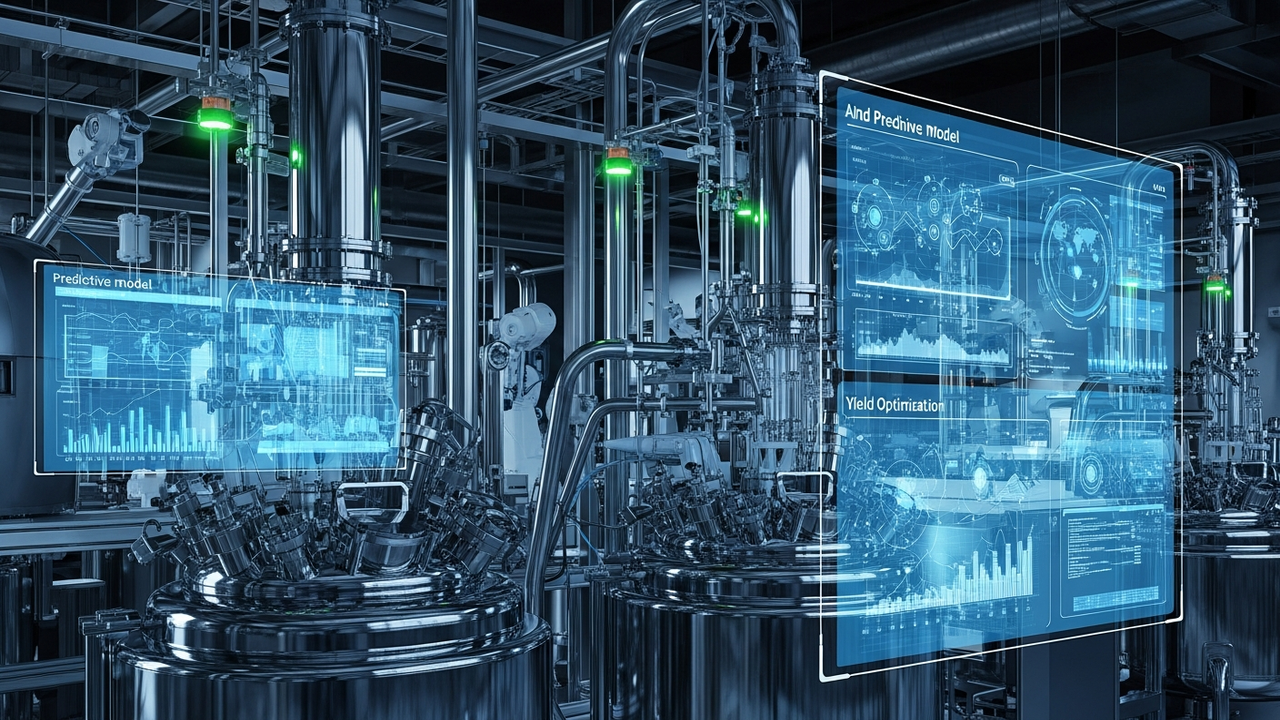
The integration of Artificial Intelligence (AI) and Machine Learning (ML) into process chromatography is fundamentally transforming the purification of biologics, particularly monoclonal antibodies (mAbs). These advanced technologies are driving substantial cost reductions and significant yield improvements by enabling more accurate prediction of resin lifetimes, optimizing chromatography loading conditions, and facilitating real-time monitoring through Process Analytical Technology (PAT).
Technical and Clinical Details
AI and ML algorithms analyze vast datasets from past purification runs to identify patterns and predict the degradation of purification resins, thereby optimizing their replacement schedules. This proactive approach prevents premature discarding of expensive resins and minimizes costly downtime. Furthermore, these technologies can analyze various loading parameters, such as flow rates, buffer compositions, and temperatures, to recommend the most efficient conditions for target protein separation. When integrated with PAT, AI/ML enables real-time monitoring of critical quality attributes (CQAs), including target protein concentration and impurity levels, throughout the chromatography process. This allows for immediate detection and automated correction of process deviations, ensuring consistent product quality and safety. Specifically, AI models can analyze chromatogram peak shapes to determine optimal cut-points, maximizing product recovery while minimizing impurity co-elution, leading to higher purity and yield.
Background and Industry Context
Biologics, especially mAbs, are indispensable therapeutics for conditions like cancer and autoimmune diseases, but their high manufacturing costs and complexity remain significant challenges. As purification typically accounts for a large portion of manufacturing expenses, its optimization is a high priority. The application of AI and ML brings data-driven optimization principles, previously refined in industries like semiconductors and automotive, to biopharmaceutical manufacturing. This allows for faster and more effective process improvements compared to traditional empirical optimization methods. Regulatory bodies are increasingly recognizing the value of such data-driven approaches in enhancing product quality and reducing risks, encouraging AI/ML utilization within Quality by Design (QbD) frameworks.
Strategic Significance and Outlook
While still in its early stages, the potential of AI and ML in process chromatography is immense. Future developments are expected to include more sophisticated applications in complex multi-column systems and continuous chromatography processes. Moreover, increased integration with other bioprocess steps, such as cell culture and filtration, will contribute to the vision of fully automated ‘lights-out’ manufacturing facilities with comprehensive digital twins. This will likely lead to further reductions in biopharmaceutical manufacturing costs, making innovative therapies more accessible to a broader patient population. Addressing data security and model validation will remain critical challenges, but this technology is poised to become an indispensable component in shaping the future of biopharmaceutical production globally.
Get our weekly technology intelligence — free
Receive an infographic that lets you judge at a glance whether each field’s analysis report is worth reading.
Subscribe Free — Weekly Tech Intelligence
By subscribing, you’ll receive Troy-Technical’s weekly technology intelligence newsletter.
- Your email and selected fields are used only to deliver the newsletter.
- We never share your information with third parties.
- You can unsubscribe anytime via the link in each email.
See our Privacy Policy for details.
Takes about a minute · Unsubscribe anytime