
Key Findings
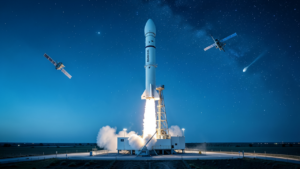
NASA has announced its intention to launch the ‘Space Reactor-1 Freedom (SR-1 Freedom)’ spacecraft in late 2028, which will be the first vehicle to utilize a nuclear fission reactor for propulsion beyond Earth’s orbit. This pioneering mission represents a significant leap forward in demonstrating next-generation energy and propulsion capabilities for deep-space exploration.
Technical and Operational Details
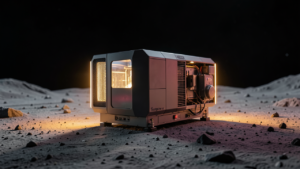
The primary objective of the SR-1 Freedom mission is to validate the reliability and efficiency of nuclear power generation in space. Specifically, it will test and prove the operational readiness of fission surface power technologies intended for lunar bases. This technology is vital for providing robust and continuous energy to lunar missions, addressing the limitations of solar power during extended lunar nights or periods of insufficient sunlight.
- Propulsion System: SR-1 Freedom will incorporate a fission reactor-based thermal or electric propulsion system, offering substantially higher specific impulse and efficiency compared to conventional chemical rockets. This is expected to drastically reduce transit times for deep-space missions and increase payload capacities.
- Mission Duration: The mission is designed for several years of operation, allowing for comprehensive assessment of system durability and reliability within the harsh space radiation environment.
- Technology Readiness: Developed under NASA’s Fission Surface Power Project, the system integrates advanced technologies across reactor design, thermal management, power conversion, and radiation shielding.
Background and Industry Context
Deep-space exploration, particularly human missions to the Moon and Mars, has been constrained by the limitations of conventional propulsion and power systems. The vast amounts of propellant required for long transits and the challenges of providing consistent power through extreme lunar temperature swings and prolonged nights have been persistent hurdles. Nuclear fission propulsion and power generation have long been identified as one of the most promising solutions to these challenges, with research spanning several decades.
Internationally, nations like Russia and China are also actively developing their space nuclear technologies. The launch of SR-1 Freedom solidifies NASA’s leading role in the competitive yet collaborative domain of space nuclear technology. Furthermore, it will play a crucial role in strengthening the domestic space nuclear industrial base, which is seen as an essential infrastructure for enabling a sustained human presence on the Moon.
Strategic Significance and Outlook
A successful SR-1 Freedom mission will lay a critical technological foundation for future human expeditions to Mars, permanent scientific outposts on the Moon, and lunar resource extraction initiatives. Fission reactors can provide stable energy not only for propulsion but also for lunar base power, life support systems, mineral processing, and in-situ resource utilization (ISRU) fuel production. This technology demonstration promises to fundamentally transform the landscape of space exploration, opening new frontiers for humanity’s deeper and more sustainable ventures into the solar system.
Source: https://www.nasa.gov/mission/space-reactor-1-freedom/
Get our weekly technology intelligence — free
Receive an infographic that lets you judge at a glance whether each field’s analysis report is worth reading.
Subscribe Free — Weekly Tech Intelligence
By subscribing, you’ll receive Troy-Technical’s weekly technology intelligence newsletter.
- Your email and selected fields are used only to deliver the newsletter.
- We never share your information with third parties.
- You can unsubscribe anytime via the link in each email.
See our Privacy Policy for details.
Takes about a minute · Unsubscribe anytime




Comments