Key Findings
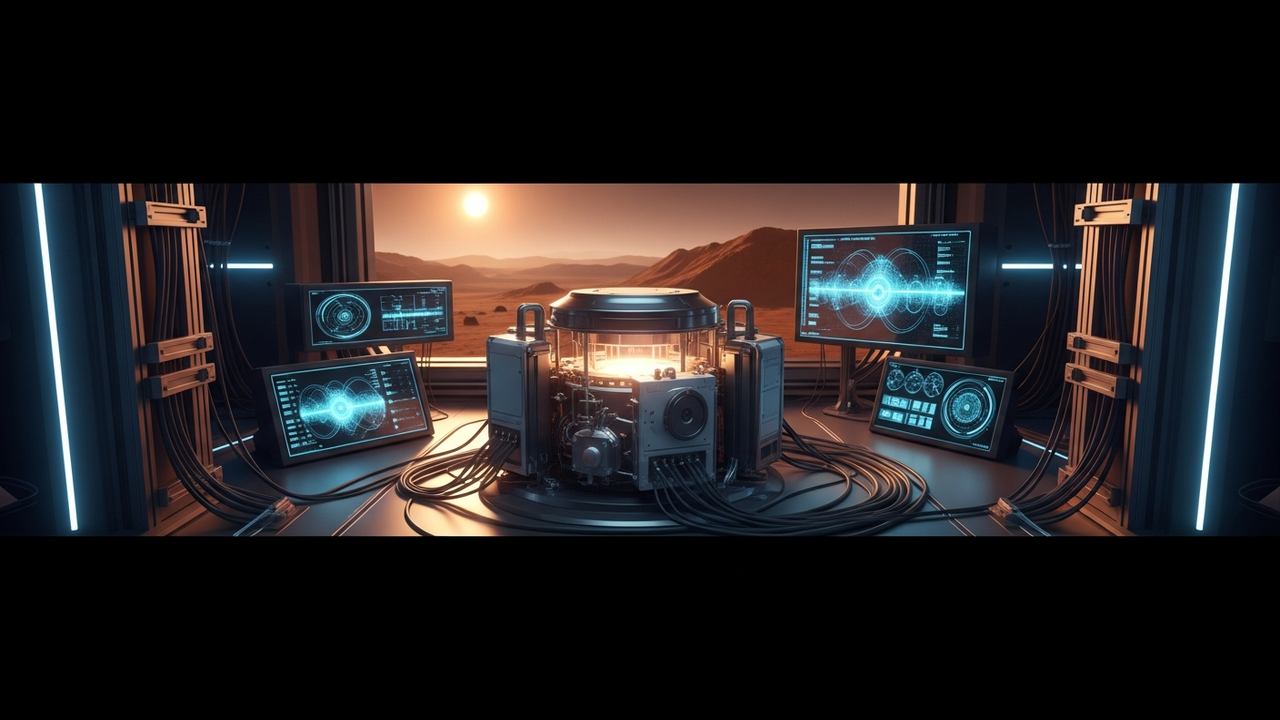
A compact nuclear fission power system, designed for Mars missions, has successfully demonstrated stable kilowatt-scale power delivery and adherence to stringent safety standards during initial testing. This system is capable of providing continuous power on the Martian surface over extended periods, independent of solar availability or battery storage, offering a crucial technological foundation for future human Mars exploration missions and the construction of permanent Martian bases. Robust operation is anticipated even under the severe Martian environment, including extreme nocturnal temperatures, dust storms, and radiation.
Technical Details
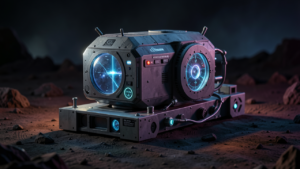
This compact nuclear fission power system comprises a small reactor core fueled by low-enriched uranium, a Stirling engine to convert heat into electricity, and a radiator unit for dissipating excess heat. The total system mass is designed to be under approximately 1000 kg, optimizing it for transport to Mars. Initial tests were conducted in a vacuum chamber, simulating Mars’ low atmospheric pressure and extreme temperature variations (-130°C to 20°C). Over several weeks of continuous operation, the system consistently maintained a 5 kW electrical output, confirming the health of its key components. In terms of safety, inherent safety features (e.g., negative reactivity feedback) are integrated, allowing the system to automatically shut down or reduce power in abnormal conditions without external intervention. Radiation shielding has also been optimized to minimize environmental impact.
Background & Context
Long-duration missions and the establishment of human bases are planned as the next steps in Mars exploration. However, solar power generation on the Martian surface is severely limited by short daylight hours, dust storms, and extreme nocturnal temperatures. To overcome these challenges and enable sustainable, stable power supply, high-power, long-life sources like fission reactors are indispensable. Previous radioisotope thermoelectric generators (RTGs) offer limited power output and cannot meet future demands. Compact nuclear fission power systems have thus been a focus of research by organizations like NASA and the DOE as the most promising solution to bridge this power gap.
Strategic Significance & Outlook
This compact nuclear fission power system will serve as a power source for diverse applications on the Martian surface, including scientific exploration rovers, drones, human habitation modules, and In-Situ Resource Utilization (ISRU) plants (e.g., for water and oxygen production). This will significantly enhance the autonomy and sustainability of Mars exploration, representing a crucial step towards building a Martian civilization less dependent on Earth-based resupply. Future plans include further design optimization, long-duration durability testing, and accelerated development for flight demonstration missions in actual Martian environments. It has the potential to become one of the primary power sources deployed on Mars by the mid-2030s.
Source: https://www.energy.gov/ne/articles/5-things-you-need-know-about-fission-surface-power-systems
Get our weekly technology intelligence — free
Receive an infographic that lets you judge at a glance whether each field’s analysis report is worth reading.
Subscribe Free — Weekly Tech Intelligence
By subscribing, you’ll receive Troy-Technical’s weekly technology intelligence newsletter.
- Your email and selected fields are used only to deliver the newsletter.
- We never share your information with third parties.
- You can unsubscribe anytime via the link in each email.
See our Privacy Policy for details.
Takes about a minute · Unsubscribe anytime



Comments