Key Findings
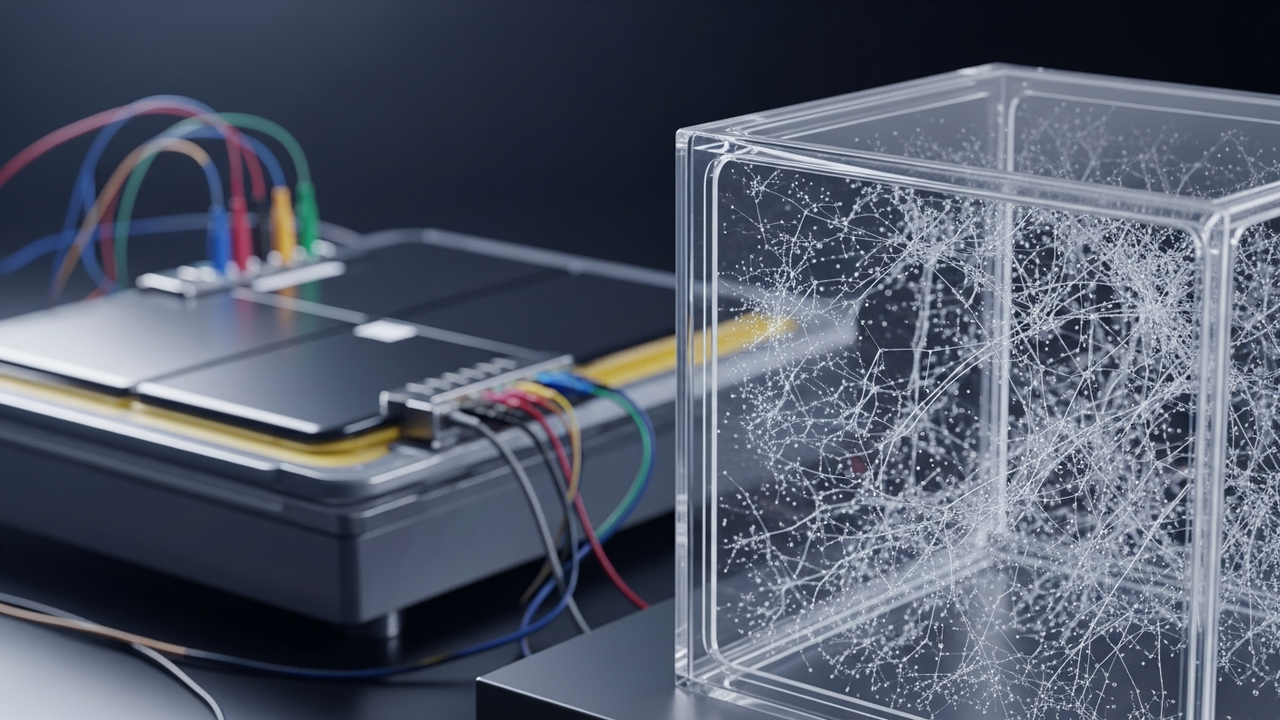
In a significant effort to overcome high interfacial resistance—a primary challenge hindering the practical application of all-solid-state batteries—innovative research has led to a breakthrough. This study reports the successful development of a novel solid-liquid growth method for directly growing a Na+ conducting solid electrolyte, specifically Na3O15Si6Y glass electrolyte, onto a sodium metal anode. This technique dramatically reduced the interfacial resistance to an exceptionally low value of approximately 6.2 Ω. This groundbreaking achievement marks a crucial step towards realizing safe and efficient room-temperature operating sodium-sulfur pouch cells, paving the way for a new class of energy storage systems.
Technical / Clinical Details
The developed solid-liquid growth method eliminates the need for high-temperature sintering or complex multi-layer structures, enabling the direct and uniform growth of the Na3O15Si6Y solid glass electrolyte on the sodium metal anode surface. This process optimizes the physical contact between the electrolyte and anode, thereby streamlining the ion transport pathways at the interface. Conventional processes often suffer from high resistance due to interfacial mismatch and side reactions between the solid electrolyte and electrode, severely degrading battery performance. The achieved ultra-low interfacial resistance of approximately 6.2 Ω is highly advantageous for improving the battery’s fast charge/discharge capability and overall energy efficiency. Sodium-sulfur batteries offer the benefit of not being constrained by lithium resources, and this reduction in interfacial resistance significantly advances their practical implementation.
Background & Context
Sodium-ion batteries are gaining considerable attention as a promising alternative to lithium-ion batteries for next-generation energy storage. Sodium is more abundant and cheaper than lithium, making it an attractive option for building sustainable energy storage systems. However, similar to lithium metal anodes, using sodium metal anodes has presented challenges with dendrite formation and interfacial stability with solid electrolytes. Achieving stable operation and high energy density at room temperature has been particularly difficult. This research addresses this long-standing issue by providing a fundamental solution for interfacial resistance, thereby opening new avenues for the commercialization of sodium-sulfur batteries.
Strategic Significance & Outlook
The achievement of low interfacial resistance through this direct growth method holds potential applications not only for sodium-sulfur pouch cells but also for other all-solid-state sodium-ion battery systems. Future work will focus on scaling up this technology for mass production, improving cost efficiency, and conducting comprehensive evaluations of long-term cycle stability and safety. Sodium-sulfur batteries, with their high theoretical energy density and use of inexpensive materials, have the potential to create a significant market in stationary energy storage and electric vehicle sectors. This breakthrough is expected to substantially contribute to reducing lithium dependency and fostering the development of more sustainable energy storage technologies on a global scale.
Get our weekly technology intelligence — free
Receive an infographic that lets you judge at a glance whether each field’s analysis report is worth reading.
Subscribe Free — Weekly Tech Intelligence
By subscribing, you’ll receive Troy-Technical’s weekly technology intelligence newsletter.
- Your email and selected fields are used only to deliver the newsletter.
- We never share your information with third parties.
- You can unsubscribe anytime via the link in each email.
See our Privacy Policy for details.
Takes about a minute · Unsubscribe anytime







Comments