Key Findings
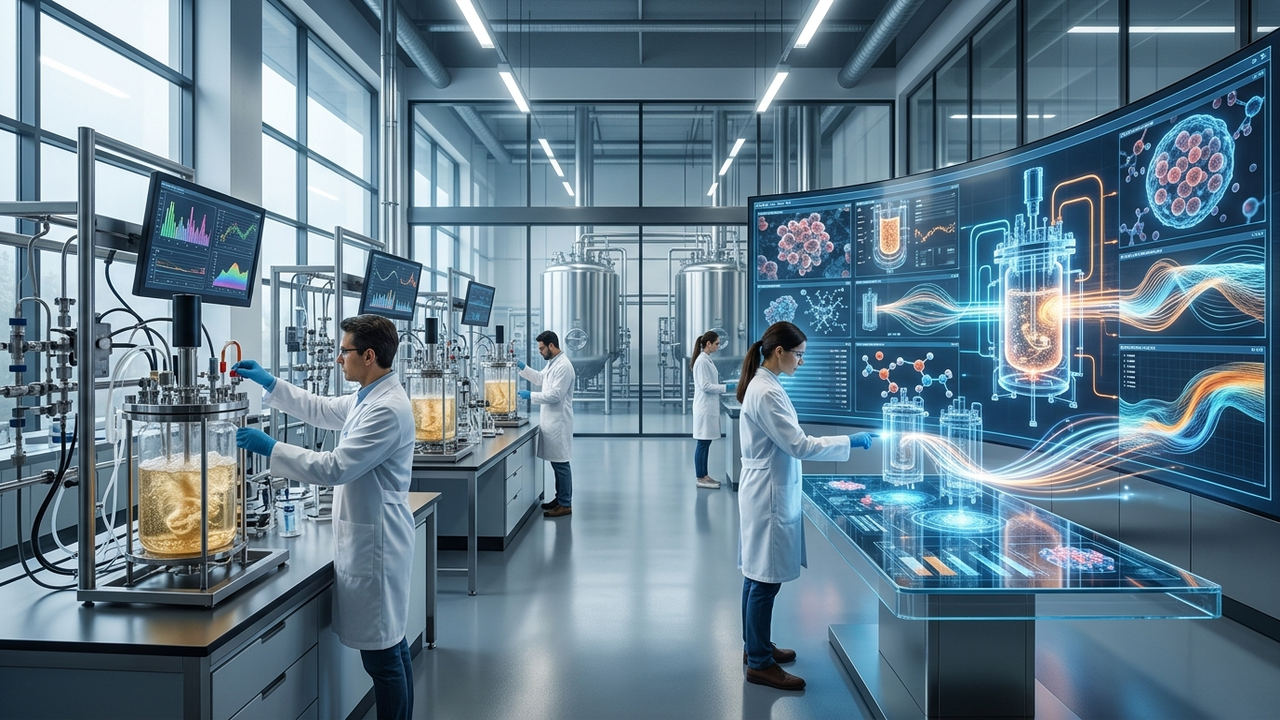
According to an analysis reported by Pharma’s Almanac, digital twin technology is emerging with a significant potential advantage over conventional physical or statistical models in bioprocess development scale-up. The primary benefit of digital twins lies in their ability to integrate process models with real-time manufacturing and experimental data, creating a dynamic virtual representation of the bioprocess. This allows for the exploration and optimization of complex, scale-dependent behaviors in a virtual environment before committing valuable physical resources.
Technical & Clinical Details
Scaling up biopharmaceutical manufacturing processes is a complex endeavor, often associated with high costs and failure rates. Traditional scale-up approaches frequently rely on heuristics, limited models, and trial-and-error, leading to time-consuming, expensive processes with inherent limitations in predictive accuracy. Digital twins offer the potential to fundamentally transform this challenge.
- Limitations of Traditional Scale-Up Models: Conventional models are typically based on small-scale experimental data, leading to uncertainties when applied to larger scales. It has been challenging to fully capture process interactions and non-linear behaviors, often resulting in unforeseen issues during large-scale manufacturing.
- Digital Twin Approach: A digital twin replicates a physical bioreactor or process in a digital space, integrating real-time data collected from sensors (e.g., pH, temperature, dissolved oxygen, cell density, metabolites). By combining this with physicochemical models, biochemical models, statistical models, and machine learning algorithms, the digital twin accurately reflects the current state of the process and predicts future behavior.
- Virtual Exploration and Optimization: Researchers and engineers can simulate different operating conditions and design changes on the digital twin, evaluating their impact. This allows for the identification of the most efficient and robust process conditions, significantly reducing the number of physical experiments. For example, the impact of changes in cell culture media composition on cell growth or protein yield can be predicted in advance, identifying potential bottlenecks.
- Real-Time Control and Adaptability: Digital twins also possess the capability to monitor processes in real-time and autonomously adjust control parameters based on predictive models. This enables rapid responses to process variations, ensuring consistent product quality.
Background & Industry Context
The biopharmaceutical industry faces relentless pressure to accelerate development timelines, reduce manufacturing costs, and enhance product quality. The advent of new modalities like cell and gene therapies further necessitates the development of more complex and individualized manufacturing processes, which traditional scale-up methods are struggling to accommodate. Digital twins are positioned as a core technology within ‘Bioprocessing 4.0,’ applying Industry 4.0 concepts to biomanufacturing.
Strategic Significance & Outlook
The maturation of digital twin technology is expected to shift decision-making in bioprocess development towards a data-driven approach, dramatically improving development efficiency and success rates. This will likely lead to faster and more reliable market introduction of new biopharmaceuticals, benefiting patients. For researchers, advanced simulation and predictive capabilities enable deeper process understanding and rapid hypothesis testing. For engineers, it means improved process robustness and control, and for investors, reduced development risk and enhanced market competitiveness. Ultimately, this technology is poised to become a crucial foundational element accelerating the realization of personalized medicine.
Get our weekly technology intelligence — free
Receive an infographic that lets you judge at a glance whether each field’s analysis report is worth reading.
Subscribe Free — Weekly Tech Intelligence
By subscribing, you’ll receive Troy-Technical’s weekly technology intelligence newsletter.
- Your email and selected fields are used only to deliver the newsletter.
- We never share your information with third parties.
- You can unsubscribe anytime via the link in each email.
See our Privacy Policy for details.
Takes about a minute · Unsubscribe anytime







Comments