Key Findings
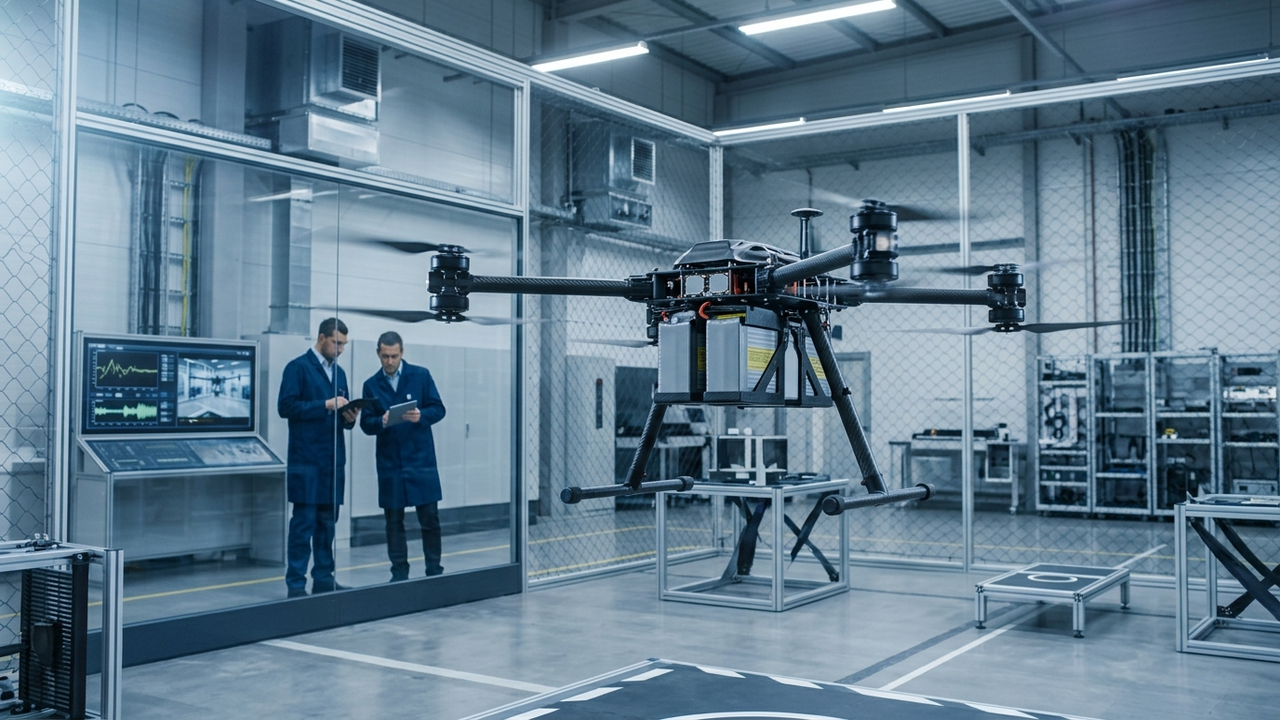
Gelion, an Australian advanced battery technology company, has announced that its developed lithium-sulfur (Li-S) battery cells have successfully passed rigorous drone flight tests conducted by QinetiQ, an independent defense science and technology evaluation organization. This achievement signifies that Gelion’s Li-S batteries have proven their theoretical advantages of high energy density and lightweight properties under actual operational conditions. This crucial validation will provide a powerful impetus for deploying the company’s Li-S batteries into the drone and other aviation application markets.
Technical / Clinical Details
Gelion’s Li-S batteries theoretically offer nearly double the energy density of conventional lithium-ion batteries, enabling significantly extended flight times and enhanced payload capacity for drones. QinetiQ’s testing verified that these cells function stably under the stringent vibration, temperature fluctuations, and power delivery requirements essential for aviation applications. Specifically, their ability to meet military and aerospace standards for safety and reliability was assessed, demonstrating the high performance of Li-S batteries even in harsh environments. Gelion’s technology utilizes a unique gel electrolyte and optimized sulfur cathode materials, which are reported to overcome the cycle life challenges (e.g., sulfur dissolution and shuttle effect) commonly associated with conventional Li-S batteries, achieving high durability.
Background & Context
The drone and unmanned aerial vehicle (UAV) market is expanding rapidly, driving demand for high-performance batteries that enable longer flight durations, greater payloads, and enhanced safety. Existing lithium-ion batteries are approaching their performance limits, leading to significant expectations for next-generation battery technologies, particularly Li-S batteries. Li-S batteries also hold the potential to reduce reliance on scarce resources like lithium and cobalt, which are critical for lithium-ion batteries, by utilizing abundant sulfur resources. Gelion’s success in passing tests by a reputable independent body like QinetiQ is a significant indicator of the maturity of Li-S technology and bolsters confidence in Li-S batteries across the industry.
Strategic Significance & Outlook
The successful drone testing of Gelion’s Li-S batteries represents a major advancement in energy storage technology for the aerospace and defense sectors. This validation will allow the company to accelerate partnerships with commercial customers and expand its supply to high-performance drones, long-range UAVs, and even next-generation aviation platforms such as electric vertical take-off and landing (eVTOL) aircraft. Going forward, Gelion is expected to focus on establishing mass production capabilities and further technological development for cost reduction. The widespread adoption of this technology has the potential to drive the electrification of the aviation industry and significantly contribute to the realization of sustainable and efficient air transport systems.
Source: https://pluang.com/en/news-feed/sel-sel-baterai-gelion-lolos-uji-drone-independen-di-qinetiq
Get our weekly technology intelligence — free
Receive an infographic that lets you judge at a glance whether each field’s analysis report is worth reading.
Subscribe Free — Weekly Tech Intelligence
By subscribing, you’ll receive Troy-Technical’s weekly technology intelligence newsletter.
- Your email and selected fields are used only to deliver the newsletter.
- We never share your information with third parties.
- You can unsubscribe anytime via the link in each email.
See our Privacy Policy for details.
Takes about a minute · Unsubscribe anytime






Comments