Key Findings
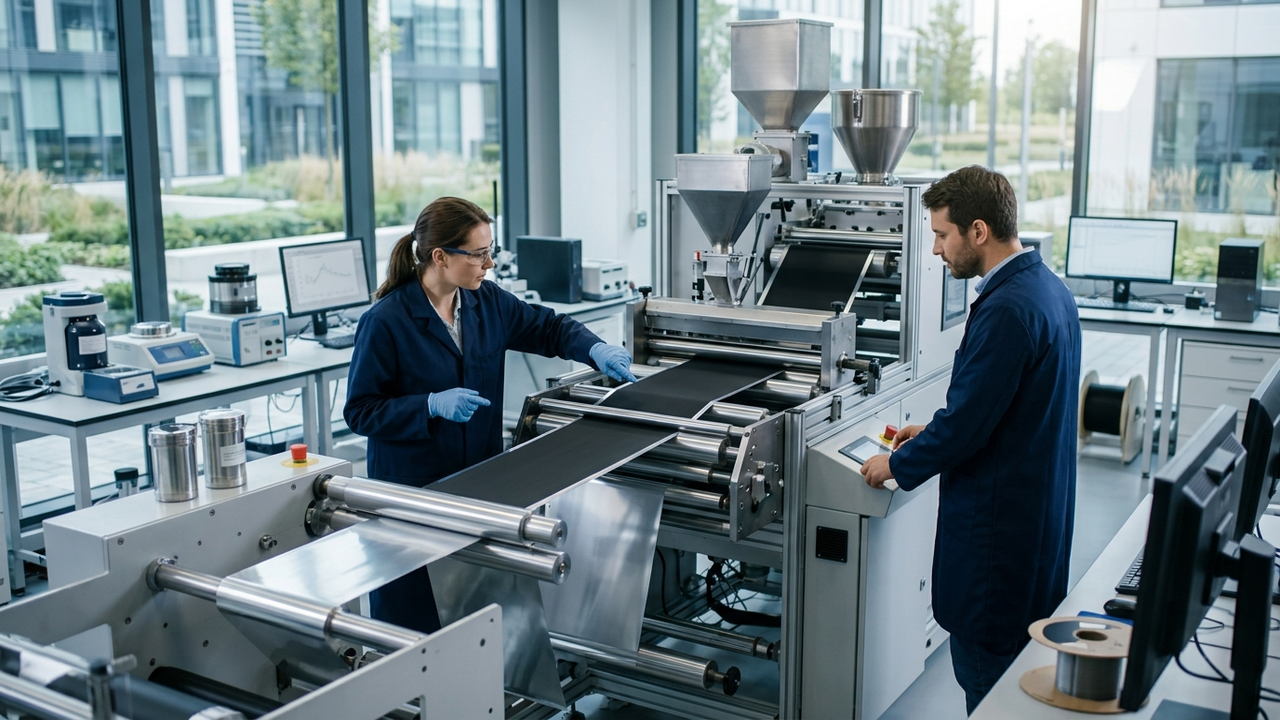
Molhill Inc. has developed groundbreaking PFAS (per- and polyfluoroalkyl substances)-free binder formulations, representing a significant technological advancement for reducing environmental impact and costs within the battery industry. These novel binders are applicable to both cathode and anode electrodes in lithium-ion batteries and hold the potential to drastically reduce or eliminate the use of conventional, toxic, and high-cost NMP (N-methyl-2-pyrrolidone) solvents. Crucially, they not only facilitate high-performance electrode coatings with inexpensive alternative solvents but also show immense promise for solvent-free dry electrode processes.
Technical / Clinical Details
Molhill Inc.’s PFAS-free binder formulations enable environmentally friendly manufacturing processes while maintaining the mechanical stability and electrochemical performance of battery electrodes. Traditionally, NMP has been the predominant solvent in battery electrode manufacturing; however, NMP is a volatile organic compound (VOC), requiring substantial costs and energy for its recovery and treatment. Molhill’s binders are designed to function with safer and more cost-effective solvents like water, thereby reducing manufacturing expenses and improving the working environment. Furthermore, the dry electrode process, by completely eliminating solvent use, could be a ‘game-changer,’ contributing to process simplification, reduction in energy consumption, and minimization of environmental impact.
Background & Context
As the electric vehicle (EV) market expands globally and demand for lithium-ion batteries surges, the sustainability and cost-efficiency of battery manufacturing have become urgent priorities. PFAS, known as ‘forever chemicals,’ are a growing environmental and health concern, leading to tightening regulations primarily in Europe and North America. Additionally, regulations regarding NMP solvent use are becoming stricter, driving a strong industry demand for PFAS-free and NMP-free solutions. Molhill Inc.’s development directly addresses these critical market and regulatory requirements, positioning it as a crucial factor in enhancing competitiveness across the battery supply chain.
Strategic Significance & Outlook
Molhill Inc.’s PFAS-free binders are poised to deliver substantial benefits to the battery manufacturing industry, specifically enabling the production of lower-environmental-impact, more sustainable batteries. If integrated with dry electrode processes, dramatic reductions in manufacturing costs and improvements in production efficiency are anticipated, potentially contributing to lower EV costs. Widespread adoption of this technology could free the battery industry from the risks of PFAS contamination and accelerate the transition towards a cleaner, more sustainable future. This positions Molhill Inc. to establish itself as a significant player in the battery materials market.
Source: https://www.molhillchemical.com/new-page-95-1
Get our weekly technology intelligence — free
Receive an infographic that lets you judge at a glance whether each field’s analysis report is worth reading.
Subscribe Free — Weekly Tech Intelligence
By subscribing, you’ll receive Troy-Technical’s weekly technology intelligence newsletter.
- Your email and selected fields are used only to deliver the newsletter.
- We never share your information with third parties.
- You can unsubscribe anytime via the link in each email.
See our Privacy Policy for details.
Takes about a minute · Unsubscribe anytime






Comments