
Key Findings
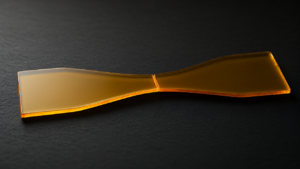
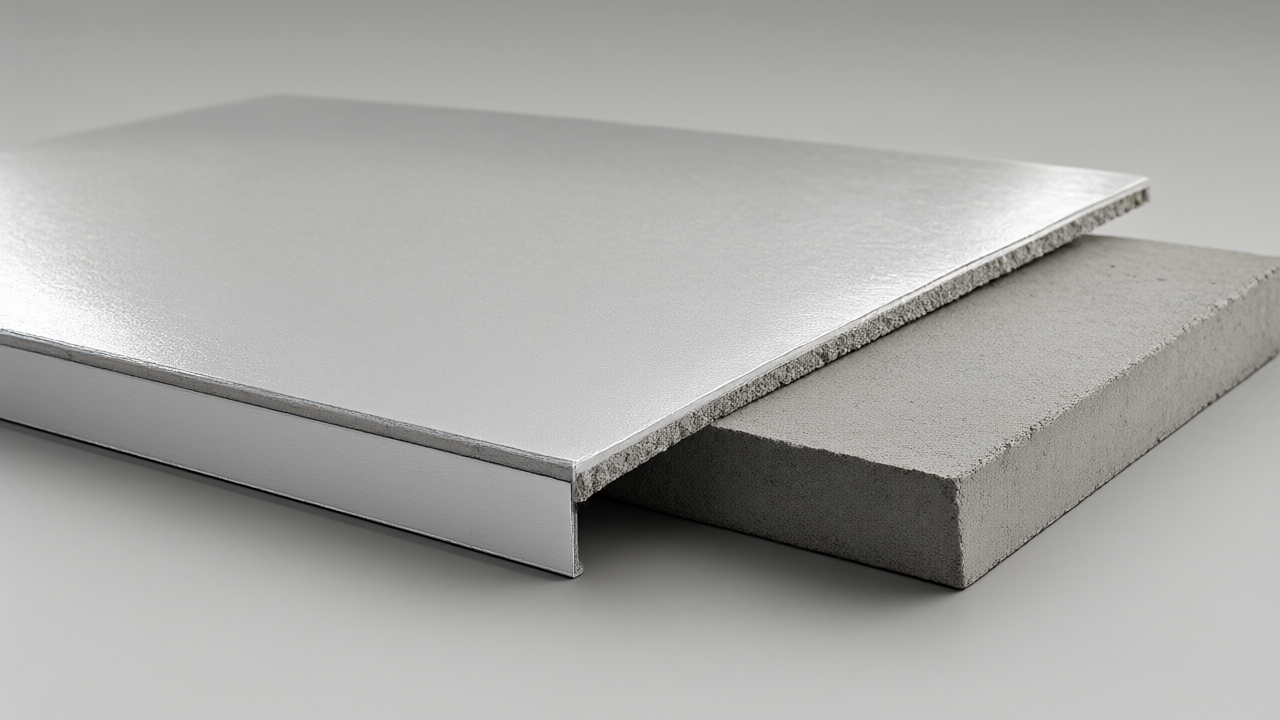
The TMPTA-based Michael addition-cured coating demonstrated a balanced property profile, featuring a tensile strength of 41.5 MPa, an elongation at break of 23.6%, and a glass transition temperature of 43.8 °C. On aluminium alloy panels, the system exhibited strong corrosion resistance, with $|Z|_{0.01\text{ Hz}}$ values of approximately $10^8\text{–}10^9\ \Omega\cdot\text{cm}^2$ after 48 hours of immersion in NaCl solution. Additionally, the coating provided effective cement-release performance and enhanced resistance to abrasion, solvents, and alkaline exposure.
Technical Details
The coating system utilizes a $\beta$-ketoester-functionalised Michael donor synthesised from E51 epoxy resin. This was achieved through sequential ring-opening with diethanolamine and acetoacetylation with ethyl acetoacetate, which maintains the mechanical strength of the epoxy backbone while allowing cross-linking under mild thermal conditions. The researchers compared three Michael acceptors with different molecular architectures to determine network performance:
- TMPTA (trimethylolpropane triacrylate): Delivered the most balanced mechanical and barrier properties.
- PETA (pentaerythritol triacrylate): Resulted in coatings that were excessively rigid and brittle with poor alkaline resistance.
- HDDA (1,6-hexanediol diacrylate): Produced under-crosslinked systems with compromised mechanical integrity and barrier performance.
Background & Context
Aluminium alloy formwork is valued in modern concrete construction for its low weight, recyclability, and dimensional accuracy. However, the amphoteric nature of aluminium makes it susceptible to the strongly alkaline pore solution of fresh concrete, which typically has a pH of 12.5–13.5. Existing protection methods have notable drawbacks: release agents are single-use, while powder coatings require shot-blasting and high-temperature curing (180 °C to 200 °C) and are prone to microcracking under mechanical stress. Other alternatives based on isocyanates or fluoropolymers present toxicity and regulatory challenges.
Significance & Outlook
The combination of the epoxy-derived $\beta$-ketoester donor and TMPTA cross-linker offers a high-solid, chemically resistant platform for easy-demoulding coatings. This system provides a more favourable environmental profile than fluoropolymer or isocyanate-based alternatives and requires less energy than powder coatings.
Get our weekly technology intelligence — free
Receive an infographic that lets you judge at a glance whether each field’s analysis report is worth reading.
Subscribe Free — Weekly Tech Intelligence
By subscribing, you’ll receive Troy-Technical’s weekly technology intelligence newsletter.
- Your email and selected fields are used only to deliver the newsletter.
- We never share your information with third parties.
- You can unsubscribe anytime via the link in each email.
See our Privacy Policy for details.
Takes about a minute · Unsubscribe anytime