Key Findings
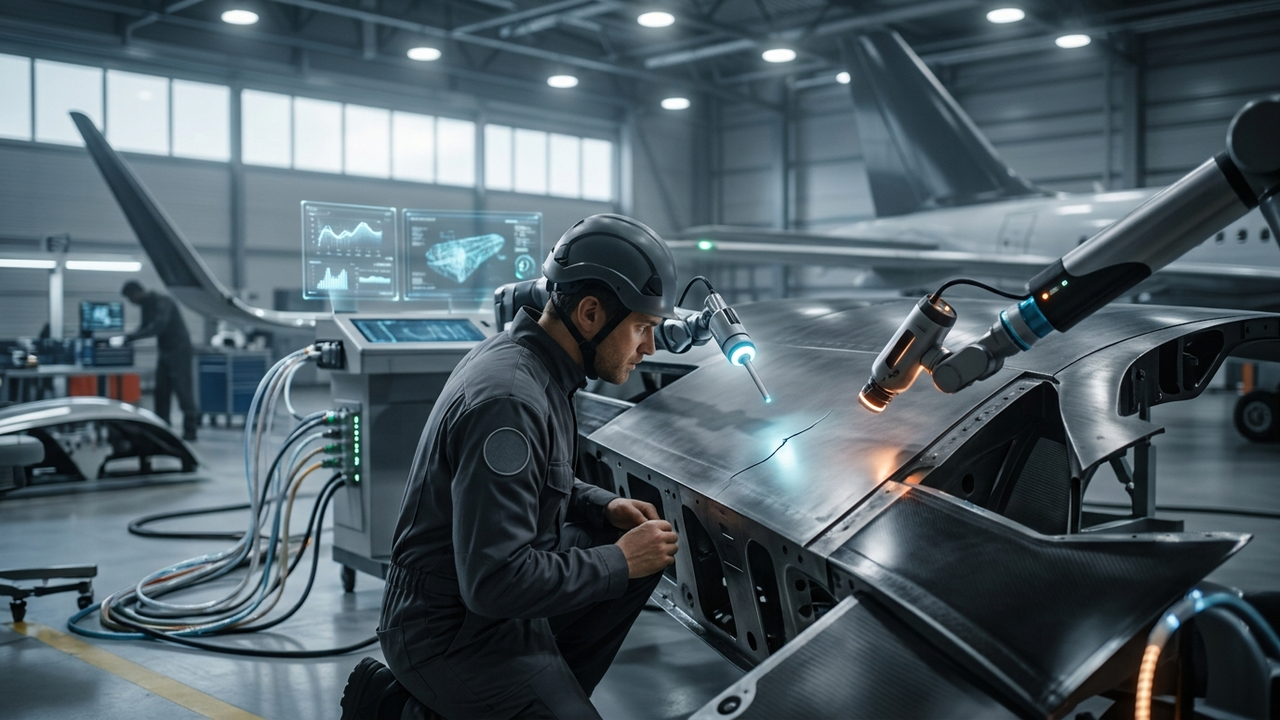
Marking a new milestone for the aerospace industry, a high-performance polymer coating capable of autonomously repairing minor damage has been developed. This advanced material activates its healing function in response to external stimuli such as UV light and heat, dramatically extending the fatigue life of aircraft fuselages and critical components, and consequently contributing to a significant reduction in operational maintenance costs.
Technical / Clinical Details
Self-healing polymer coatings typically function either by encapsulating healing agents within the material or by forming dynamic covalent bond networks. The system developed in this study utilizes a mechanism where healing agents within the polymer matrix migrate to damaged sites in response to environmental factors like UV radiation and heat. These agents then repair cracks and microscopic defects through polymerization or recombination reactions. This autonomous repair process allows for the maintenance of material integrity without human intervention, crucially preventing the propagation of micro-cracks that commonly occur in aerospace structural materials at an early stage. The published long-term demonstration data, acquired under actual flight conditions, indicates that this coating consistently exhibits its repair capabilities and suppresses fatigue crack growth, potentially extending component lifetimes by decades on average. This technology directly translates to extended safe operating periods for aircraft by enhancing the material’s self-diagnosis and self-healing capabilities.
Background & Context
Aircraft are constantly exposed to severe environments during flight, including high loads, temperature fluctuations, and UV radiation, making material fatigue and minor damage inevitable. Such damage progresses over time and can eventually lead to structural failure. Therefore, rigorous periodic inspections and maintenance are essential, constituting a significant portion of airlines’ operating costs. Self-healing materials have garnered attention in the aerospace industry as a next-generation technology with the potential to extend maintenance cycles and reduce the risk of unexpected failures. This research represents a major step towards the practical implementation of such technology in this field.
Strategic Significance & Outlook
This self-healing polymer coating offers a groundbreaking solution that simultaneously enhances aircraft safety and economic efficiency. Its adoption is anticipated across a wide range of aerospace applications, including commercial aircraft, defense, space probes, and drones. Reduced maintenance costs will contribute to improved profitability for airlines, while extended fatigue life will prolong the design life of aircraft, fostering a more sustainable air transport system. Moving forward, as suitability for large-scale manufacturing processes, applicability to different material substrates, and performance evaluations under even more diverse environmental conditions are advanced, this technology is set to become a critical component in shaping the future of the aerospace industry.
Source: #
Get our weekly technology intelligence — free
Receive an infographic that lets you judge at a glance whether each field’s analysis report is worth reading.
Subscribe Free — Weekly Tech Intelligence
By subscribing, you’ll receive Troy-Technical’s weekly technology intelligence newsletter.
- Your email and selected fields are used only to deliver the newsletter.
- We never share your information with third parties.
- You can unsubscribe anytime via the link in each email.
See our Privacy Policy for details.
Takes about a minute · Unsubscribe anytime


Comments