Key Findings
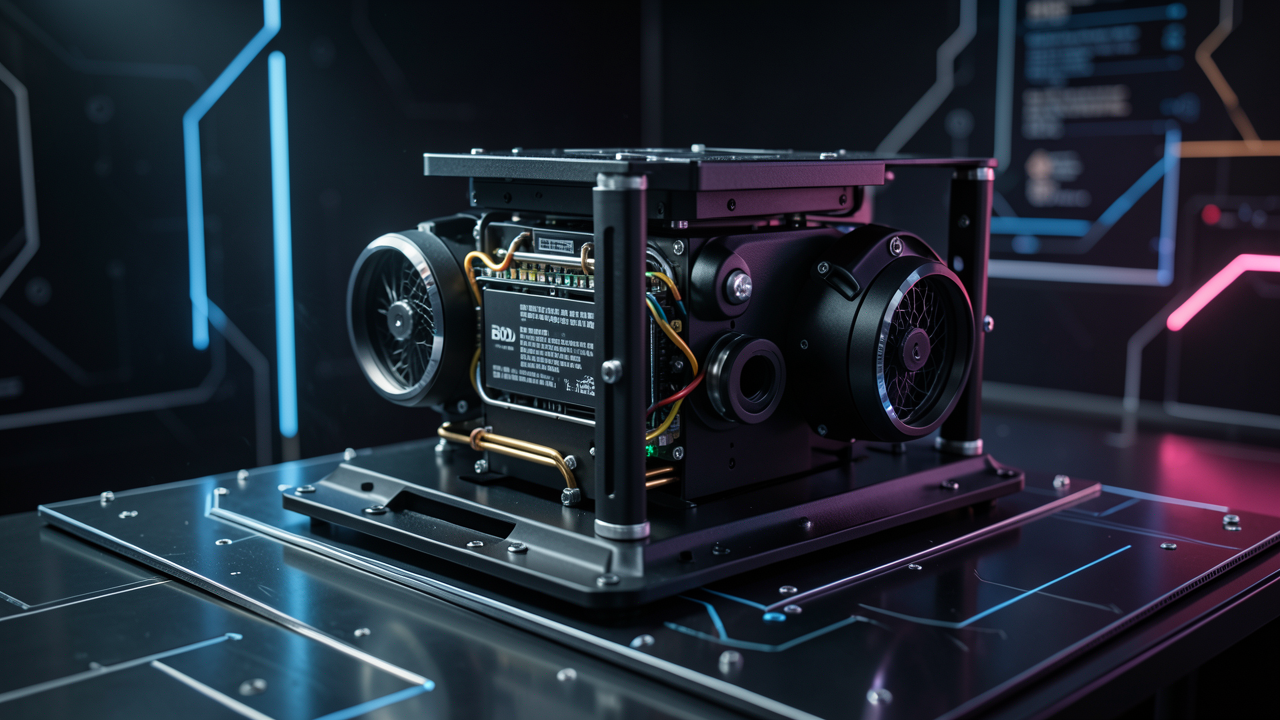
BYD’s autonomous driving system has been revealed to possess hardware capabilities ready for SAE Level 3 and Level 4 autonomy, integrating LiDAR, cameras, and infrared sensors into a single stack. This announcement, made by Stella Li of BYD, highlights the company’s advanced technological readiness despite current Chinese regulations limiting autonomous driving deployment to Level 2+. BYD emphasizes that its technology is already ahead of the curve, prepared for future regulatory easing.
Technical Details
BYD’s autonomous driving hardware is engineered with an advanced suite of sensors and an integrated architecture. The system comprises the following key components:
- LiDAR (Light Detection and Ranging): Generates precise 3D maps of the environment, providing high-accuracy distance measurements and object detection. This enables detailed perception of surroundings and accurate localization and obstacle avoidance in complex traffic conditions.
- Cameras: Provide rich visual information for recognizing traffic signs, signals, lanes, pedestrians, and other vehicles. Multiple cameras ensure a wide field of view and redundancy for enhanced safety.
- Infrared Sensors: Augment object detection capabilities in adverse conditions such as darkness and fog, supporting all-weather operation of the system.
- Single-Stack Integration: To efficiently process data from these diverse sensors, BYD has integrated them into a single hardware stack. This integration optimizes data synchronization and fusion between sensors, leading to a more robust and consistent environmental perception.
This advanced hardware foundation allows BYD’s system to offer sophisticated features such as:
- Automatic Parking: Enhances daily convenience by autonomously performing parking maneuvers even in complex parking scenarios.
- Autonomous Drift Mode for Track Driving: A specialized feature designed for performance in specific driving environments, demanding high control precision and safety.
Stella Li’s statement indicates that BYD has already incorporated these advanced hardware capabilities into its vehicles, positioning the company to await software advancements and regulatory relaxations for broader deployment.
Background & Context
China is a leading nation in the development and deployment of autonomous driving technology, though current regulations primarily focus on Level 2+ capabilities. This level allows for advanced driver-assistance on highways and partial automation under specific conditions. However, the fact that major automakers like BYD are already preparing Level 3 and Level 4 capable hardware signifies a strategic move to anticipate future regulatory easing and expanding market demand. Level 3 (Conditional Driving Automation) allows the system to perform all driving tasks under specific conditions, with the human driver expected to intervene when requested. Level 4 (High Driving Automation) allows the system to handle all driving tasks and unexpected events within a defined operational design domain (ODD) without human intervention.
Strategic Significance & Outlook
BYD’s early adoption of Level 3/4-ready hardware positions the company for significant competitive advantages in the future autonomous driving market. Once regulations catch up, BYD will be able to rapidly deploy advanced autonomous services. This could be a key differentiator in the technological race against competitors like Tesla and other major automakers. Future developments will focus on optimizing software and continuously improving AI models to fully leverage these hardware capabilities, providing safer and more comfortable autonomous driving experiences. Furthermore, the deployment of Level 3/4 autonomous driving services both within and outside China will contribute to smart city development and the transformation of transportation infrastructure globally.
Source: https://www.techjournal.uk/p/byds-self-driving-hardware-is-already
Get our weekly technology intelligence — free
Receive an infographic that lets you judge at a glance whether each field’s analysis report is worth reading.
Subscribe Free — Weekly Tech Intelligence
By subscribing, you’ll receive Troy-Technical’s weekly technology intelligence newsletter.
- Your email and selected fields are used only to deliver the newsletter.
- We never share your information with third parties.
- You can unsubscribe anytime via the link in each email.
See our Privacy Policy for details.
Takes about a minute · Unsubscribe anytime







Comments