
Key Findings
Toyota Motor Corporation has significantly advanced its hydrogen strategy for the heavy-duty transport sector, unveiling a 3rd-generation fuel cell system and announcing strategic partnerships with leading European truck manufacturers Scania and IVECO. This breakthrough system delivers double the power output, double the durability, and a 20% improvement in fuel efficiency compared to the previous generation, alongside substantial cost reductions. These advancements position hydrogen fuel cell trucks to achieve performance and operational costs competitive with diesel counterparts, thereby aggressively driving decarbonization in commercial logistics.
Technical Details
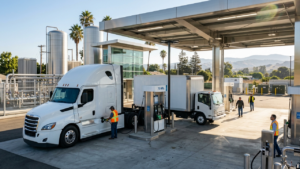
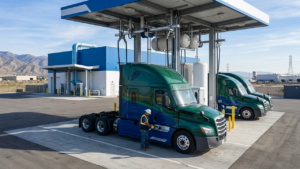
The 3rd-generation Toyota fuel cell system represents a leap in hydrogen powertrain technology. Key improvements include a more compact and highly efficient fuel cell stack, leading to increased power density per unit volume, which facilitates easier integration into heavy-duty vehicle chassis. Enhanced durability is crucial for the demanding operational cycles of commercial transport, promising reduced maintenance overheads. The 20% improvement in fuel efficiency directly translates to lower operational costs, boosting economic incentives for fleet operators. Toyota’s collaboration with Scania will see the deployment of this 3rd-generation system in 40 heavy-duty trucks, with validation trials underway. Concurrently, the partnership with IVECO focuses on developing new fuel cell electric trucks as part of the EU-funded EMPOWER project. These initiatives are concrete steps towards the commercialization and widespread adoption of hydrogen fuel cell technology in the heavy-duty sector.
Background & Context
The heavy-duty transport sector has long been considered one of the most challenging areas to decarbonize due to its high energy demands, long-haul requirements, and the limitations of battery-electric solutions regarding range, charging infrastructure, and payload capacity. Hydrogen fuel cells offer a promising alternative, addressing these challenges by providing rapid refueling and greater energy density. European regulations, such as those within the Alternative Fuels Infrastructure Regulation (AFIR) and broader targets under the Fit for 55 package, are actively promoting the development of hydrogen infrastructure and the adoption of fuel cell vehicles to meet ambitious greenhouse gas emission reduction goals. Toyota’s alliances with European OEMs are strategically aligned with these policy drivers, fostering technological cooperation to accelerate development and market penetration.
Strategic Significance & Outlook
The introduction of Toyota’s 3rd-generation fuel cell system and its alliances with major European truck manufacturers are poised to significantly accelerate the adoption of hydrogen fuel cells in heavy-duty transport. As performance improves and costs decrease, more fleet operators are expected to consider hydrogen trucks, which will in turn stimulate the expansion of hydrogen refueling networks. This technological progression also opens avenues for diverse applications beyond long-haul trucking, including construction vehicles and buses. Ultimately, these developments represent a critical milestone towards building a sustainable global mobility landscape, underpinning the realization of a comprehensive hydrogen economy.
Source: https://newsroom.toyota.eu/toyota-expands-hydrogen-fuel-cell-technology-for-heavy-duty-transport/
Get our weekly technology intelligence — free
Receive an infographic that lets you judge at a glance whether each field’s analysis report is worth reading.
Subscribe Free — Weekly Tech Intelligence
By subscribing, you’ll receive Troy-Technical’s weekly technology intelligence newsletter.
- Your email and selected fields are used only to deliver the newsletter.
- We never share your information with third parties.
- You can unsubscribe anytime via the link in each email.
See our Privacy Policy for details.
Takes about a minute · Unsubscribe anytime





Comments