

Key Findings
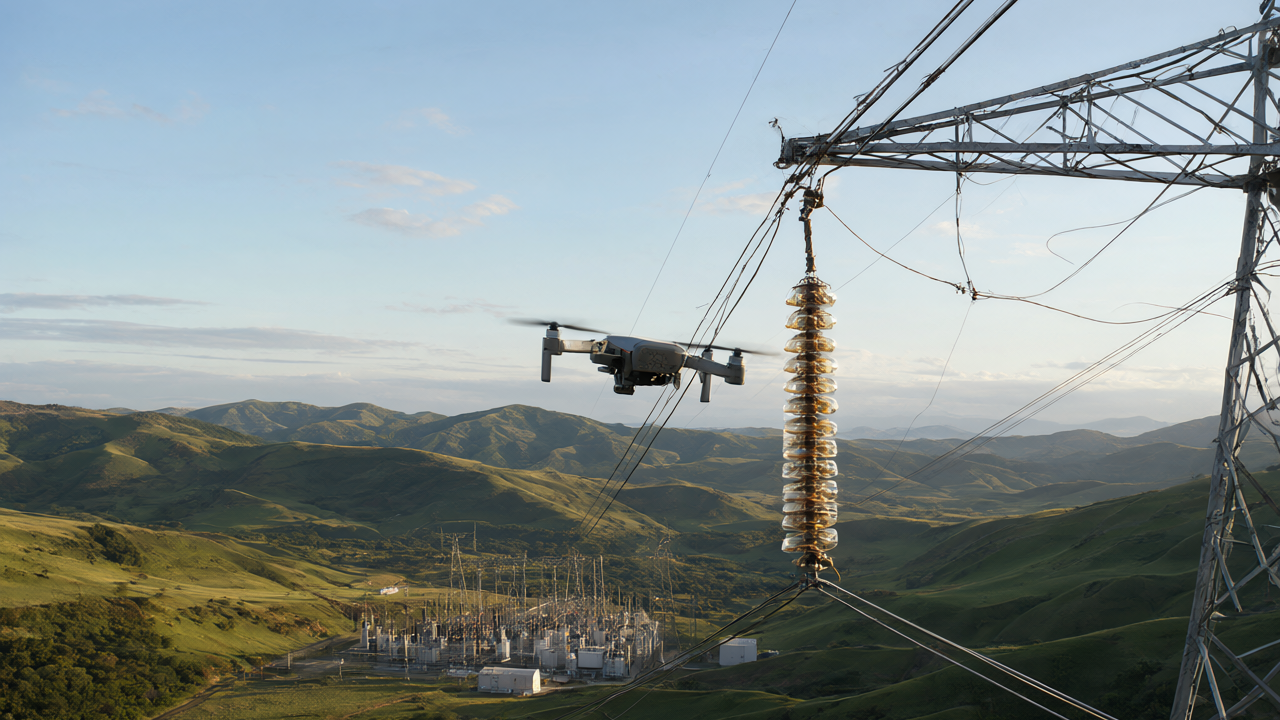
The U.S. Federal Aviation Administration (FAA) has proposed new Part 108 BVLOS (Beyond Visual Line of Sight) rules, which aim to designate airspace within 50 feet of power lines and substations as “shielded areas.” This groundbreaking framework is set to drastically increase the efficiency of AI-powered drone inspections for critical power infrastructure. The regulatory change is expected to normalize drone-based power line and substation maintenance, offering a significant improvement in cost-effectiveness and safety compared to existing inspection methods.
Technical & Clinical Details
- The proposed FAA Part 108 BVLOS rule defines specific airspace around power infrastructure as “shielded areas” when granted owner permission, thereby relaxing stringent BVLOS flight regulations for these contexts. This proposal was issued as a Notice of Proposed Rulemaking (NPRM) on August 7, 2025, with the final rule still pending as of late September 2026.
- Upon implementation, this new regulation will enable AI-integrated drone systems to conduct autonomous and extensive patrols and inspections of power lines and substations. AI will automatically detect anomalies from collected images and sensor data, identifying subtle defects that might be missed by human visual inspection.
- Drones are equipped with various sensors, including high-resolution cameras, thermal imaging devices, and LiDAR, allowing access to high-altitude and hazardous areas. This significantly enhances worker safety and is projected to reduce inspection time and costs compared to traditional methods.
Background & Context
Current power infrastructure inspections often rely on helicopters, ground-based visual checks, or manned aircraft, which are associated with high costs and significant risks to human life. BVLOS flight restrictions have been a major barrier to fully realizing the potential of drones. The FAA’s proposal specifically targets “corridor operations” like power line inspections to overcome this obstacle. AI drones are poised to surpass traditional methods not only in operational efficiency but also in data consistency and analytical accuracy.
Strategic Significance & Outlook
Once finalized, the rule will enable utility companies to rapidly deploy drone-based inspection programs, strengthening maintenance capabilities across vast infrastructure networks. This will lead to early detection and prevention of transmission losses and failures, contributing to a more stable power supply for the public. In the future, as drone data collection and AI learning capabilities advance, more diverse applications are anticipated, including predictive maintenance and rapid damage assessment during disaster events.
Source: https://dronehub.ai/blog/ai-power-line-substation-inspection-compared
Get our weekly technology intelligence — free
Receive an infographic that lets you judge at a glance whether each field’s analysis report is worth reading.
Subscribe Free — Weekly Tech Intelligence
By subscribing, you’ll receive Troy-Technical’s weekly technology intelligence newsletter.
- Your email and selected fields are used only to deliver the newsletter.
- We never share your information with third parties.
- You can unsubscribe anytime via the link in each email.
See our Privacy Policy for details.
Takes about a minute · Unsubscribe anytime