
Key Findings
MIT researchers have successfully demonstrated the in vivo reprogramming of NK cells to target dysfunctional T cells, which are drivers of lymphoma and autoimmune hepatitis. In animal trials, the team found they could reprogram approximately 80 percent of targeted NK cells. In a mouse model of aggressive melanoma, three out of five mice receiving the LNPs entered complete remission. Additionally, T cell lymphoma was eradicated in humanized mouse models after five injections of the reprogramming LNPs, showing results similar to conventional ex vivo CAR NK cell therapy.
Technical Details
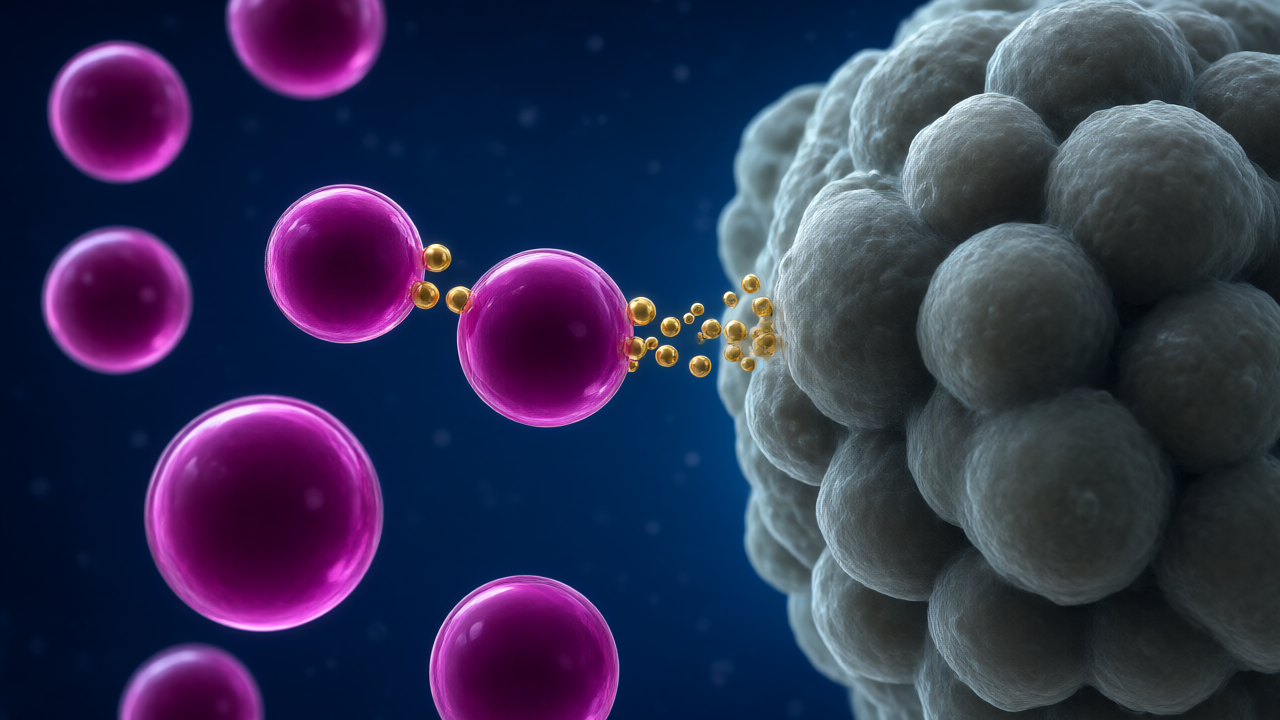
The system utilizes lipid nanoparticles (LNPs) to deliver messenger RNA (mRNA) directly to NK cells within the patient’s body. The process involves several specific components:
- mRNA Payload: Encodes chimeric antigen receptors (CAR) that allow NK cells to detect specific proteins, such as CD19 (found on B cells) or CD3 (found on autoreactive T cells).
- Targeting Mechanism: The LNPs are coated with antibody fragments that bind to receptors on the surface of NK cells to ensure precise delivery.
- Mechanism of Action: Once the mRNA is delivered, the NK cells express the CAR protein, enabling them to seek and destroy the target dysfunctional T cells.
Background & Context
While the FDA has approved seven CAR T cell treatments for blood cancers, these require a complex process of isolating cells, engineering them in a lab, and re-infusing them. CAR NK cells offer a distinct advantage over CAR T cells when treating T cell malignancies; because NK cells are used, the therapy avoids the risk of engineered cells killing each other, a common failure point in CAR T cell treatments for T cell diseases.
Significance & Outlook
The primary obstacle to CAR NK therapy has been the significant manufacturing challenges and expenses of ex vivo production. By shifting the reprogramming process to occur in vivo, this MIT approach dramatically simplifies the clinical process and reduces costs. While no CAR NK cell therapies are currently FDA-approved, this method provides a scalable pathway for treating both cancer and autoimmune disorders.
Source: https://news.mit.edu/2026/reprogrammed-nk-immune-cells-target-cancer-and-autoimmune-disorders-1013
Get our weekly technology intelligence — free
Receive an infographic that lets you judge at a glance whether each field’s analysis report is worth reading.
Subscribe Free — Weekly Tech Intelligence
By subscribing, you’ll receive Troy-Technical’s weekly technology intelligence newsletter.
- Your email and selected fields are used only to deliver the newsletter.
- We never share your information with third parties.
- You can unsubscribe anytime via the link in each email.
See our Privacy Policy for details.
Takes about a minute · Unsubscribe anytime