Key Findings
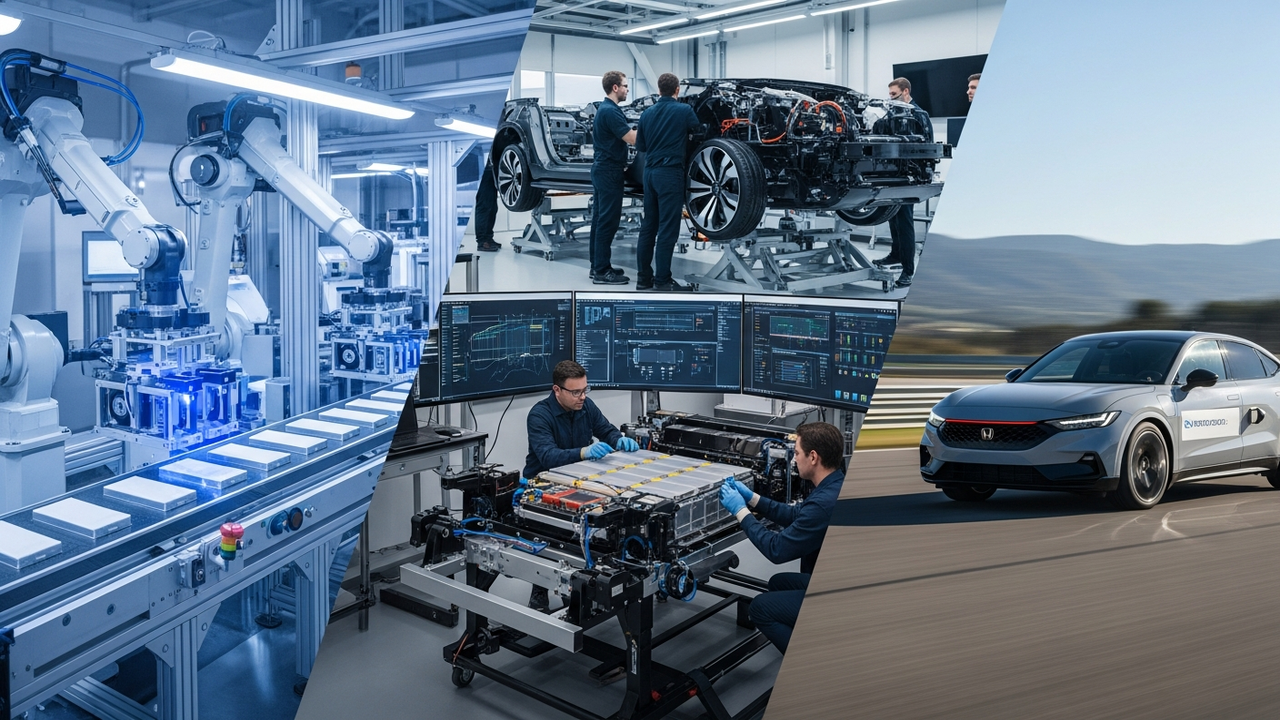
The progression of solid-state battery technology in 2026 has unequivocally shifted from the phase of fundamental research breakthroughs to a more practical and manufacturing-oriented stage. The industry-wide focus is no longer confined to laboratory-scale proof-of-concepts; instead, it has moved towards establishing pilot production lines, integrating into specific automotive development programs, executing real-world vehicle testing, establishing scalable production technologies for solid electrolyte materials, and defining new battery module and pack design requirements. Symbolizing this acceleration towards practical implementation, QuantumScape and Honda announced a joint development agreement on June 18, 2026, enhancing their collaborative efforts to further advance the solid-state lithium-metal battery platform and its associated manufacturing processes.
Technical / Clinical Details
Mass production of solid-state batteries requires not only fundamental material science but also advanced engineering and manufacturing techniques. In pilot production lines, processes such as solid electrolyte sheet formation, lamination with electrodes, and cell sealing are validated in a practical environment. Integration into automotive development programs involves optimizing battery pack thermal management, crash safety, and vehicle communication systems. Real-world vehicle testing is indispensable for evaluating performance, durability, and safety under actual driving conditions. Scalable production technology for electrolytes is key to cost reduction and supply stability. The QuantumScape-Honda partnership specifically aims to collaboratively resolve challenges of solid-state batteries (dendrite formation, interfacial resistance), especially those using lithium metal anodes, and to streamline production processes. This cooperation is setting a concrete roadmap for the mass production of batteries with high energy density and safety.
Background & Context
All-solid-state batteries have been anticipated as a next-generation technology to replace existing lithium-ion batteries by extending EV driving range, shortening charging times, and reducing the risk of thermal runaway. While results have long been predominantly at the laboratory level, recent advancements in material development and manufacturing technology have heightened expectations for commercialization. Strategic partnerships between automakers and battery development companies are indispensable for accelerating the practical application of the technology. The collaboration of a major automaker like Honda with an advanced battery technology company like QuantumScape is evidence that solid-state batteries are recognized as a core technology for the future of EVs, potentially significantly altering the competitive landscape of the EV market.
Strategic Significance & Outlook
The transition of solid-state battery technology to pilot production, real-world vehicle testing, and scalable electrolyte production clearly indicates that its commercialization is imminent. The QuantumScape-Honda partnership will be a significant driving force, particularly for the mass production of high-performance lithium metal-based solid-state batteries. Moving forward, these efforts are expected to lead to reductions in manufacturing costs, improvements in production efficiency, and the establishment of reliable battery pack designs. Consequently, EVs equipped with solid-state batteries will genuinely enter the market, offering new choices to consumers and making substantial contributions to the realization of a sustainable mobility society. Automakers and battery suppliers worldwide are accelerating their development efforts to avoid being left behind in this wave of technological innovation.
Source: https://xwellcn.com/battery-news/solid-state-battery-progress-2026-battery-pack-assembly/
Get our weekly technology intelligence — free
Receive an infographic that lets you judge at a glance whether each field’s analysis report is worth reading.
Subscribe Free — Weekly Tech Intelligence
By subscribing, you’ll receive Troy-Technical’s weekly technology intelligence newsletter.
- Your email and selected fields are used only to deliver the newsletter.
- We never share your information with third parties.
- You can unsubscribe anytime via the link in each email.
See our Privacy Policy for details.
Takes about a minute · Unsubscribe anytime








Comments