Key Findings
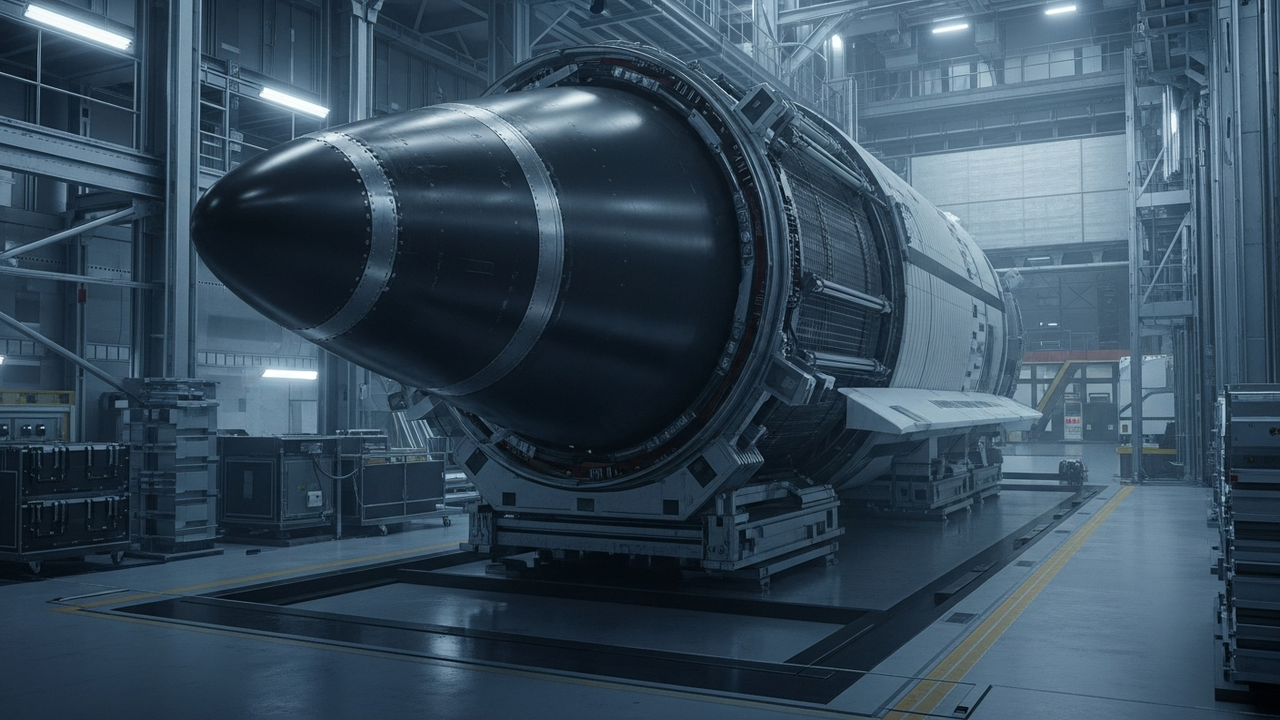
A novel lightweight composite material, specifically engineered for the structural components of reusable launch vehicles, has shown remarkable performance, significantly outperforming existing materials in critical metrics. The material exhibits superior high-cycle fatigue resistance, crucial for enduring repeated launches and atmospheric re-entries, surpassing traditional titanium alloys and nickel-based superalloys. Furthermore, it maintains structural integrity and stable mechanical properties in extreme high-temperature environments, specifically around 1500°C, typical of rocket engine sections and aerodynamically heated surfaces. This advancement suggests a potential reduction in the frequency of rocket component replacements, directly contributing to lower operational costs.
Technical Details
This innovative composite is fabricated from a unique combination of ceramic fibers embedded within a high-temperature resistant polymer matrix, utilizing specialized lay-up and sintering processes. This synergistic composition enhances specific strength and stiffness, potentially reducing mass by over 20% compared to conventional metallic materials. Testing involved thermomechanical fatigue machines simulating thousands of thermal and stress cycles akin to actual reusable rocket flight profiles. The material demonstrated over 1.3 times the endurance of existing materials before failure, exhibiting delayed crack initiation and suppressed crack propagation rates. High-temperature tensile tests at 1500°C revealed superior yield and tensile strengths compared to current high-performance alloys, alongside a notable reduction in thermal expansion coefficient.
Background & Context
The global shift towards reusable rockets is a primary driver for dramatically reducing launch costs and increasing accessibility to space. However, reusability demands materials that can withstand extreme thermal, pressure, vibration, and fatigue loads. Current materials often necessitate extensive inspections and replacements after only a few to dozens of reuses, creating a bottleneck in cost reduction efforts. The composite developed in this research offers a fundamental technological solution to these operational challenges, paving the way for more economically viable and frequent space access.
Strategic Significance & Outlook
This novel composite material holds promise for diverse high-load applications in reusable launch vehicles, including nozzles, turbopump components, airframe structures, and thermal protection systems. Future efforts will focus on evaluating the material’s long-term reliability in the actual space environment and assessing cost-effectiveness associated with manufacturing scale-up. With space qualification tests anticipated within a few years, the material could be integrated into next-generation reusable rockets by the 2030s, potentially revolutionizing the sustainability and economics of space transportation.
Source: #
Get our weekly technology intelligence — free
Receive an infographic that lets you judge at a glance whether each field’s analysis report is worth reading.
Subscribe Free — Weekly Tech Intelligence
By subscribing, you’ll receive Troy-Technical’s weekly technology intelligence newsletter.
- Your email and selected fields are used only to deliver the newsletter.
- We never share your information with third parties.
- You can unsubscribe anytime via the link in each email.
See our Privacy Policy for details.
Takes about a minute · Unsubscribe anytime







Comments