Key Findings
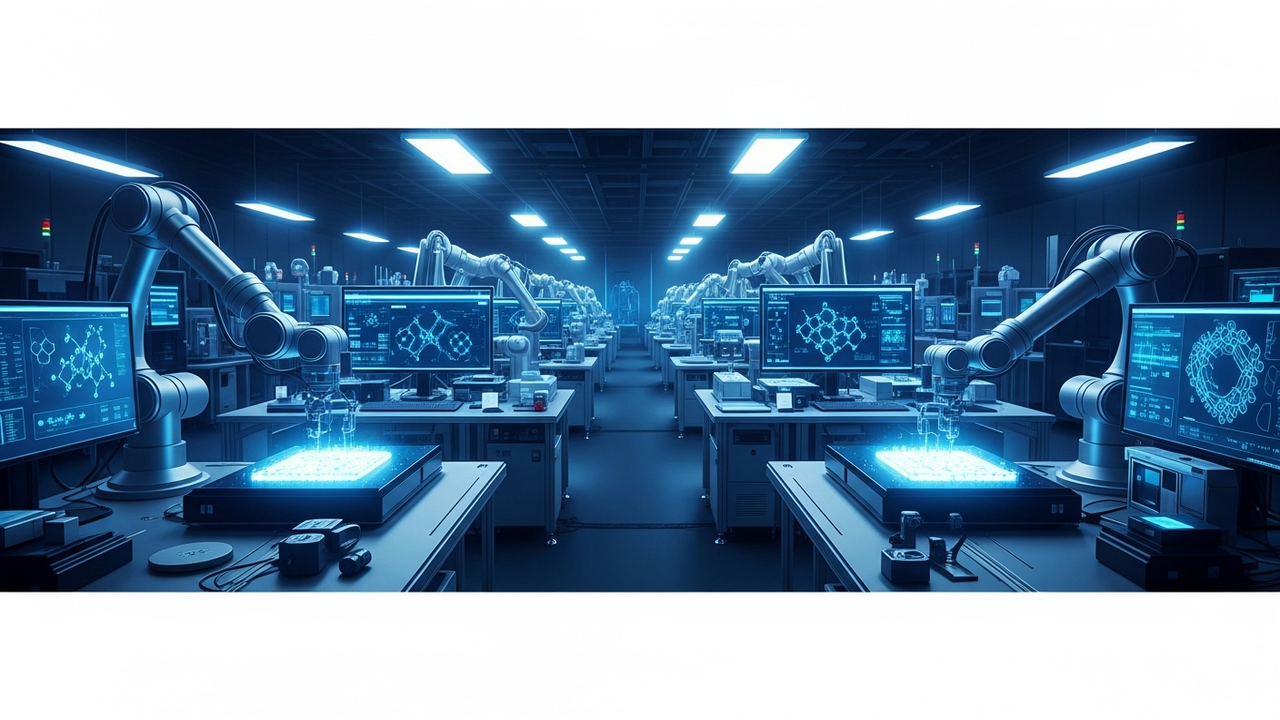
The Dutch Institute for Fundamental Energy Research (DIFFER) has established ‘Self-Driving Labs’ (SDLs) to dramatically accelerate materials discovery in the field of energy conversion and storage. These SDLs aim to reduce traditional materials research and development cycles by up to 60% by integrating automated processes, high-throughput technologies, advanced data analytics, and artificial intelligence (AI). While initially focused on electrochemical energy conversion, plans are in place to extend their application to other chemical reactions and a broader range of material classes, potentially transforming the efficiency of scientific discovery.
Technical / Clinical Details
DIFFER’s Self-Driving Labs comprise several key components. Firstly, automated material synthesis modules generate diverse material compositions in a high-throughput manner, enhancing experimental reproducibility and efficiency. Secondly, integrated characterization and screening systems rapidly measure physical, chemical, and electrochemical properties. The vast amount of generated data is then fed in real-time to data interpretation modules, analyzed using machine learning algorithms. This AI system autonomously proposes and plans optimal experimental conditions and material compositions for subsequent experiments. For instance, when exploring the activity of a specific catalyst material, AI efficiently navigates the most promising compositional space based on historical data and physical models, minimizing the number of experimental iterations. This significantly reduces human intervention time, allowing researchers to focus their expertise on more complex problem-solving.
Background & Context
The discovery and development of new materials are key to driving innovation across many sectors, including energy, healthcare, and electronics. However, traditional materials research has relied on time-consuming and costly trial-and-error processes, with the pace failing to meet the demand for innovation. Recent advancements in artificial intelligence and automation technologies are profoundly changing the R&D paradigm in materials science. Approaches like SDLs aim to accelerate the discovery of groundbreaking materials by efficiently exploring complex material system design spaces and conducting experiments based on predictions. This is particularly significant in a modern society that urgently requires sustainable energy solutions.
Strategic Significance & Outlook
DIFFER’s SDLs have the potential to redefine the efficiency of materials discovery in the energy science sector. Initial successes in electrochemical energy conversion (e.g., fuel cells, electrolyzers, battery materials) suggest that this platform can be readily extended to other chemical reaction systems (e.g., catalytic reactions, photocatalytic reactions) and new material classes (e.g., thermoelectric materials, quantum materials). In the future, a network of SDLs could collaborate internationally, becoming part of a global materials discovery ecosystem, thereby providing solutions to global challenges like climate change and energy security more rapidly. This would lead to reduced R&D costs and accelerated market entry of new technologies.
Source: https://www.differ.nl/vacancies/1322327
Get our weekly technology intelligence — free
Receive an infographic that lets you judge at a glance whether each field’s analysis report is worth reading.
Subscribe Free — Weekly Tech Intelligence
By subscribing, you’ll receive Troy-Technical’s weekly technology intelligence newsletter.
- Your email and selected fields are used only to deliver the newsletter.
- We never share your information with third parties.
- You can unsubscribe anytime via the link in each email.
See our Privacy Policy for details.
Takes about a minute · Unsubscribe anytime




Comments