Key Findings
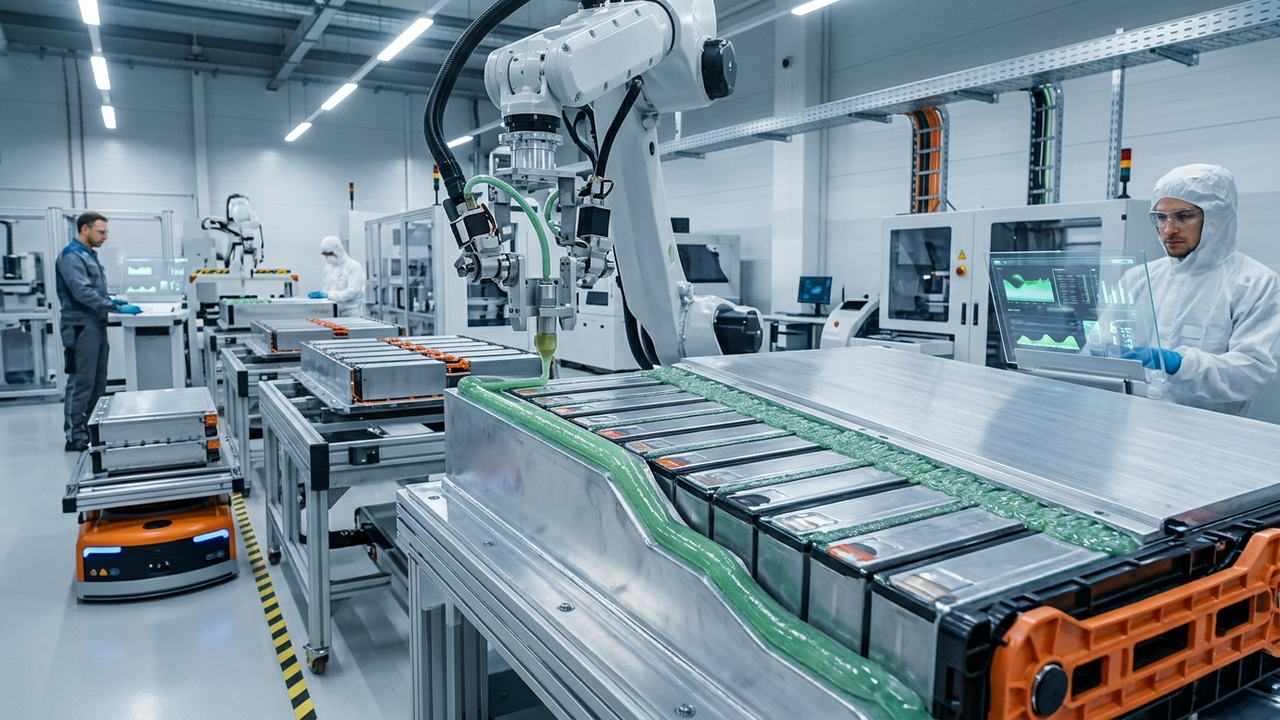
Master Bond has introduced two innovative epoxy products, EP37-3FLF and EP5TC-80, designed to significantly boost the performance and reliability of electric vehicle (EV) battery assemblies. These adhesives are specifically engineered to withstand the harsh thermal cycling and mechanical stresses encountered in EV battery packs, contributing to extended battery life and enhanced safety.
Technical Details
EP37-3FLF is a two-component epoxy adhesive characterized by its high flexibility, low viscosity, and optical clarity. Its exceptional resistance to thermal cycling effectively mitigates stress caused by the expansion and contraction of battery cells. This property significantly reduces the risk of delamination and cracking, ensuring long-term reliability. Conversely, EP5TC-80 is a one-component, thermally conductive epoxy that provides superior heat dissipation capabilities. It efficiently transfers heat generated within the battery to external cooling systems, preventing hot spots and minimizing the risk of overheating, performance degradation, and failure. EP5TC-80 also offers excellent bonding strength at high temperatures, making it suitable for demanding operating environments. Both products are crucial for maintaining the integrity and thermal regulation of complex battery module designs.
Background & Context
The rapid expansion of the EV market has led to escalating demands for improved battery performance, safety, and durability. For lithium-ion batteries, their high energy density makes thermal management exceptionally critical. Adhesives play multifaceted roles beyond mere cell and module fixation, including ensuring thermal conduction paths, protecting against vibration and shock, and providing electrical insulation. Master Bond’s new products directly address these challenges, offering vital material solutions for battery manufacturers seeking to develop higher-performance and safer EV batteries.
Strategic Significance & Outlook
The introduction of these advanced adhesives will increase design flexibility for EV batteries and contribute to more efficient manufacturing processes. By providing superior thermal management and structural integrity, these innovations also translate into tangible consumer benefits, such as extended EV range and faster charging times. Future developments are expected to focus on adhesives capable of enduring even more extreme conditions and high-speed curing adhesives compatible with automated production lines. Master Bond’s technology forms a foundational support for the continued advancement of the EV industry.
Source: https://www.masterbond.com/properties/adhesives-for-electric-vehicle-battery-assembly
Get our weekly technology intelligence — free
Receive an infographic that lets you judge at a glance whether each field’s analysis report is worth reading.
Subscribe Free — Weekly Tech Intelligence
By subscribing, you’ll receive Troy-Technical’s weekly technology intelligence newsletter.
- Your email and selected fields are used only to deliver the newsletter.
- We never share your information with third parties.
- You can unsubscribe anytime via the link in each email.
See our Privacy Policy for details.
Takes about a minute · Unsubscribe anytime




Comments