Key Findings
The U.S. Department of Energy (DoE) announced a new grant program totaling $500 million in late August 2026, targeting a wide range of battery materials, manufacturing, and recycling initiatives. This substantial funding aims to strengthen the domestic supply chain for next-generation energy storage technologies and enhance energy independence and economic security within the United States.
Technical / Clinical Details
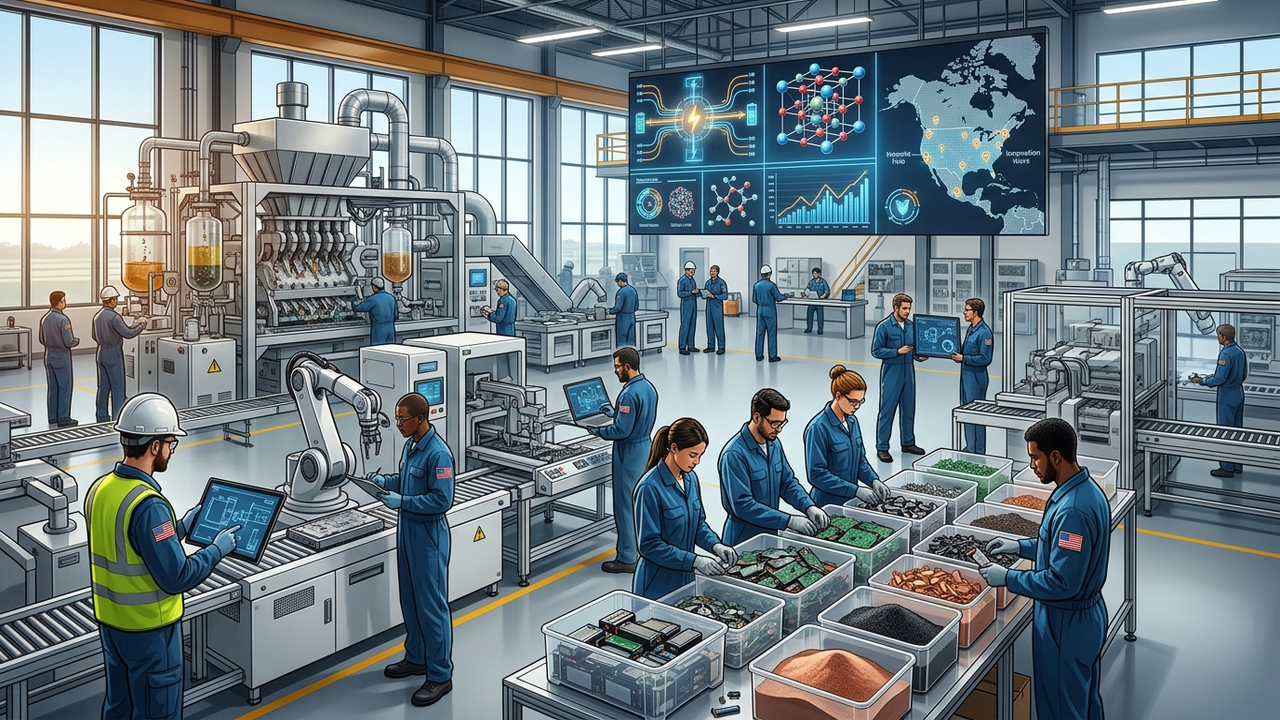
The grants are strategically focused on several core areas critical to battery technology. These include the development of next-generation anode materials to boost energy density and lifespan, advancements in direct lithium extraction (DLE) technologies to improve lithium recovery efficiency while reducing environmental impact, bolstering domestic cobalt production capacity to diversify supply chains, creating novel electrolytes for enhanced battery performance and safety, and innovating recycling processes to maximize the recovery of critical minerals from end-of-life batteries. These areas are pivotal in determining battery performance, cost, and sustainability, forming an indispensable technological foundation for U.S. competitiveness.
Background & Context
This $500 million allocation represents the third tranche of funding under the DoE’s broader ‘Battery Manufacturing and Recycling’ and ‘Battery Materials Processing’ programs, each endowed with $3 billion. These programs are integral to a national strategy designed to establish U.S. leadership in battery technology and its associated supply chains. With global demand for electric vehicles (EVs) and stationary energy storage systems (ESS) surging, the supply of critical minerals like lithium, cobalt, and nickel is susceptible to geopolitical risks, and processing capabilities are heavily concentrated in specific countries. The U.S. government seeks to mitigate these dependencies by increasing domestic production capacity and technological prowess, thereby facilitating a stable clean energy economy.
Strategic Significance & Outlook
This $500 million grant will serve as a powerful incentive, accelerating research, development, and commercialization across a broad spectrum of U.S. players, from startups to major research institutions. Investments in innovative technologies such as DLE and next-generation anodes are particularly crucial, directly impacting battery performance breakthroughs and cost reductions, which will dictate future market competitiveness. Moreover, strengthening domestic recycling capabilities will significantly contribute to stabilizing critical mineral supply and reducing environmental impact, thereby supporting a sustainable energy transition. These efforts are foundational for the U.S. to assume a leading role in the clean energy sector and to secure its long-term advantage in the multi-trillion-dollar global battery market.
Get our weekly technology intelligence — free
Receive an infographic that lets you judge at a glance whether each field’s analysis report is worth reading.
Subscribe Free — Weekly Tech Intelligence
By subscribing, you’ll receive Troy-Technical’s weekly technology intelligence newsletter.
- Your email and selected fields are used only to deliver the newsletter.
- We never share your information with third parties.
- You can unsubscribe anytime via the link in each email.
See our Privacy Policy for details.
Takes about a minute · Unsubscribe anytime







Comments