
Key Findings
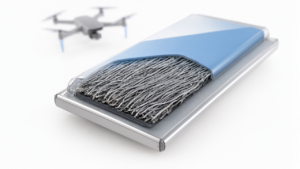
A research team at the Korea Research Institute of Chemical Technology (KRICT) has achieved a significant breakthrough in the development of high-energy density batteries for electric vehicles (EVs). They successfully and simultaneously improved both electrolyte wettability and lithium-ion mobility—two major challenges in dry electrode technology—by incorporating a mere 0.5% of graphitic carbon nitride (g-C₃N₄) into electrode materials. This achievement significantly contributes to the realization of a more efficient and cost-effective battery manufacturing process that does not rely on conventional wet methods.
Technical Details
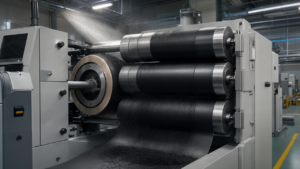
Dry electrode manufacturing technology is gaining attention as a next-generation approach for lithium-ion battery electrode fabrication, as it eliminates the need for expensive and environmentally harmful organic solvents. This process has the potential to drastically reduce manufacturing costs, energy consumption, and production space. However, dry-processed electrodes typically suffer from poor electrolyte wettability and slow ion conduction within the electrode. The KRICT team leveraged the unique surface properties and structure of g-C₃N₄ to adjust the surface energy of the electrode materials, thereby enhancing the ‘wettability’ for efficient electrolyte penetration. Simultaneously, g-C₃N₄ was found to optimize the lithium-ion transport pathways, improving ion conductivity. These dual enhancements directly impact battery charge/discharge efficiency and lifespan, representing a critical advancement for EV batteries requiring high power and energy density.
Background and Industry Context
The demand for lithium-ion batteries is soaring due to the proliferation of EVs and energy storage systems (ESS). However, the electrode manufacturing step, which constitutes a large portion of the battery production process, incurs substantial costs and energy due to solvent use and drying, with environmental regulations becoming increasingly stringent. Against this backdrop, dry electrode technology is being actively researched and developed globally as a crucial solution for reducing manufacturing costs, lessening environmental impact, and improving productivity. KRICT’s latest achievement significantly accelerates the commercialization of this technology.
Strategic Significance and Outlook
KRICT’s research dramatically increases the commercial viability of dry electrode technology, poised to directly impact the performance enhancement and cost reduction of next-generation EV batteries. This could further accelerate the adoption of electric vehicles and promote the transition to more sustainable transportation systems. Furthermore, applying this technology to large-scale ESS could contribute to the expansion of renewable energy integration and grid stabilization. The next steps toward commercialization will involve process optimization for mass production and rigorous verification of long-term stability.
Source: https://en.news1.kr/economy/6287316
Get our weekly technology intelligence — free
Receive an infographic that lets you judge at a glance whether each field’s analysis report is worth reading.
Subscribe Free — Weekly Tech Intelligence
By subscribing, you’ll receive Troy-Technical’s weekly technology intelligence newsletter.
- Your email and selected fields are used only to deliver the newsletter.
- We never share your information with third parties.
- You can unsubscribe anytime via the link in each email.
See our Privacy Policy for details.
Takes about a minute · Unsubscribe anytime



Comments