Key Findings: SMM Weekly Report Highlights Persistent High Costs for Lithium Sulfide; Ion Energy Commences Mass Production of 520Wh/kg Polymer Solid-State Batteries
The latest weekly report from SMM (Shanghai Metals Market) underscores the ongoing challenge of high material costs for sulfide-based solid-state batteries. Battery-grade lithium sulfide is currently trading at 1.3 million yuan/ton, significantly above the target cost of 0.5 million yuan/ton, presenting a persistent barrier to commercialization. However, amidst this challenge, Ion Energy has announced the activation of its Wuhan R&D and production base, initiating the production of 51Ah automotive-grade polymer solid-state batteries. These batteries boast an impressive energy density of 520Wh/kg, ultra-fast charging in 6 minutes, and a cycle life exceeding 3,500 cycles. Furthermore, China’s WeLion has signed a 150MWh semi-solid energy storage project contract with Szermann Kft in Hungary, marking a concrete entry into the European market.
Technical and Clinical Details
- Lithium Sulfide Cost Issue: Sulfide-based solid-state batteries are gaining attention due to their high ionic conductivity, but the manufacturing cost of their primary raw material, battery-grade lithium sulfide (Li2S), remains a significant hurdle. The current market price, at 2.6 times the target cost, is hindering the widespread adoption of sulfide-based solid-state batteries. This high cost likely stems from specific manufacturing processes or raw material sourcing, demanding a breakthrough.
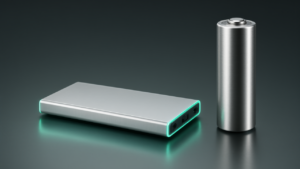
- Ion Energy’s Polymer Solid-State Batteries: The polymer solid-state batteries that Ion Energy has commenced mass production of feature the following outstanding performances:
- Energy Density: 520Wh/kg is a figure that substantially exceeds current state-of-the-art lithium-ion batteries, dramatically extending the driving range of electric vehicles.
- Ultra-Fast Charging: The ability to complete charging in 6 minutes rivals the refueling time of gasoline cars, drastically improving the convenience of EVs. This suggests extremely low internal resistance at the solid electrolyte and electrode interfaces.
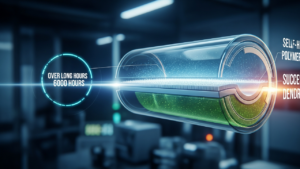
- Long Lifespan: A cycle life of over 3,500 cycles reduces battery replacement frequency and significantly lowers the Total Cost of Ownership (TCO) for EVs. This implies that internal degradation mechanisms within the battery are effectively suppressed.
- Automotive Grade: A capacity of 51Ah indicates a practical size intended for EV integration, suggesting compliance with safety standards.
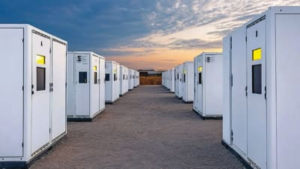
- WeLion’s European Expansion: WeLion’s 150MWh semi-solid energy storage project in Hungary demonstrates the expansion of solid-state battery technology into the stationary energy storage market. Semi-solid batteries are easier to manufacture compared to full solid-state batteries and are expected to be applied to medium-scale energy storage systems. This European expansion highlights the growing presence of Chinese companies in international markets.
Background and Industry Context
Solid-state batteries, as a next-generation battery technology, are highly anticipated across electric vehicle (EV) and energy storage system (ESS) sectors due to their superiority in safety, energy density, lifespan, and fast-charging capabilities compared to conventional lithium-ion batteries using liquid electrolytes. While sulfide-based systems are attractive for their high ionic conductivity, they face challenges in price and air stability. Polymer-based systems are relatively easier to manufacture and offer flexibility but are generally considered to have lower ionic conductivity; however, Ion Energy’s achievement reconfirms the potential of polymer-based solutions. China, driven by government initiatives, is vigorously pushing solid-state battery development, aiming for technological establishment and market dominance both domestically and internationally.
Future Outlook
Despite the persistent cost challenge of lithium sulfide, Ion Energy’s groundbreaking performance and commencement of mass production for polymer solid-state batteries mark a significant milestone in the commercialization of solid-state battery technology. Notably, the specifications of 520Wh/kg and 6-minute charging capability hold the potential to bring about a major transformation in the EV market. WeLion’s European project also signals the diverse application fields and international market expansion of solid-state battery technology, drawing significant attention to the industry’s future trajectory. Should the cost issue for sulfide-based materials be resolved, the solid-state battery market is expected to grow even more rapidly. In an intensifying competitive landscape, reducing material costs, optimizing manufacturing processes, and comparing performance across different electrolyte types will be key areas of focus moving forward.
Get our weekly technology intelligence — free
Receive an infographic that lets you judge at a glance whether each field’s analysis report is worth reading.
Subscribe Free — Weekly Tech Intelligence
By subscribing, you’ll receive Troy-Technical’s weekly technology intelligence newsletter.
- Your email and selected fields are used only to deliver the newsletter.
- We never share your information with third parties.
- You can unsubscribe anytime via the link in each email.
See our Privacy Policy for details.
Takes about a minute · Unsubscribe anytime