Key Findings
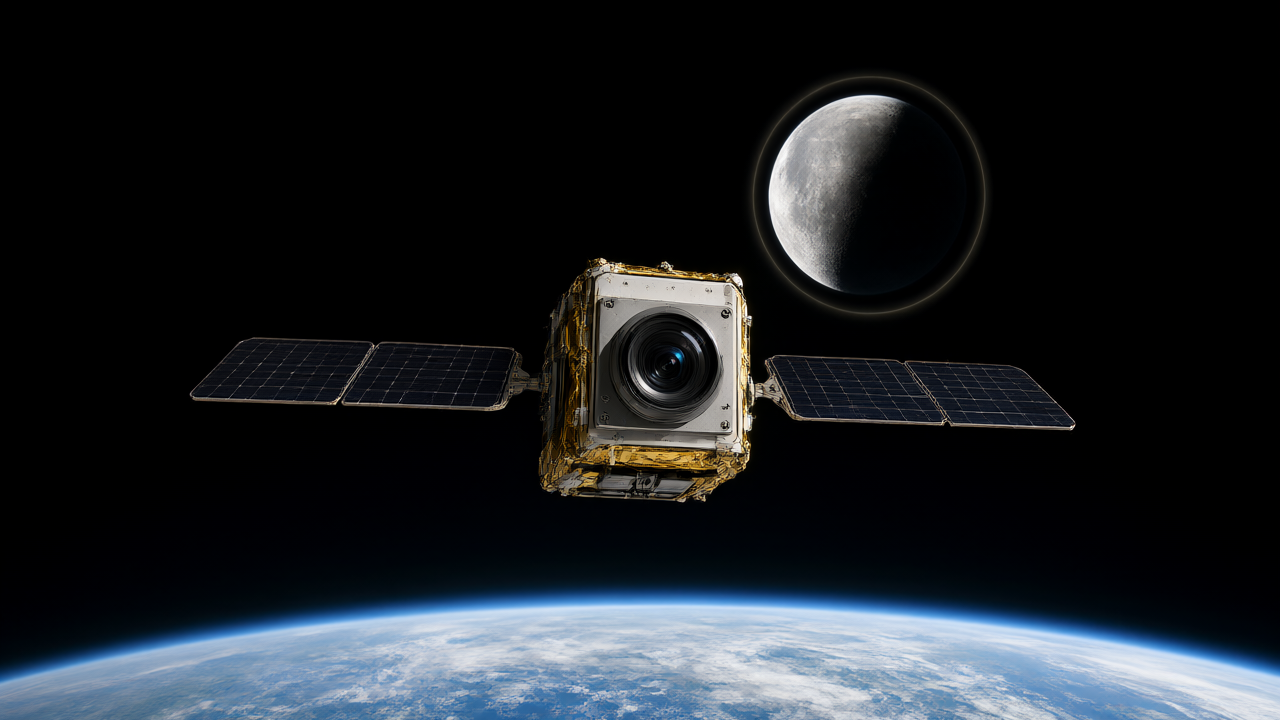
Researchers have demonstrated a flight deployment on a 6U CubeSat that enables onboard training and inference of a thermal segmentation model. This marks the first time machine learning models have been trained on a GPU on a free-flying spacecraft, as previous space-based training relied on low-power CPUs or VPUs. The system was used to implement closed-loop attitude control, allowing the spacecraft to autonomously track the Moon using a real-time thermal image feed.
Technical Details
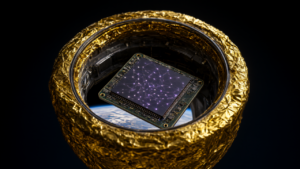
The onboard compute architecture centers on the NVIDIA Jetson TX2 NX GPU. To manage data transport between the segmentation module and the bus avionics, the team deployed the Foxy distribution of the Robot Operating System (ROS 2). Additionally, the system integrates an open-source file system designed for self-healing and strong data integrity. Over approximately one year, the team conducted 12 experiments to validate the reliability of this pipeline under the environmental and compute constraints of LEO.
Background & Context
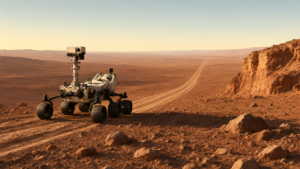
Deep space missions face significant communication delays and bandwidth limitations, making human-in-the-loop operations impractical. While terrestrial robotics—such as those from Waymo and Tesla—tightly integrate perception models with control, spacecraft have historically relied on classical algorithms due to compute limitations. For instance, the Perseverance rover uses a RAD750 processor operating at 200 MHz with 256 MB of RAM. Recent shifts toward Commercial Off-The-Shelf (COTS) hardware, such as the Qualcomm Snapdragon 801 used in the Mars Helicopter, have paved the way for more complex onboard AI.
Significance & Outlook
This demonstration proves that modern learning-based pipelines and COTS hardware can operate reliably in space. By integrating a vision segmentation model directly with the Attitude Determination and Control System (ADCS), the mission shows a path toward spacecraft that can perceive, learn from, and adapt to their environments autonomously. This capability is essential for future robotic exploration of environments far from Earth.
Source: https://arxiv.org/html/2610.19122v1
Get our weekly technology intelligence — free
Receive an infographic that lets you judge at a glance whether each field’s analysis report is worth reading.
Subscribe Free — Weekly Tech Intelligence
By subscribing, you’ll receive Troy-Technical’s weekly technology intelligence newsletter.
- Your email and selected fields are used only to deliver the newsletter.
- We never share your information with third parties.
- You can unsubscribe anytime via the link in each email.
See our Privacy Policy for details.
Takes about a minute · Unsubscribe anytime