


Key Findings
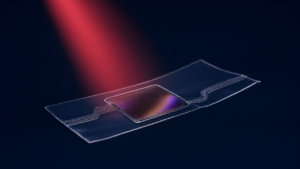
The developed tin-modified nanotube gel successfully reduces the operating temperature of commercial polycrystalline silicon solar cells by 9.5 C. This thermal management leads to a direct increase in power conversion efficiency (PCE), rising from 12.5% to 13.2% under simulated sunlight. Testing over 40 days showed the device retained an efficiency of 12%, which further improved to 13.3% after the gel was soaked in deionized water for 24 hours and reused.
Technical Details
The cooling medium consists of polyvinyl alcohol (PVA) blended with tin (Sn)-coated and Sn-filled carbon nanotubes (Sn-CNTs). Tin was selected as the coating material due to its good compatibility with carbon nanomaterials, relatively low melting temperature (232 C), and excellent wettability, ensuring a uniform coating of the CNT surfaces.
The fabrication process involved:
- Dissolving 0.5 g of PVA in 5 ml of dimethyl sulfoxide at 120 C.
- Adding Sn-CNTs at concentrations of 0.5 wt%, 0.7 wt%, and 1.4 wt%.
- Stirring for one hour and ultrasonication for 30 minutes.
- Casting into 5 cm × 5 cm molds and applying a freeze-thaw crosslinking process at 0 C for 24 hours.
The resulting PVA/Sn-CNT conducting gel demonstrated a thermal conductivity of 3.2 W/mK and a mechanical strength of 0.21 kPa.
Background & Context
The research, conducted by scientists from the Indian Institute of Technology (IIT) Mandi and Amity University, aimed to create a cost-effective, sustainable, and passive cooling solution. By reducing operating temperatures without requiring external energy, the team sought to improve electrical performance and extend the lifespan of photovoltaic devices.
Significance & Outlook
The findings, published in Solar Energy, suggest a green and affordable pathway to boost solar efficiency and thermal control. While the material shows high potential for thermal management without compromising PCE, the researchers did not provide a detailed cost assessment or a direct economic comparison with existing cooling technologies.
Get our weekly technology intelligence — free
Receive an infographic that lets you judge at a glance whether each field’s analysis report is worth reading.
Subscribe Free — Weekly Tech Intelligence
By subscribing, you’ll receive Troy-Technical’s weekly technology intelligence newsletter.
- Your email and selected fields are used only to deliver the newsletter.
- We never share your information with third parties.
- You can unsubscribe anytime via the link in each email.
See our Privacy Policy for details.
Takes about a minute · Unsubscribe anytime