


Key Findings
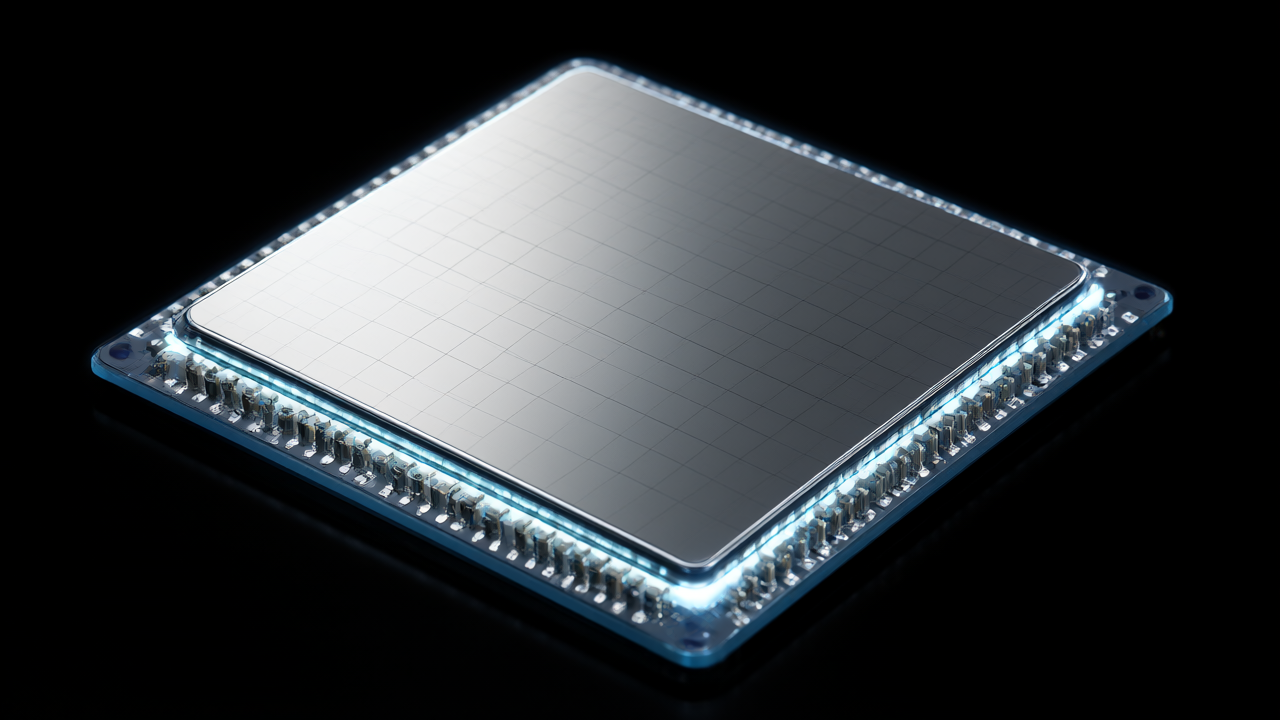
NVIDIA’s Vera CPU utilizes a monolithic compute die rather than the chiplet architectures employed by major x86 competitors. This design choice is specifically tailored for agentic AI workloads, which require strong single-threaded performance and low latency. According to reports, Vera delivers up to twice the performance of leading x86 processors for sequential tasks such as code compilation and Python scripting, with a 1.6-times advantage on a geometric-mean basis. Compared to its predecessor, Grace, Vera provides 1.5 times the performance.
Technical Details
The monolithic design eliminates the need for CPU cores to cross boundaries between separate chiplets, significantly reducing data movement latency. Key technical specifications include:
- Bisection Bandwidth: 3.4 TB/s, which is three times that of the leading x86 processor used in NVIDIA’s comparison.
- Memory Subsystem: A custom LPDDR5X memory subsystem.
- Interconnect: Second-generation Scalable Coherent Fabric.
- Spatial Multithreading: A technology that allocates dedicated resources to I/O and worker threads to prevent background operations from interfering with primary processing tasks.
Background and Context
The shift in architecture reflects a change in CPU design priorities. While traditional cloud workloads focus on throughput and high core counts, agentic AI requires the ability to execute sequential tasks quickly. Consequently, NVIDIA is expanding the role of the CPU in AI infrastructure. While the Grace CPU was primarily a host processor for GPU systems, the demand for reinforcement learning and agentic AI has led NVIDIA to develop standalone Vera CPU racks to handle CPU-intensive tasks and AI agent tool calls.
Additional Updates
Separately, NVIDIA Senior Vice President Jeff Fisher has denied rumors regarding the discontinuation of the GeForce RTX 5090. Despite global supply constraints and market prices exceeding the US$1,999 MSRP on some platforms, Fisher stated the RTX 5090 remains a key product that the company will continue to supply.
Get our weekly technology intelligence — free
Receive an infographic that lets you judge at a glance whether each field’s analysis report is worth reading.
Subscribe Free — Weekly Tech Intelligence
By subscribing, you’ll receive Troy-Technical’s weekly technology intelligence newsletter.
- Your email and selected fields are used only to deliver the newsletter.
- We never share your information with third parties.
- You can unsubscribe anytime via the link in each email.
See our Privacy Policy for details.
Takes about a minute · Unsubscribe anytime