
Key Findings
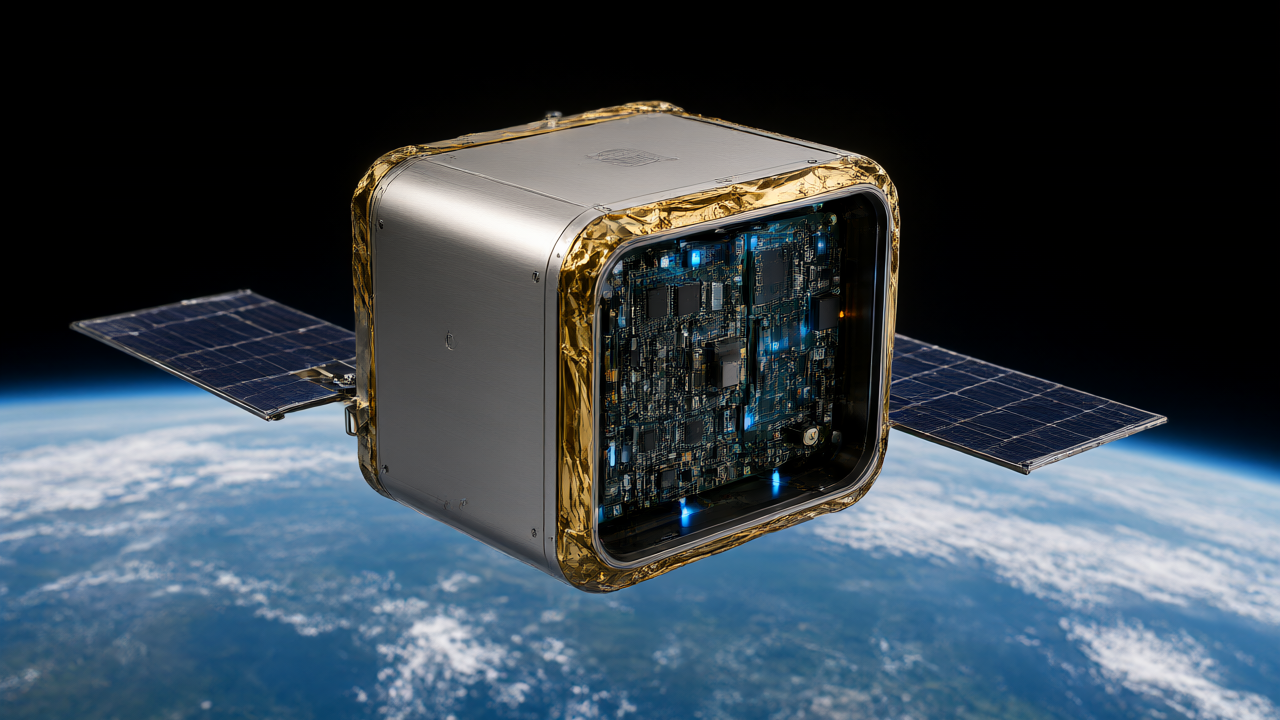
Zhongke Tiansuan has successfully developed the “Aurora 5000C,” a business-grade space supercomputing payload. Unlike previous experimental satellites, this payload is designed for commercial operationality, meaning it can provide continuous, deliverable, and reusable on-orbit computing services. The system is based on fully domestic Chinese chips and is awaiting launch for on-orbit verification.
Technical Details
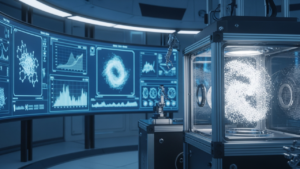
The Aurora 5000C is a cluster-level system reaching POPS-scale computing power. It integrates four types of domestic chips: CPU, GPU, NPU, and FPGA, utilizing heterogeneous integration technology to ensure compatibility between different brands and types. To address the vacuum of space, the team developed a specialized cooling system to export heat from the chips. To mitigate radiation-induced errors, the company employs a fault-tolerant computing scheme combining “spatial redundancy, time redundancy, and information redundancy.”
The company’s technical evolution includes previous iterations:
- Aurora 1000A: An edge-integrated machine with 32 TOPS computing power and 1TB to 2TB storage. It has operated on-orbit for over 1,200 days and has demonstrated on-orbit injection and real-time inference of large models.
- Aurora 3000B: A distributed general-purpose computer with 0.5 POPS computing power and 8TB storage, used to verify scalable intelligent module schemes.
Background and Context
Based in the Space-based Computing Industry Base in Songjiang, Shanghai, Zhongke Tiansuan is integrating with the “Thousand Sails Constellation” (GigaConstellation) project. By deploying Aurora edge machines on communication satellites, the company aims to provide the computing power necessary for the dynamic network optimization of large-scale low-earth orbit (LEO) satellite constellations.
Significance and Outlook
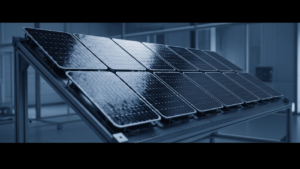
Under the “Tiansuan Plan,” the company intends to deploy a ten-thousand-card space supercomputing center by 2035 in a sun-synchronous orbit. This center will consist of a computing cabin (target 10EOPS), an energy cabin (over 100MW via flexible photovoltaics), a communication cabin (bandwidth over 10Tbps), and an automated maintenance cabin. The goal is to provide “computing power equity” and AI accessibility to “Belt and Road” partner nations.
Source: https://news.qq.com/rain/a/20261114A0420O00?id=20261114A0420O00&path=a&app=news&suid=&redirect_pc=1
Get our weekly technology intelligence — free
Receive an infographic that lets you judge at a glance whether each field’s analysis report is worth reading.
Subscribe Free — Weekly Tech Intelligence
By subscribing, you’ll receive Troy-Technical’s weekly technology intelligence newsletter.
- Your email and selected fields are used only to deliver the newsletter.
- We never share your information with third parties.
- You can unsubscribe anytime via the link in each email.
See our Privacy Policy for details.
Takes about a minute · Unsubscribe anytime