Key Findings
Hyundai Motor and Kia have registered a U.S. patent (US12802998 B2) titled “Dry Cathode For All-solid-state Battery With High Energy Density And Method Of Manufacturing Same.” The core achievement is a dry manufacturing process that significantly improves energy density and ion mobility compared to traditional wet methods. Experimental data shows that when active material content is set to 85%, the dry process yields a discharge capacity of 3.84 mAh/㎠, compared to 1.70 mAh/㎠ for the wet process.
Technical Details
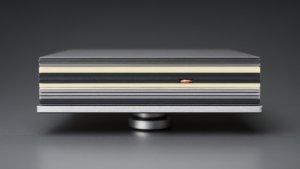
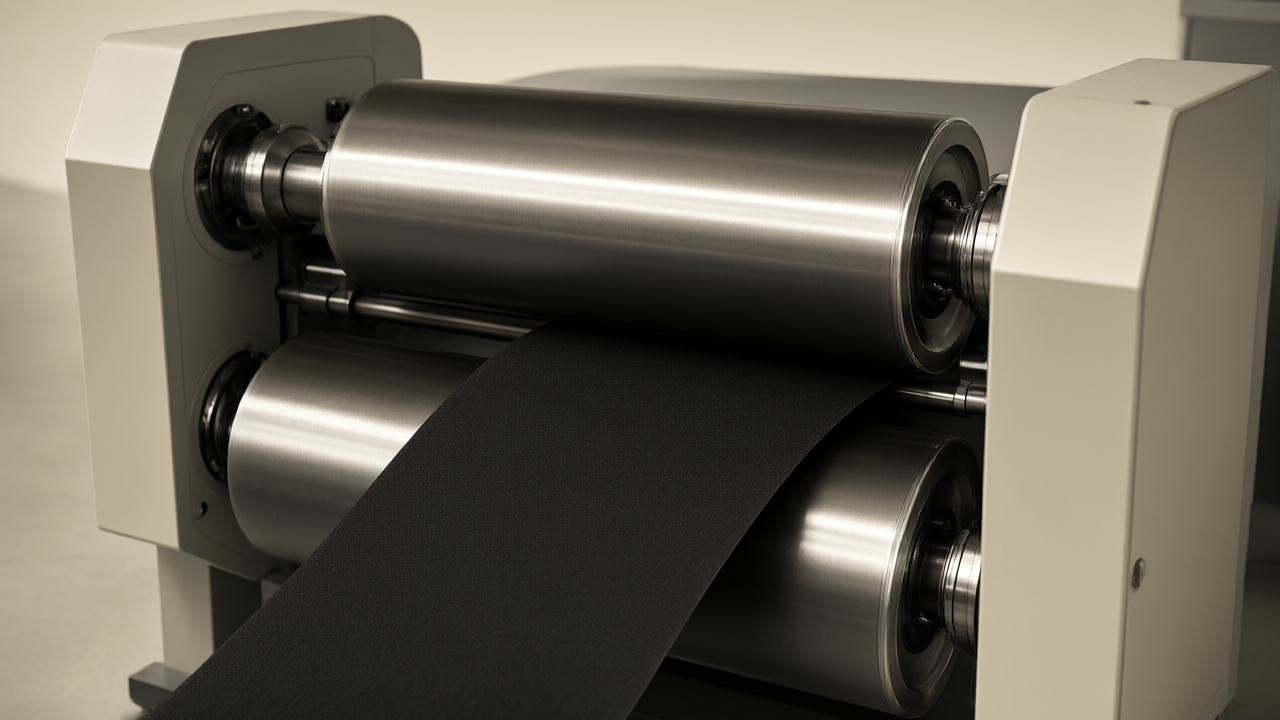
The patented technology eliminates the use of solvents, avoiding the limitations of wet processes where drying thick electrodes is difficult and binders can obstruct the movement of lithium ions and electrons. The dry process involves mixing cathode active materials, solid electrolytes, and fibrous binders in powder form, applying pressure to create binder filaments that secure materials while maintaining pathways for ion and electron transport.
- Material Composition: The patent specifies an active material content of 80–87% and a solid electrolyte content of 13–20% based on the combined weight of the two.
- Performance Metrics: Internal resistance for the dry process was measured at 2.91 Ω, representing an 85% reduction compared to the 19.40 Ω recorded for the wet process.
- Optimization Limits: The researchers found that increasing active material content beyond 90% leads to decreased lithium-ion conductivity and reduced discharge capacity.
Background & Context
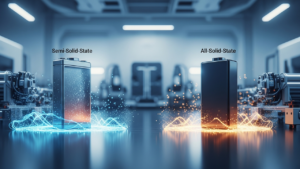
All-solid-state batteries are viewed as next-generation power sources due to their safety and energy density advantages over liquid electrolytes. However, commercialization has been hindered by challenges in optimizing manufacturing processes and ensuring ion delivery within the electrode. Specifically, sulfide-based solid electrolytes used in these batteries are known to be vulnerable to certain solvents used in wet processing.
Significance & Outlook
By securing this patent, Hyundai and Kia have established a technical foundation for high-energy-density cathode design and dry manufacturing. While the companies have not disclosed a specific timeline for commercialization or mass production, the technology is expected to strengthen their competitiveness in the development of next-generation electric vehicle batteries.
Source: https://www.theguru.co.kr/news/article.html?no=109949
Get our weekly technology intelligence — free
Receive an infographic that lets you judge at a glance whether each field’s analysis report is worth reading.
Subscribe Free — Weekly Tech Intelligence
By subscribing, you’ll receive Troy-Technical’s weekly technology intelligence newsletter.
- Your email and selected fields are used only to deliver the newsletter.
- We never share your information with third parties.
- You can unsubscribe anytime via the link in each email.
See our Privacy Policy for details.
Takes about a minute · Unsubscribe anytime