Key Findings
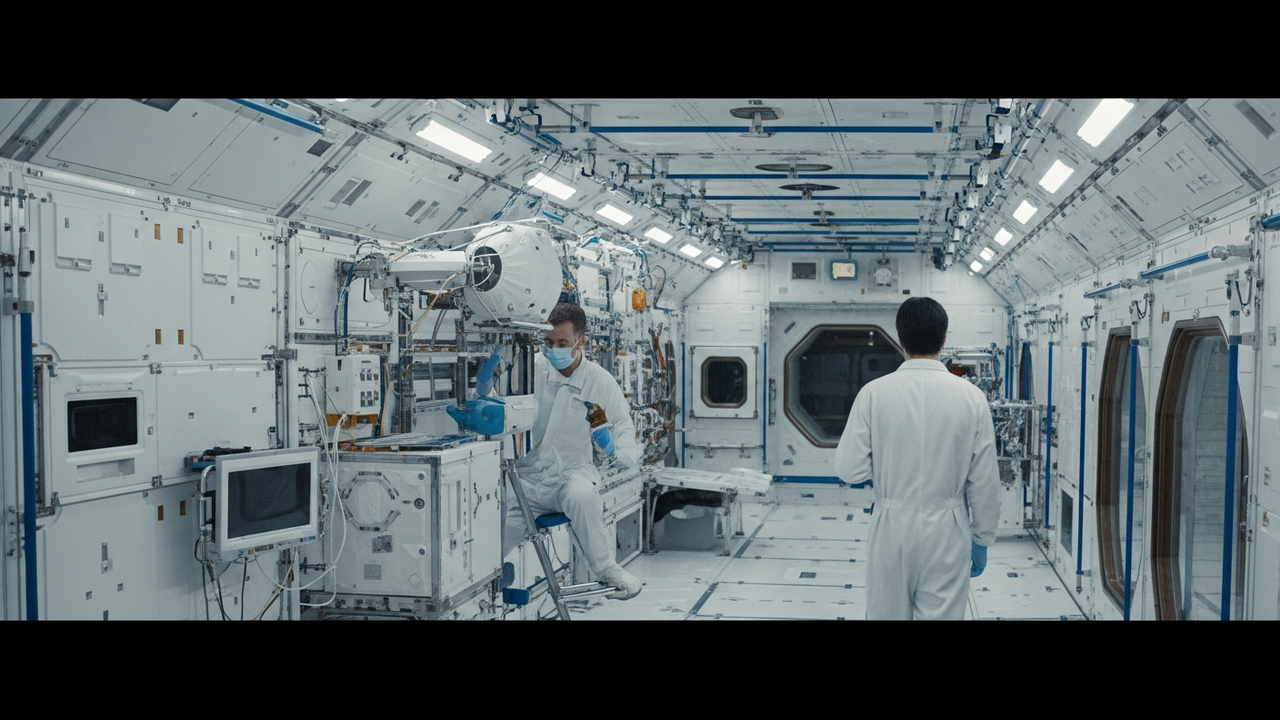
New experiments in cartilage tissue bioengineering and advanced materials manufacturing have commenced aboard the International Space Station (ISS). This initiative leverages the unique advantages of the microgravity environment to produce high-quality tissues and materials that are difficult to create on Earth, marking a groundbreaking advancement contributing to new industry development in space medicine and materials science.
Technical & Experimental Details
- Cartilage Tissue Bioengineering: Microgravity is known to be conducive to three-dimensional cell growth, allowing for the formation of tissue structures that more closely mimic in-vivo conditions. The cartilage tissue bioengineering experiments on the ISS aim to construct functional cartilage using stem cells and biomaterials, through processes like 3D bioprinting and self-assembly. This holds promise for treating joint diseases in astronauts and for regenerative medicine applications on Earth.
- Advanced Materials Manufacturing: In microgravity, convection in solutions is suppressed, and impurities do not settle, enabling the manufacturing of more homogeneous and defect-free crystals and composite materials that are impossible or extremely challenging to produce on Earth. The advanced materials manufacturing experiments initiated on the ISS could potentially lead to the development of high-performance optical materials, semiconductor materials, or superalloys utilizing these properties.
- Astronaut Role: In addition to conducting these complex bioengineering and materials science experiments, astronauts are engaged in various life science experiments and preparations for Extravehicular Activities (EVAs). Their manual dexterity and expertise are indispensable for executing precise experiments in the microgravity environment, which cannot be replicated on Earth.
Background & Industry Context
Space development is shifting from pure exploration to commercial utilization, with In-Orbit Manufacturing (IOM) emerging as a crucial pillar of the space economy. The unique characteristics of the microgravity environment, in particular, hold the potential to create new industries in fields such such as pharmaceuticals, materials science, and regenerative medicine. The ISS serves as an invaluable platform for demonstrating and commercializing these advanced technologies.
Future Outlook
The progress in cartilage tissue bioengineering and advanced materials manufacturing on the ISS strongly suggests the feasibility of production activities in space. The data and technologies derived from these experiments will contribute to the development of medical solutions for maintaining astronaut health, as well as significantly impact the treatment of intractable diseases on Earth and the development of high-performance materials supporting next-generation industries. Manufacturing technologies leveraging the space environment are expected to lay the groundwork for humanity’s long-term presence in space and expansion beyond Earth, serving as a critical driver for the growth of the space industry.
Source: https://astrobiology.com/category/space-life-science/
Get our weekly technology intelligence — free
Receive an infographic that lets you judge at a glance whether each field’s analysis report is worth reading.
Subscribe Free — Weekly Tech Intelligence
By subscribing, you’ll receive Troy-Technical’s weekly technology intelligence newsletter.
- Your email and selected fields are used only to deliver the newsletter.
- We never share your information with third parties.
- You can unsubscribe anytime via the link in each email.
See our Privacy Policy for details.
Takes about a minute · Unsubscribe anytime






Comments