Key Findings
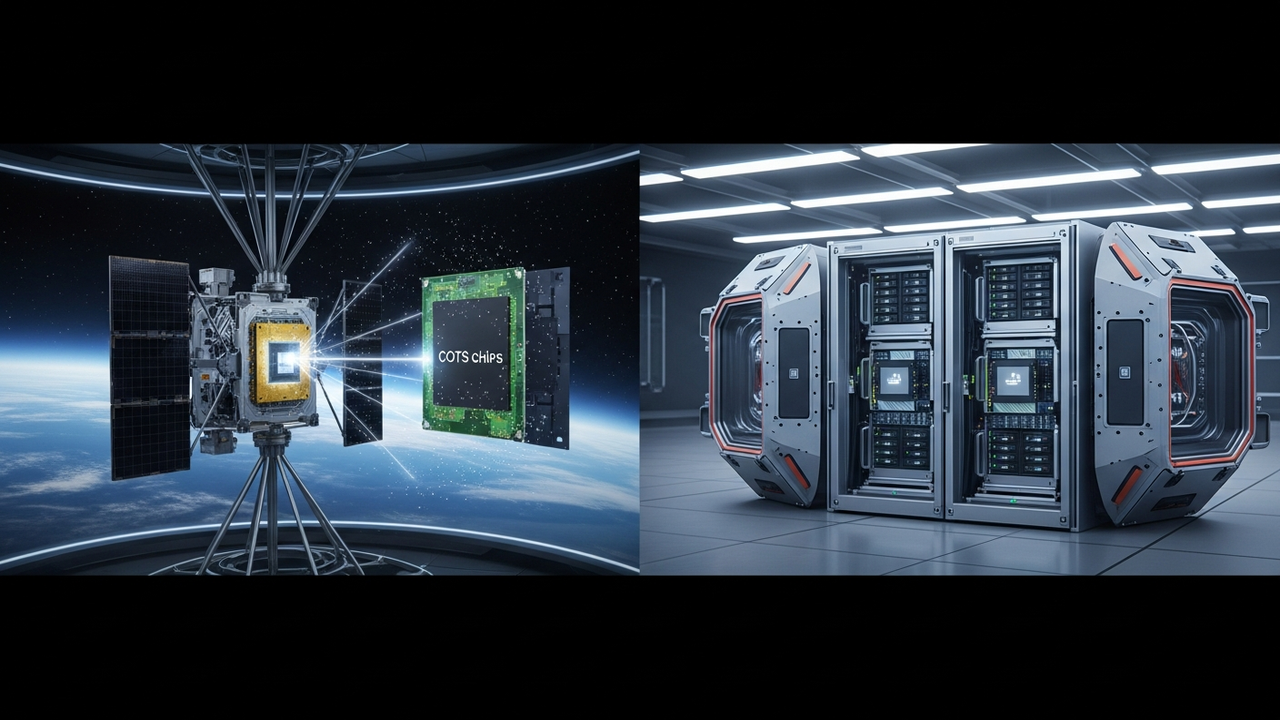
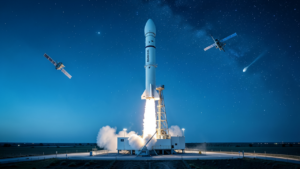
Google’s research reveals that commercial off-the-shelf (COTS) components, particularly High Bandwidth Memory (HBM) and general-purpose core computing chips, can indeed achieve sufficient radiation tolerance for the harsh conditions of Low Earth Orbit (LEO). This groundbreaking discovery directly challenges the long-held industry belief that costly, custom radiation-hardened chips are essential for space missions. Critically, these findings provide robust support for SpaceX’s AI1 satellite strategy, which seeks to harness commercial components for cost-effective, in-orbit AI processing.
Technical Details
Google’s study employed rigorous radiation testing, utilizing a 67MeV proton beam to assess the resilience of terrestrial HBM memory and modern core computing chips within a simulated space environment. The results underscore that these COTS chips not only possess inherent capabilities to withstand certain radiation events but, more significantly, can achieve high reliability even under extreme space conditions when augmented by software-level fault tolerance mechanisms. These mechanisms include Error Correcting Codes (ECC) and watchdog resets, which enable the detection and correction of transient soft errors induced by radiation, thereby ensuring continuous system operation. This innovative approach circumvents the traditional trade-offs of high cost and performance limitations inherent in conventional radiation-hardening processes, paving the way for deploying more powerful computing resources in space.
Background & Industry Context
Historically, radiation tolerance has been a paramount concern for semiconductor devices in the space industry, necessitating the widespread adoption of specialized, costly radiation-hardened chips. However, the rapid proliferation of small satellite constellations and the escalating demand for in-orbit data processing—for Earth observation, communications, and AI applications—have driven a critical need for more affordable, higher-performance computing power. Projects such as SpaceX’s Starlink and Starmind (AI1 satellites) demand the rapid and cost-effective deployment of vast numbers of satellites, rendering the utilization of COTS components an indispensable strategy for their realization. Google’s research findings provide crucial scientific substantiation for the technical feasibility of this COTS-based approach, which is poised to catalyze a paradigm shift in hardware selection across the space industry.
Strategic Significance & Outlook
The demonstrated radiation tolerance of COTS chips, validated by Google’s research, is set to profoundly reshape the future of space computing. SpaceX intends to further validate this approach at scale through its AI1 satellite constellation; its anticipated success is likely to inspire adoption across other space companies and national space agencies. This breakthrough will accelerate the realization of orbital data centers, enabling complex AI workloads, real-time analytics, and the development of entirely novel space services. From a long-term perspective, a substantial reduction in space hardware procurement costs is expected, which will democratize access to space and foster significant growth across the entire space economy.
Source: https://eu.36kr.com/en/p/3886961848597253
Get our weekly technology intelligence — free
Receive an infographic that lets you judge at a glance whether each field’s analysis report is worth reading.
Subscribe Free — Weekly Tech Intelligence
By subscribing, you’ll receive Troy-Technical’s weekly technology intelligence newsletter.
- Your email and selected fields are used only to deliver the newsletter.
- We never share your information with third parties.
- You can unsubscribe anytime via the link in each email.
See our Privacy Policy for details.
Takes about a minute · Unsubscribe anytime


Comments