


Key Findings
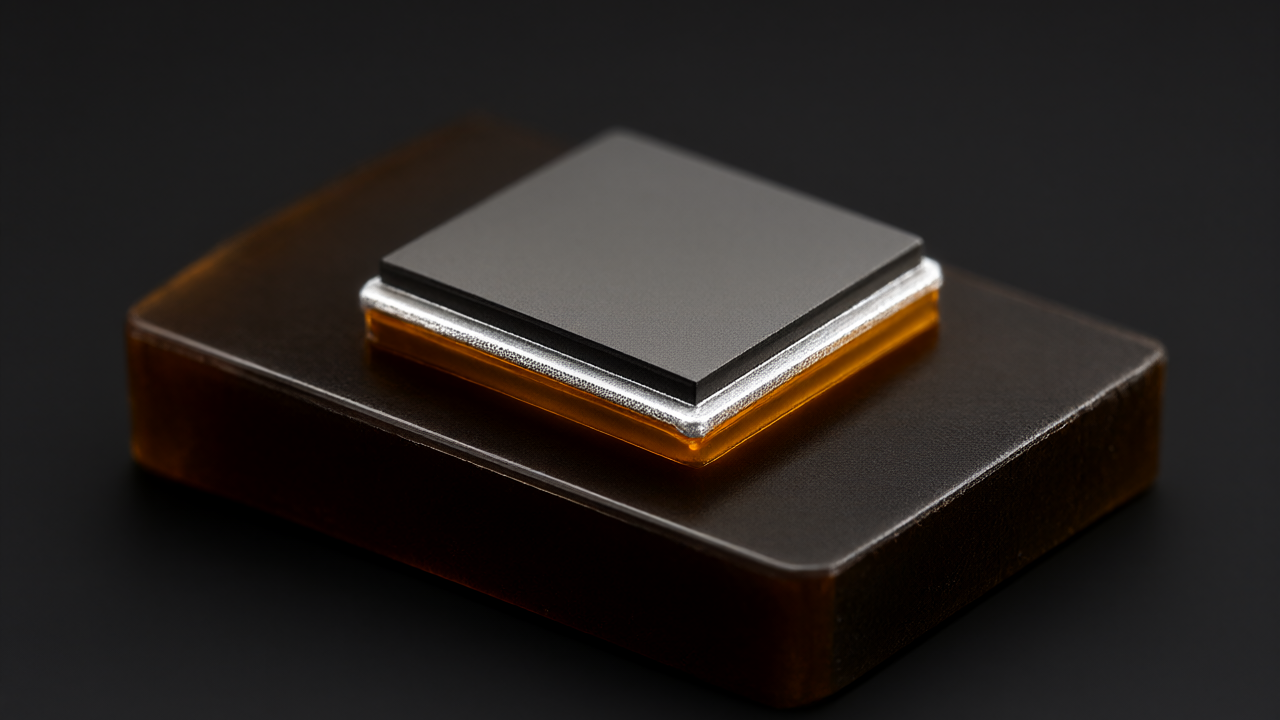
The study demonstrates that power chips can be directly bonded to non-metallized, fiber-reinforced cyanate ester composite substrates using low-temperature nano-silver sintering. The joints reached a maximum shear strength of 11.5 MPa. Long-term reliability tests showed that after 600 h of high-temperature aging, the shear strength remained at 9.3 MPa, representing a decrease of approximately 19%.
Technical Details
The sintering process resulted in Ag particles coalescing on the composite surface to form a mechanically bonded heterogeneous interface. The porosity of the sintered Ag layer varied based on the applied pressure during the 15 min sintering process:
- At 15 MPa, the porosity was 10.1%.
- At 20 MPa, the porosity decreased to 6.5%.
Analysis of the failure modes revealed a shift over time. Initial failures occurred at the Ag/composite interface, but as aging progressed, the failure mode shifted toward cracking and delamination within the composite substrate itself.
Background & Context
Integrating power chips with polymer composites is a priority for applications requiring lightweight materials, thermal stability, and low-dielectric properties. Cyanate ester composites serve as the substrate in this research to evaluate the feasibility of direct nano-silver bonding without the need for prior metallization.
Significance & Outlook
The results confirm the feasibility of using low-temperature nano-silver sintering for bonding power chips to cyanate ester composites. However, the study identifies that the principal limitation on long-term joint reliability is the thermal degradation of the substrate rather than the silver joint itself.
Source: https://doi.org/10.21203/rs.3.rs-11259596/v1
Get our weekly technology intelligence — free
Receive an infographic that lets you judge at a glance whether each field’s analysis report is worth reading.
Subscribe Free — Weekly Tech Intelligence
By subscribing, you’ll receive Troy-Technical’s weekly technology intelligence newsletter.
- Your email and selected fields are used only to deliver the newsletter.
- We never share your information with third parties.
- You can unsubscribe anytime via the link in each email.
See our Privacy Policy for details.
Takes about a minute · Unsubscribe anytime