Key Findings
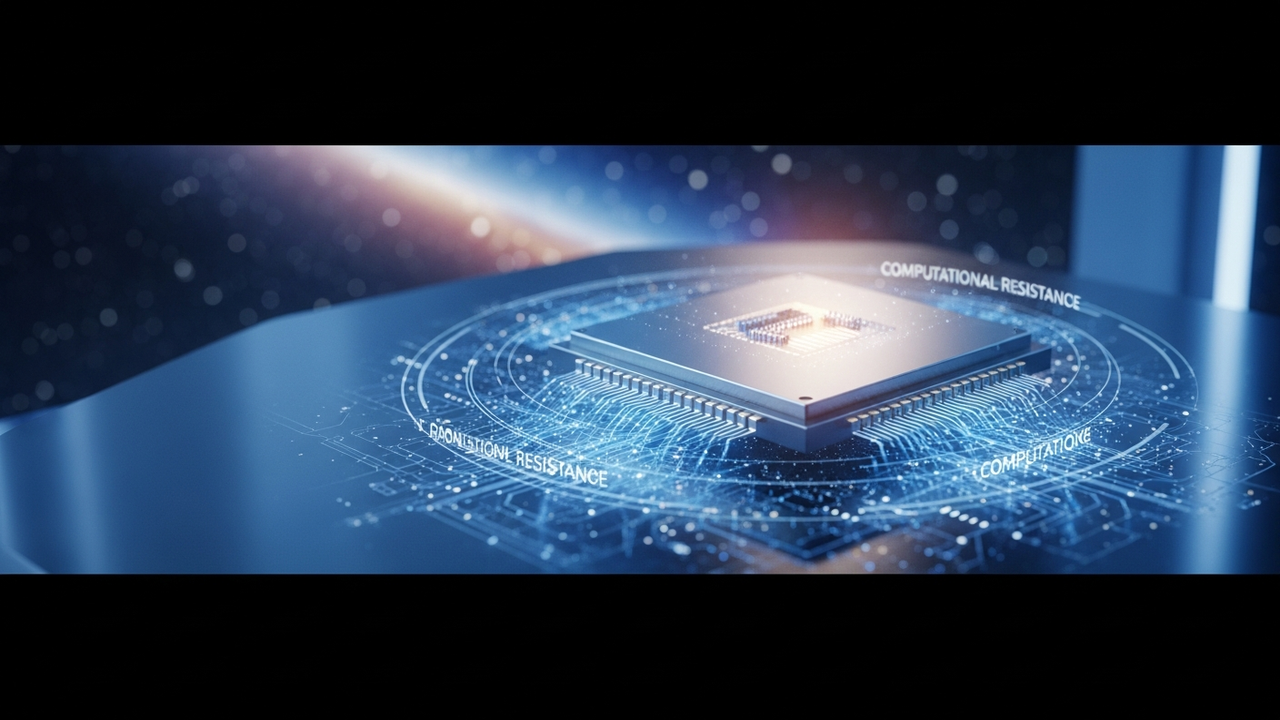
Renesas Electronics has developed and announced new radiation-hardened processors capable of withstanding the extremely harsh radiation environments of deep-space missions. These innovative processors feature high levels of Total Ionizing Dose (TID) tolerance (>500krad) and Single Event Effect (SEE) immunity (LET >100 MeV-cm²/mg). They successfully balance high computational performance with the exceptionally high reliability demanded for space applications. This promises to dramatically improve mission success rates and data processing capabilities for interplanetary probes and deep-space telescopes, where long-term autonomous operation is indispensable.
Technical Details
This new radiation-hardened processor combines Renesas’ proprietary Advanced Radiation-Hardened (RH) process technology with a cutting-edge multi-core architecture. The processor cores integrate fault-tolerant designs, such as Triple Modular Redundancy (TMR) and Error Correction Code (ECC), to protect the system from transient soft errors and permanent hard errors caused by space radiation. Furthermore, the adoption of Silicon-On-Insulator (SOI) technology effectively suppresses radiation-induced latch-up phenomena. In terms of computational power, it features multiple high-performance ARM Cortex-R52 processor cores, enhanced with Floating Point Units (FPU) and Digital Signal Processing (DSP) capabilities. This enables real-time execution of advanced image processing, data compression, and autonomous navigation calculations in orbit. Low-power design is also a key characteristic, contributing to the limited power budget of deep-space probes.
Background & Context
Deep-space exploration missions are exposed to severe radiation environments outside Earth’s magnetosphere for periods ranging from years to decades, demanding exceptionally high radiation hardness and long-term reliability from onboard electronic components. Conventional space processors often prioritized reliability at the expense of computational power, which became a bottleneck for mission complexity and data processing capabilities. Renesas’ new processor overcomes this trade-off, enabling the exploration of new frontiers in deep space by combining high performance with high reliability. This technology is critical for future ambitious missions such as human exploration of the Moon and Mars, and the exploration of exoplanets.
Strategic Significance & Outlook
This radiation-hardened processor is expected to be adopted as the main on-board computer for various deep-space missions, including large planetary probes like the Jupiter Icy Moons Explorer (JUICE), the Lunar Gateway station, and next-generation deep-space telescopes. The device’s robustness and high performance will maximize the acquisition of scientific data, enhance spacecraft autonomy, and support real-time decision-making in environments with significant communication delays from Earth. Through this product, Renesas aims to establish itself as a leading provider of embedded solutions in the space industry and contribute to dramatically advancing humanity’s deep-space exploration capabilities.
Source: #
Get our weekly technology intelligence — free
Receive an infographic that lets you judge at a glance whether each field’s analysis report is worth reading.
Subscribe Free — Weekly Tech Intelligence
By subscribing, you’ll receive Troy-Technical’s weekly technology intelligence newsletter.
- Your email and selected fields are used only to deliver the newsletter.
- We never share your information with third parties.
- You can unsubscribe anytime via the link in each email.
See our Privacy Policy for details.
Takes about a minute · Unsubscribe anytime





Comments