Key Findings
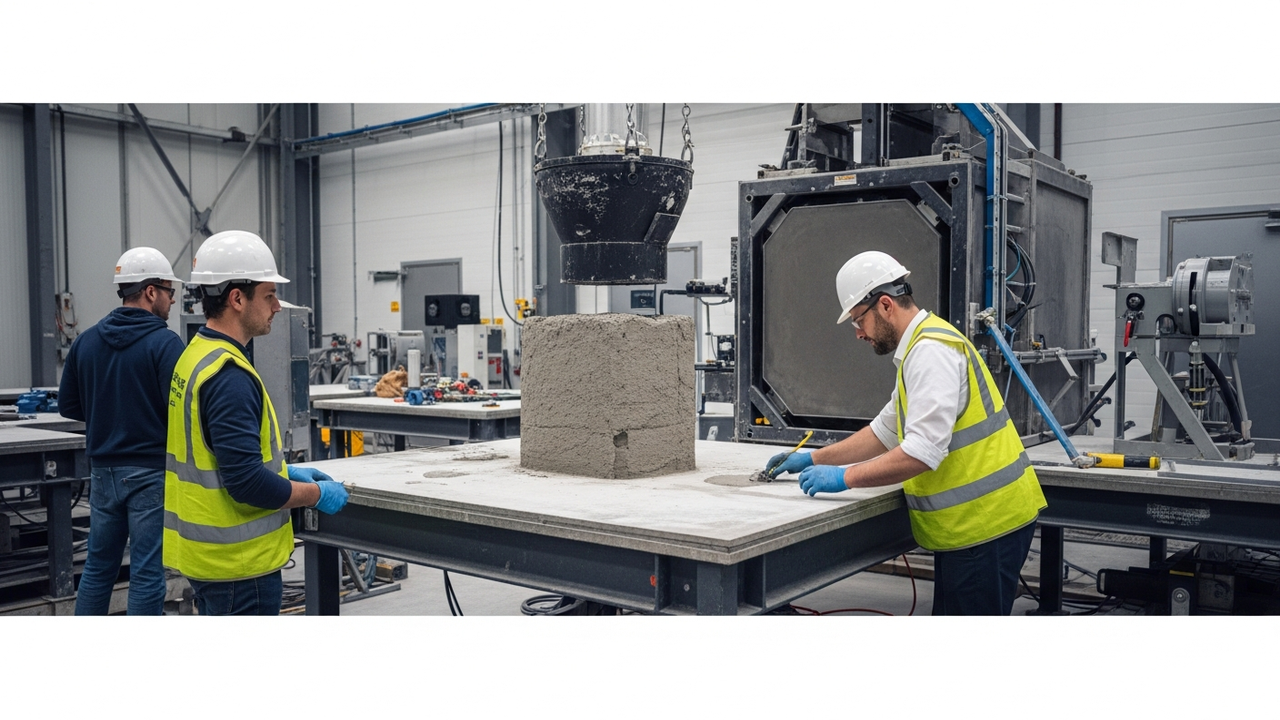
Ireland has achieved a groundbreaking advance in sustainable building materials with the development of the nation’s first cement-free 3D-printed geopolymer. This innovative material completely eliminates the use of traditional Portland cement, leading to a significant reduction in carbon dioxide emissions during the manufacturing process.
Technical / Clinical Details
The developed geopolymer is produced by reacting industrial by-products such as fly ash and blast furnace slag with an alkaline activator. This process bypasses the high-temperature calcination required for cement production, thereby substantially cutting energy consumption and CO2 emissions. Furthermore, its integration with 3D printing technology allows for the efficient and precise fabrication of complex architectural components. This minimizes material waste while increasing design flexibility, and contributes to reducing construction costs and project timelines. Notably, the geopolymer has demonstrated excellent compressive strength and durability, confirmed to perform at or above the level of traditional concrete.
Background & Context
The construction industry, particularly cement production, accounts for approximately 10% of global CO2 emissions, making it a major source of environmental impact. Consequently, the development of eco-friendly alternative materials is an urgent priority. Geopolymer technology has garnered attention as a promising solution to these challenges. When combined with 3D printing, it offers the potential to simultaneously optimize construction processes and resource utilization, contributing to the establishment of a circular economy. This development in Ireland holds significant importance for the country’s green building promotion strategies.
Strategic Significance & Outlook
Cement-free 3D-printed geopolymers hold immense potential to bring about significant transformation in the future of the construction industry. Applications are particularly anticipated in infrastructure development, disaster relief housing, and modular construction. As further research and development towards commercialization and standardization progresses, this technology is poised to play a central role in a future where sustainable construction becomes the norm. This will contribute to reducing the environmental footprint and improving resource efficiency in urban development.
Source: https://phys.org/chemistry-news/materials-science/
Get our weekly technology intelligence — free
Receive an infographic that lets you judge at a glance whether each field’s analysis report is worth reading.
Subscribe Free — Weekly Tech Intelligence
By subscribing, you’ll receive Troy-Technical’s weekly technology intelligence newsletter.
- Your email and selected fields are used only to deliver the newsletter.
- We never share your information with third parties.
- You can unsubscribe anytime via the link in each email.
See our Privacy Policy for details.
Takes about a minute · Unsubscribe anytime








Comments