
Key Findings
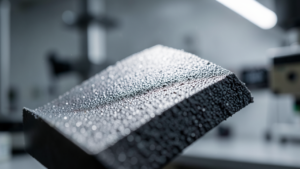
A research team has successfully developed a phase change material (PCM) sourced from biomass and has commenced trials for its application in building thermal management systems, particularly in the highly energy-intensive cooling systems of data centers. This novel PCM significantly reduces environmental impact compared to conventional petroleum-derived paraffin-based materials, while also boasting superior heat storage performance and excellent long-term thermal cycling stability.
Technical / Clinical Details
Phase Change Materials (PCMs) maintain a constant temperature by absorbing and releasing large amounts of latent heat during their solid-to-liquid and liquid-to-solid phase transitions. This property allows them to level out peak thermal loads and enable efficient thermal management. The biomass-derived PCM developed here is synthesized from renewable resources such as vegetable oils and cellulose, which substantially reduces CO2 emissions across its entire lifecycle from production to disposal. In terms of performance, it exhibits improved heat storage density per unit volume compared to paraffin-based PCMs with similar phase transition temperatures, allowing for more compact system designs. Furthermore, it has been confirmed to maintain stable performance over long periods with minimal material degradation even after repeated thermal cycles. For its deployment in data center cooling systems, PCM modules are strategically placed in the server rack exhaust pathways to effectively absorb peak heat generation, thereby reducing the operational load on air conditioning equipment and optimizing power consumption.
Background & Context
In modern society, data centers are indispensable infrastructure supporting the information age, yet their operation consumes vast amounts of electricity. Specifically, the power required for cooling servers constitutes a significant portion of a data center’s total energy consumption, leading to increased operational costs and environmental impact. To achieve a sustainable society, improving data center energy efficiency is an urgent challenge, and there is a strong demand for the development of eco-friendly, high-efficiency cooling technologies. Biomass-derived PCMs are gaining attention as a promising solution to this challenge.
Strategic Significance & Outlook
The integration of this biomass-derived PCM into data centers establishes a new benchmark for energy efficiency and environmental impact reduction within the information technology industry. If initial deployment trials yield positive results, application to other data centers, as well as general office buildings and residential structures, is expected to accelerate. Furthermore, this renewable resource-based PCM contributes to reducing reliance on petroleum and enhancing supply chain sustainability. In the future, it is anticipated to evolve into a core technology for regional energy management systems integrated with smart grids, significantly contributing to the realization of a greener society.
Source: #
Get our weekly technology intelligence — free
Receive an infographic that lets you judge at a glance whether each field’s analysis report is worth reading.
Subscribe Free — Weekly Tech Intelligence
By subscribing, you’ll receive Troy-Technical’s weekly technology intelligence newsletter.
- Your email and selected fields are used only to deliver the newsletter.
- We never share your information with third parties.
- You can unsubscribe anytime via the link in each email.
See our Privacy Policy for details.
Takes about a minute · Unsubscribe anytime








Comments