Key Findings
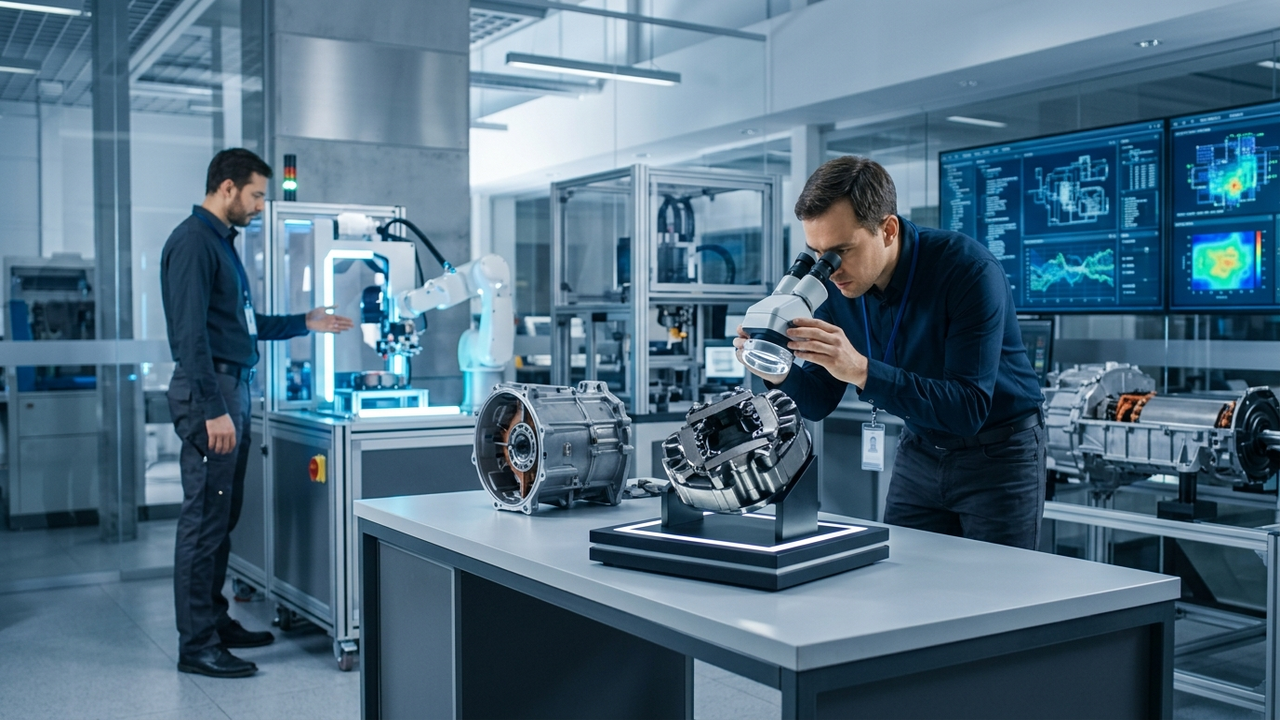
TDK Corporation has announced the development of a prototype for a high-performance permanent magnet that completely eliminates the use of rare-earth elements, positioning it as a next-generation material for electric vehicle (EV) motors. This groundbreaking new magnet offers magnetic properties comparable to conventional rare-earth magnets while significantly contributing to a reduction in manufacturing costs and mitigating supply chain risks associated with rare-earth resources.
Technical / Clinical Details
Currently, high-performance magnets widely used in EV motors are neodymium magnets (NdFeB magnets), primarily composed of rare-earth elements like neodymium (Nd) and dysprosium (Dy). These elements are geographically concentrated in specific regions, leading to constant geopolitical risks such as supply instability and price volatility. The new magnet developed by TDK is based on a manganese-aluminum (MnAl) alloy system, utilizing abundant manganese (Mn) and aluminum (Al) as its main components. Through proprietary process technology and precise microstructure control, TDK has dramatically improved its magnetic properties. It is reported to have successfully approached the levels of key magnetic characteristics, such as remnant magnetization and coercivity, which were previously considered difficult to achieve with MnAl-based magnets compared to NdFeB magnets. This technology not only uses non-rare-earth materials but also ensures magnetic property stability in high-temperature environments, achieving both high efficiency and reliability required for EV motors. This expands the options for motor design independent of rare-earth elements, enhancing the overall sustainability of the EV industry.
Background & Context
The global automotive industry is accelerating its transition to EVs amidst the decarbonization trend, and high-performance motors are key to determining EV range and driving performance. However, the supply constraints of rare-earth elements, the main materials for high-performance magnets, have been a potential bottleneck for the growth of the EV industry. The current high dependence on major rare-earth producing countries also raises concerns about economic security. TDK’s new technology holds critical significance for the industry by resolving these supply risks and enabling more stable material procurement and cost-competitive EV manufacturing.
Strategic Significance & Outlook
TDK’s announcement of a rare-earth-free permanent magnet will have a significant impact on the EV market. If mass production technology is established and cost optimization progresses, EV manufacturers will be able to supply more affordable and stable high-performance motors, further accelerating EV adoption. Furthermore, this technology is expected to be applied not only to EV motors but also to a wide range of fields where permanent magnets are used, such as wind power generators, industrial robots, and home appliances. As a successful example of materials development overcoming resource constraints for a sustainable society, its future technological advancements and market introduction are highly anticipated.
Source: #
Get our weekly technology intelligence — free
Receive an infographic that lets you judge at a glance whether each field’s analysis report is worth reading.
Subscribe Free — Weekly Tech Intelligence
By subscribing, you’ll receive Troy-Technical’s weekly technology intelligence newsletter.
- Your email and selected fields are used only to deliver the newsletter.
- We never share your information with third parties.
- You can unsubscribe anytime via the link in each email.
See our Privacy Policy for details.
Takes about a minute · Unsubscribe anytime








Comments