Key Findings
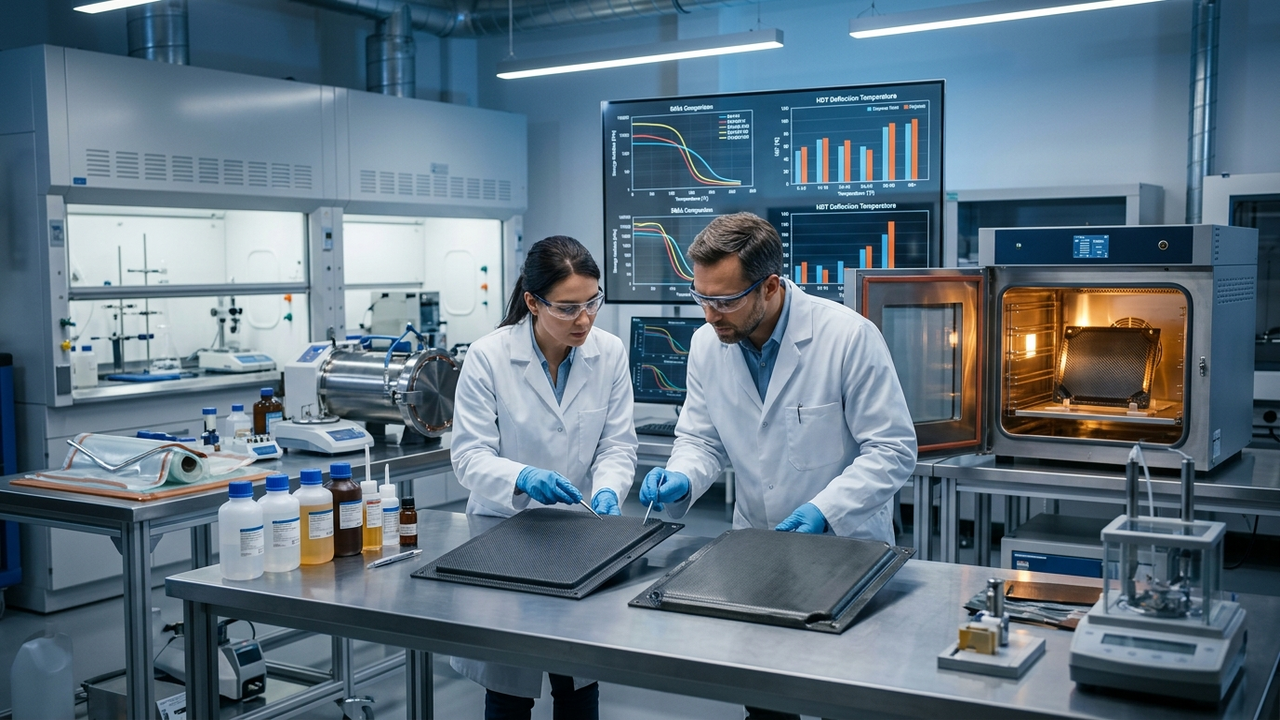
The high-temperature resin selection guide published by INCURE INC. provides critical insights, asserting that the heat resistance of carbon fiber composites is predominantly determined by the choice of the resin matrix. The guide meticulously analyzes the characteristics and application areas of leading high-temperature resins—epoxies, phenolics, bismaleimides (BMI), cyanate esters, and polyimides—while outlining their typical operating temperature ranges. A central emphasis is placed on the indispensable role of proper post-curing in maximizing the glass transition temperature (Tg) and unlocking the full thermal performance potential of these advanced materials, especially in extreme environments like engine compartments and aerospace structures.
Technical / Product Details
For carbon fiber composites operating in high-temperature environments, the primary resin choices include:
- Epoxy Resins: Widely used for their excellent adhesion, mechanical strength, and moisture resistance. While general-purpose epoxies operate up to 150-200°C, specialized novolac epoxies can extend this to 250°C. Complete post-curing is vital for achieving maximum Tg.
- Phenolic Resins: Known for superior flame retardancy and low smoke emission, making them suitable for aerospace interiors. Their heat resistance typically extends to around 200°C.
- Bismaleimide (BMI) Resins: Offer higher Tg than epoxies, enabling continuous service temperatures from 200-250°C. Frequently used in aerospace structural components, but can exhibit higher brittleness.
- Cyanate Ester Resins: Possess Tg values comparable to or exceeding BMIs (250-300°C) and are characterized by low dielectric loss, making them ideal for high-frequency electronic substrates.
- Polyimide Resins: Provide the highest class of heat resistance (over 300°C, with short-term exposure exceeding 400°C), employed in extremely harsh environments such as engine components. While potentially challenging to process, their performance is unmatched.
The true heat resistance of these resins is heavily influenced by their glass transition temperature (Tg), which indicates the temperature at which the polymer begins to soften. A higher Tg ensures better dimensional stability and mechanical properties at elevated temperatures. A thorough and complete post-cure is indispensable for driving the resin’s cross-linking reaction to its maximum extent, thereby achieving the theoretical maximum Tg. Incomplete curing will lead to a suppressed Tg and compromised performance.
Background & Context
Components for extreme environments, such as aerospace vehicles, high-performance automotive engine parts, and industrial high-temperature equipment, necessitate materials with exceptional heat resistance and mechanical strength. Carbon fiber composites, due to their superior strength-to-weight ratio, are extensively adopted in these sectors, but their ultimate performance is intrinsically tied to the thermal stability of the chosen resin matrix. In the current drive for lighter, more fuel-efficient designs, the development and judicious selection of high-temperature polymer composites represent a critical catalyst for technological innovation. This guide serves as an invaluable resource for engineers to select optimal resins based on specific application requirements.
Strategic Significance & Outlook
The demand for high-temperature composite materials is projected to grow continually, fueled by expansion in the aerospace industry, the increasing performance requirements of electric vehicles, and the use in harsh environments within renewable energy sectors (e.g., geothermal energy, high-temperature fuel cells). Future advancements will likely focus on developing novel resin systems that combine even higher heat resistance with improved processability and cost-effectiveness. Furthermore, progress in simulation technologies will streamline material design and post-curing optimization, enabling more accurate prediction of material behavior under specific thermal profiles and stress conditions. This will further accelerate the practical implementation of high-performance composite materials, steering the industry towards a more sustainable and high-performing future.
Source: https://incurelab.com/wp/high-temperature-epoxy-laminating-resin
Get our weekly technology intelligence — free
Receive an infographic that lets you judge at a glance whether each field’s analysis report is worth reading.
Subscribe Free — Weekly Tech Intelligence
By subscribing, you’ll receive Troy-Technical’s weekly technology intelligence newsletter.
- Your email and selected fields are used only to deliver the newsletter.
- We never share your information with third parties.
- You can unsubscribe anytime via the link in each email.
See our Privacy Policy for details.
Takes about a minute · Unsubscribe anytime






Comments