Key Findings
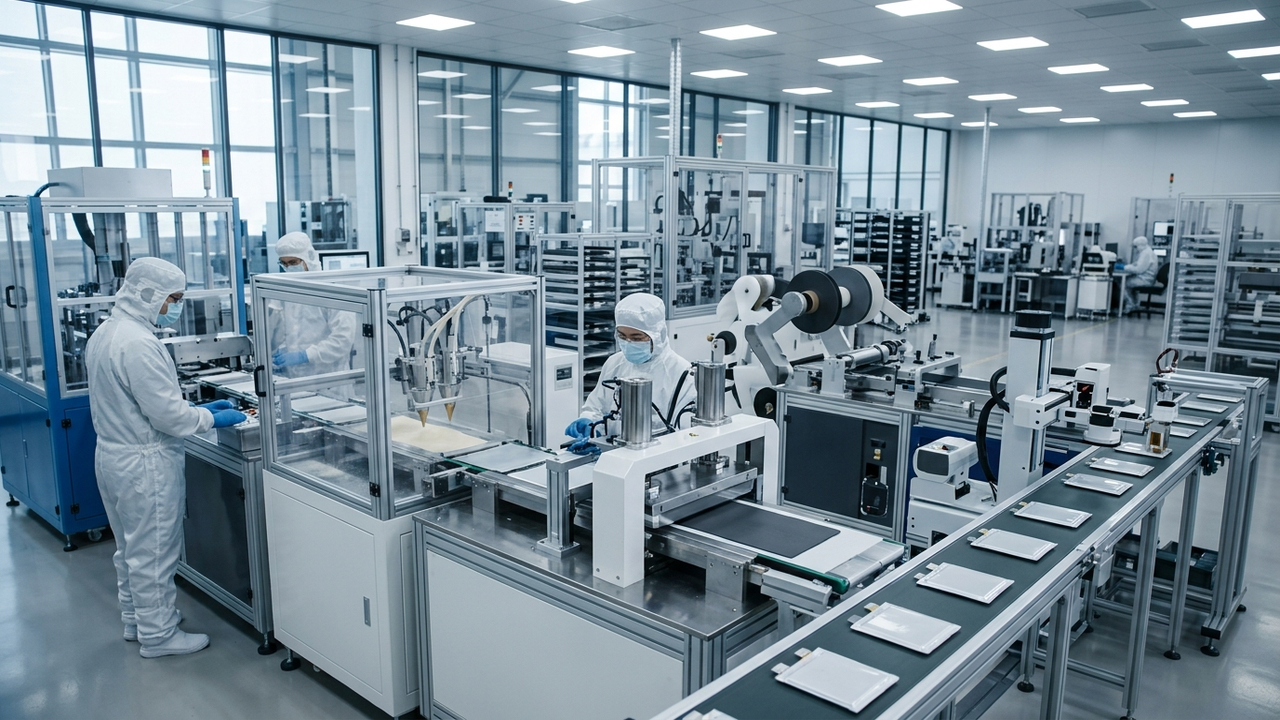
Significant progress in solid-state battery technology has been reported, with Xinyuren successfully trial-producing its second-generation halide solid electrolyte and Easpring establishing large-scale supply capabilities for a new sulfide solid electrolyte. These material breakthroughs are pivotal for enhancing solid-state battery performance and reducing manufacturing costs, thereby accelerating their commercial viability. Concurrently, Dongfeng Motor has announced an October launch and Q4 2026 delivery schedule for its 350 Wh/kg hybrid solid-liquid battery, providing a concrete example of near-term application.
Technical / Clinical Details
Xinyuren’s second-generation halide solid electrolyte addresses critical challenges in ionic conductivity and stability that have hampered previous solid electrolyte designs. Halide electrolytes are recognized for their high ionic conductivity and wide electrochemical window, positioning them as strong contenders alongside sulfide electrolytes for next-generation solid-state batteries. Easpring’s scaled production of sulfide solid electrolyte is crucial, given its high room-temperature ionic conductivity and favorable mechanical properties, which are essential for reducing manufacturing costs and improving the scalability of all-solid-state batteries. In academic research, significant attention is paid to interface engineering; for instance, a defect-engineered LiYO₂ interlayer is being developed to reduce interface resistance and improve stability between high-nickel cathodes and Li₆PS₅Cl solid electrolytes. Furthermore, adaptive interface strategies for lithium-metal anodes are critical for suppressing lithium dendrite formation, a key safety and performance concern.
Background & Context
Solid-state batteries are poised to revolutionize electric vehicles (EVs) and stationary energy storage by offering superior safety and higher energy density compared to conventional lithium-ion batteries. Eliminating liquid electrolytes removes the risks of leakage and thermal runaway, enhancing overall safety and reliability. The higher energy density translates to extended EV range and faster charging times. The Chinese government, through its ’15th Five-Year Plan,’ is actively promoting the standardization and industrialization of solid-state batteries. The recent advancements in material technology and specific product launch plans from major automotive manufacturers directly align with and validate this national strategic push towards a robust solid-state battery ecosystem. The global race to commercialize these advanced battery technologies underscores their perceived transformative potential across multiple industries.
Strategic Significance & Outlook
The mass production of new solid-state battery materials and their integration into EV production roadmaps indicate that solid-state battery commercialization is transitioning from theoretical promise to practical implementation. The critical next steps involve scaling these technologies cost-effectively and ensuring long-term reliability under diverse operating conditions. Dongfeng Motor’s hybrid solid-liquid battery, with its 350 Wh/kg energy density, represents a pragmatic interim step towards full solid-state technology, and its market performance will be closely watched. The ongoing academic research into interface control remains fundamental, as stable interfaces are crucial for maximizing the performance and lifespan of all-solid-state cells. The convergence of material science breakthroughs, manufacturing scale-up, and strategic product launches suggests that the latter half of the 2020s will see a much broader adoption of solid-state battery technologies.
Get our weekly technology intelligence — free
Receive an infographic that lets you judge at a glance whether each field’s analysis report is worth reading.
Subscribe Free — Weekly Tech Intelligence
By subscribing, you’ll receive Troy-Technical’s weekly technology intelligence newsletter.
- Your email and selected fields are used only to deliver the newsletter.
- We never share your information with third parties.
- You can unsubscribe anytime via the link in each email.
See our Privacy Policy for details.
Takes about a minute · Unsubscribe anytime







Comments