Key Findings
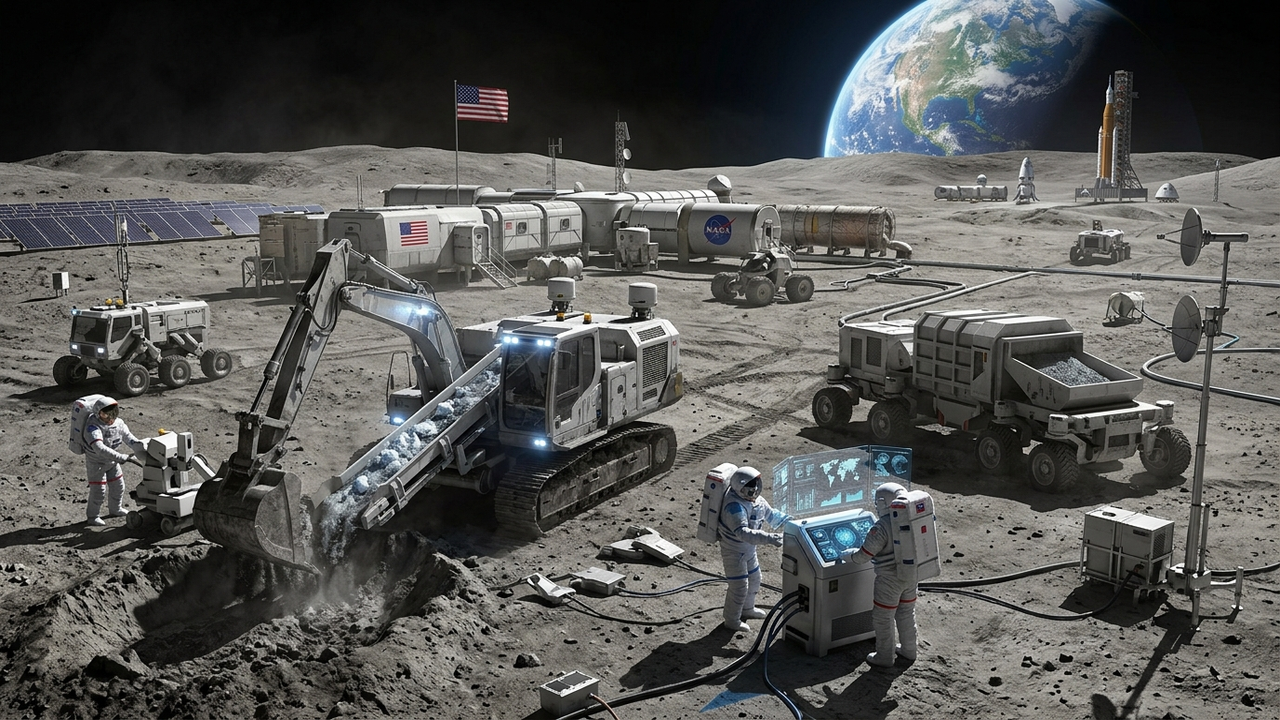
NASA’s Artemis program is intensely focused on the exploration and development of lunar resource extraction technologies, including Helium-3, water ice, titanium, and aluminum, with an ambitious goal to establish a permanent lunar base by the mid-2030s. This strategy aims to significantly reduce future mission costs and enable a sustained human presence on the Moon by leveraging these resources for nuclear fusion energy, construction materials, and the generation of fuel and oxygen through In-Situ Resource Utilization (ISRU).
Technical & Clinical Details
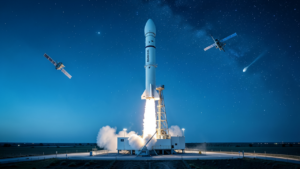
Advanced robotic missions are essential for lunar resource prospecting. These missions identify potential water ice deposits in lunar polar regions and validate extraction technologies. Helium-3, a promising clean fuel for fusion power, is a key target, with ongoing development of techniques for its efficient recovery from lunar regolith. Furthermore, metals like titanium and aluminum will be utilized for lunar construction and in-situ manufacturing, lessening reliance on Earth-based material supply. Private companies such as SpaceX, ispace, and Astrobotic are actively developing lunar landers and rovers to demonstrate resource prospecting and utilization capabilities.
Background & Context
The Artemis program exemplifies the collaboration between government agencies and the private sector in space development, accelerating innovation and improving cost-efficiency. The utilization of lunar resources not only enhances the sustainability of deep space exploration but also has the potential to create a multi-trillion-dollar new market in the space economy by providing novel energy and material sources for Earth. However, international legal frameworks and governance for lunar resource extraction and utilization are still in nascent stages, representing critical future challenges.
Strategic Significance & Outlook
Advancements in lunar resource mining technology will enable permanent human outposts on the Moon, serving as a stepping stone for future deep-space missions to Mars and beyond. Should commercial utilization of Helium-3 become viable, it could contribute to solving Earth’s energy challenges. The entry of private enterprises fosters competition and innovation, accelerating efficient lunar resource utilization while establishing new models for space business. This transformative shift redefines space from merely a domain of exploration to a new frontier of economic activity and industrial development.
Get our weekly technology intelligence — free
Receive an infographic that lets you judge at a glance whether each field’s analysis report is worth reading.
Subscribe Free — Weekly Tech Intelligence
By subscribing, you’ll receive Troy-Technical’s weekly technology intelligence newsletter.
- Your email and selected fields are used only to deliver the newsletter.
- We never share your information with third parties.
- You can unsubscribe anytime via the link in each email.
See our Privacy Policy for details.
Takes about a minute · Unsubscribe anytime




Comments