Key Findings
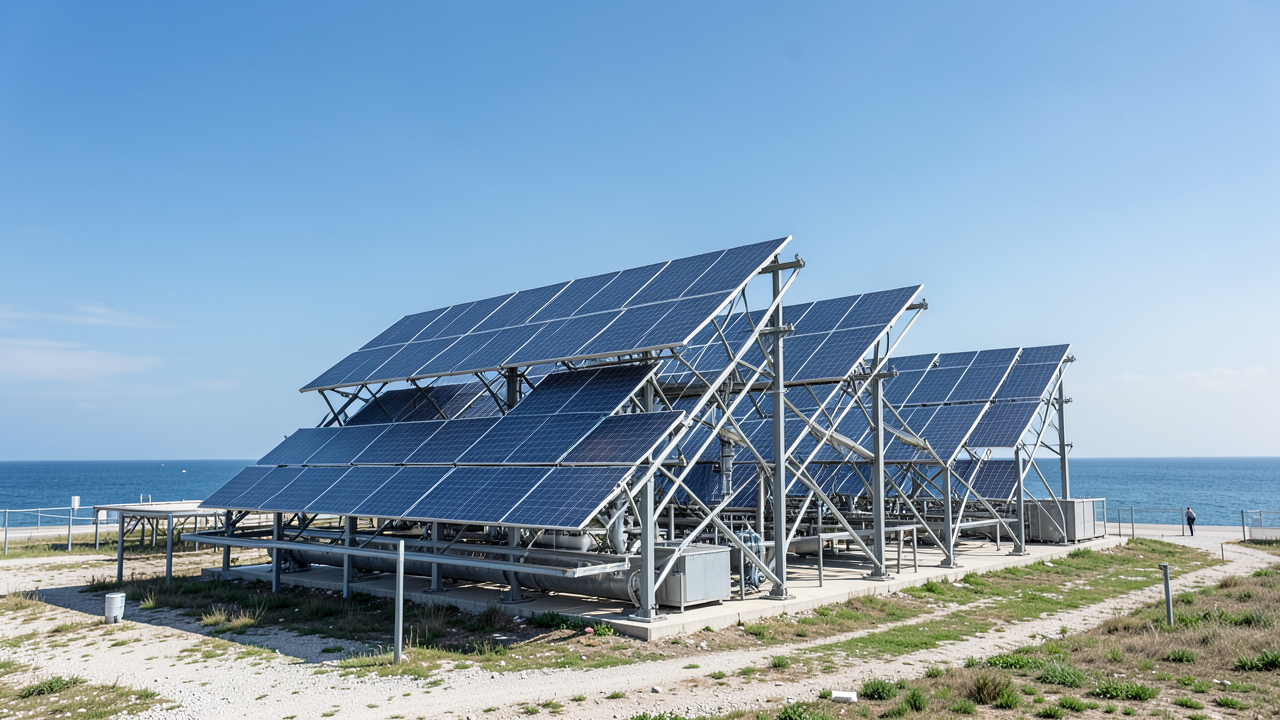
Significant advancements are being made in extending the operational lifespan of space solar cells, crucial for the longevity and reliability of spacecraft. These innovations include the use of highly radiation-resistant materials such as multi-junction solar cells based on III-V semiconductors, alongside the application of sophisticated protective coatings and cover materials. Perovskite photovoltaics are emerging as a transformative technology, offering a compelling combination of high efficiency, lower manufacturing costs, reduced weight, and superior radiation endurance, particularly for large-scale satellite constellations. Furthermore, improved performance and enhanced radiation tolerance have reignited interest in silicon photovoltaic technology, positioning it as a more cost-effective power solution for space applications.
Technical Details
- III-V Multi-Junction Solar Cells: These cells, often incorporating materials like gallium arsenide (GaAs) and indium phosphide (InP), achieve high conversion efficiencies by stacking multiple sub-cells with different bandgaps, optimized to absorb a broad spectrum of sunlight. Their inherent material properties and sophisticated design make them significantly more resistant to degradation from high-energy particles prevalent in space radiation environments compared to single-junction cells.
- Protective Coatings and Cover Materials: To mitigate damage from ultraviolet radiation, atomic oxygen, and charged particles, solar cells are encapsulated with specialized protective coatings and cover glasses. These materials are engineered to be transparent to sunlight while effectively shielding the underlying cell structure, slowing down radiation-induced degradation and ensuring long-term performance stability.
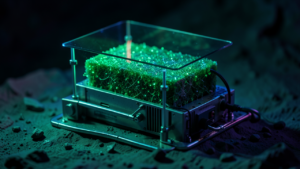
- Perovskite Photovoltaics: Perovskite materials offer advantages such as tunable bandgaps, high power conversion efficiencies, and suitability for flexible, lightweight manufacturing processes. Their demonstrated resilience to various forms of radiation, coupled with their potential for cost reduction, makes them highly attractive for future satellite constellations where large numbers of durable, inexpensive solar arrays are required.
- Improved Silicon PV: Recent research and development have overcome some traditional limitations of silicon solar cells in space, particularly their susceptibility to radiation. Innovations in cell design, such as back-contact architectures, and improvements in silicon material purity have led to enhanced performance and increased radiation tolerance, making silicon a viable and economical option for certain types of space missions.
Background & Context
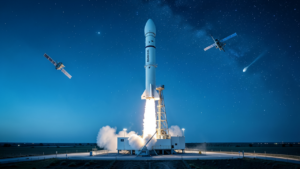
The burgeoning space industry, driven by the proliferation of satellite constellations and long-duration deep-space missions, demands power systems that can operate reliably for extended periods under extreme conditions. Solar arrays are the primary power source for most spacecraft, but their performance degrades over time due to exposure to cosmic rays and solar flares. The strategies outlined—from advanced material selection to novel cell architectures—directly address this critical challenge. By providing more robust and cost-effective power solutions, these technologies are pivotal for sustaining the expansion of space infrastructure and enabling ambitious future missions.
Strategic Significance & Outlook
These advancements will profoundly impact the design and economic viability of future space missions. The availability of more resilient and cost-efficient solar cells will accelerate the deployment of large satellite constellations, enhancing global communication, Earth observation, and navigation services. For deep-space probes and human-crewed missions, improved solar cell longevity translates into increased mission duration and reduced operational risks. Continued investment in radiation-hardened solar cell technologies is essential for the long-term sustainability and growth of humanity’s presence and activities in space, pushing the boundaries of scientific exploration and commercial exploitation.
Source: https://www.shgulier.com/news/top-tips-for-extending-the-life-of-space-solar-cells.html
Get our weekly technology intelligence — free
Receive an infographic that lets you judge at a glance whether each field’s analysis report is worth reading.
Subscribe Free — Weekly Tech Intelligence
By subscribing, you’ll receive Troy-Technical’s weekly technology intelligence newsletter.
- Your email and selected fields are used only to deliver the newsletter.
- We never share your information with third parties.
- You can unsubscribe anytime via the link in each email.
See our Privacy Policy for details.
Takes about a minute · Unsubscribe anytime



Comments