Key Findings
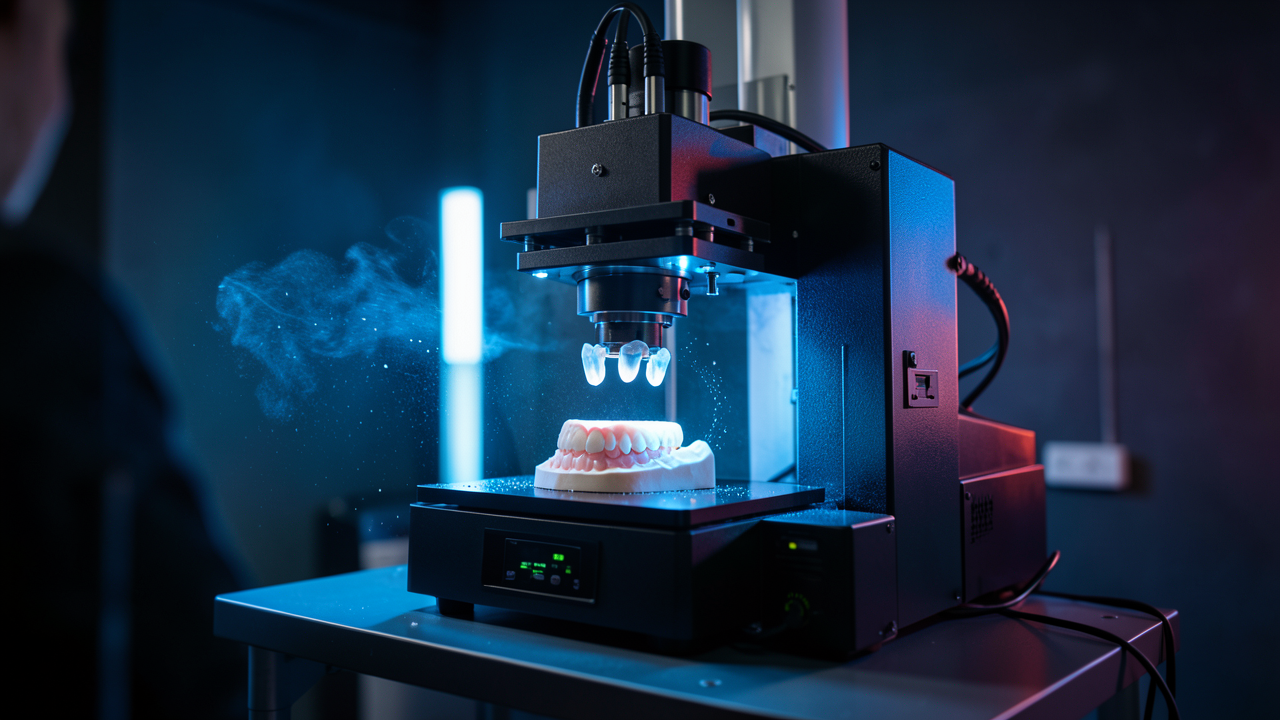
In its recently released checklist for chairside dental equipment and materials, GlobalDentex emphasized the significant utility of dental 3D printers, particularly for the rapid in-office fabrication of surgical guides, diagnostic models, and temporary restorations using photoresist resins. This technology holds substantial potential to improve the efficiency of dental treatment workflows.
Technical / Clinical Details
Dental 3D printers are rapidly becoming indispensable tools in the digital dentistry workflow. Photoresist resin, a liquid polymer that hardens upon exposure to light, enables high-resolution printing in dental 3D printers, especially those utilizing SLA (Stereolithography) or DLP (Digital Light Processing) technologies. This allows for the swift production of customized items—such as surgical guides for enhanced implant placement precision, diagnostic models for occlusion analysis and patient education, and temporary crowns or bridges for interim restorations—directly from patient scan data within the clinic. This capability significantly reduces turnaround times by minimizing reliance on external labs. However, the report explicitly states that 3D printed products made with photoresist resins are primarily suited for auxiliary applications like guides, models, and temporaries, and not for definitive, load-bearing restorations (e.g., permanent crowns or bridges).
Background & Context
The dental industry is undergoing rapid digitalization, with intraoral scanners, CAD/CAM systems, and 3D printers becoming key drivers for improving the quality and efficiency of clinical practice. Integrating chairside 3D printers offers considerable advantages, particularly in implantology and orthodontics, by enabling immediate, customized appliance fabrication. This leads to reduced patient waiting times, increased flexibility in treatment planning, and enhanced capability for urgent cases. Advances in photoresist resins further elevate the precision and reliability of these applications.
Strategic Significance & Outlook
The technology of dental 3D printers and photoresist resins is expected to continue its evolution. In the future, the development of more durable and biocompatible resins may expand their applicability to definitive load-bearing restorations. Furthermore, the integration of AI for automated design and optimization of printing processes could enable even faster and more precise fabrication. This will empower dental clinics to complete more treatments in-house, offering patients quicker and more personalized dental care. The widespread adoption of digital dentistry is poised to significantly improve both the accessibility and quality of dental healthcare.
Source: https://www.globaldentex.com/knowledge/chairside-dental-equipment-material-checklist.html
Get our weekly technology intelligence — free
Receive an infographic that lets you judge at a glance whether each field’s analysis report is worth reading.
Subscribe Free — Weekly Tech Intelligence
By subscribing, you’ll receive Troy-Technical’s weekly technology intelligence newsletter.
- Your email and selected fields are used only to deliver the newsletter.
- We never share your information with third parties.
- You can unsubscribe anytime via the link in each email.
See our Privacy Policy for details.
Takes about a minute · Unsubscribe anytime





Comments