


Key Findings
BeetleBot is a bio-inspired robot capable of navigating turns, gripping objects, and transporting them to different locations. The system is characterized by its use of artificial muscles and a bidirectional feedback mechanism that links robot-detected information to the operator’s subsequent actions in real time.
Technical Details
The robot’s artificial muscles are 3D-printed from liquid crystal elastomer (LCE), a material that contracts and shortens by 45% when heated and returns to its original shape upon cooling. To achieve contraction, the LCE muscles must reach 110 °C (230 °F), which is generated by passing an electric current through integrated wires. However, the energy required to generate this heat remains a primary technical challenge.
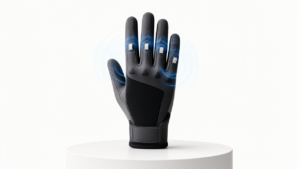
Control is managed via a flexible sensor patch worn on the operator’s finger. Bending the finger changes the patch’s electrical resistance, triggering one of four commands: move forward, turn left, turn right, or grip an object. The gripping mechanism, inspired by beetle mandibles, utilizes LCE muscles and a pressure sensor to determine the force applied to an object.
Background & Context
The design of BeetleBot is based on the Mecynorrhina torquata, a large beetle native to Cameroon, Uganda, and the Congo. Researchers studied the positioning and function of the insect’s leg muscles and joints to replicate these principles in the robot. This approach provides an alternative to creating cyborgs from real insects, avoiding associated ethical concerns.
Significance & Outlook
The integration of a camera and pressure sensors allows for a continuous exchange of information between the human operator and the robot. Future development goals include improving energy efficiency and response speed. The research team intends to eventually transition BeetleBot into a fully soft-bodied robot to increase its versatility across various operational environments, such as industrial equipment inspection and space exploration.
Source: https://newatlas.com/robotics/beetlebot-robotic-beetle/
Get our weekly technology intelligence — free
Receive an infographic that lets you judge at a glance whether each field’s analysis report is worth reading.
Subscribe Free — Weekly Tech Intelligence
By subscribing, you’ll receive Troy-Technical’s weekly technology intelligence newsletter.
- Your email and selected fields are used only to deliver the newsletter.
- We never share your information with third parties.
- You can unsubscribe anytime via the link in each email.
See our Privacy Policy for details.
Takes about a minute · Unsubscribe anytime